
Robotic grinding and polishing
A cast part still has fine burrs and a dull skin when it reaches finishing. Our cell sands zamak and brass parts on compensated belts and polishes them to a bright surface, while the operator loads from outside, away from the dust.
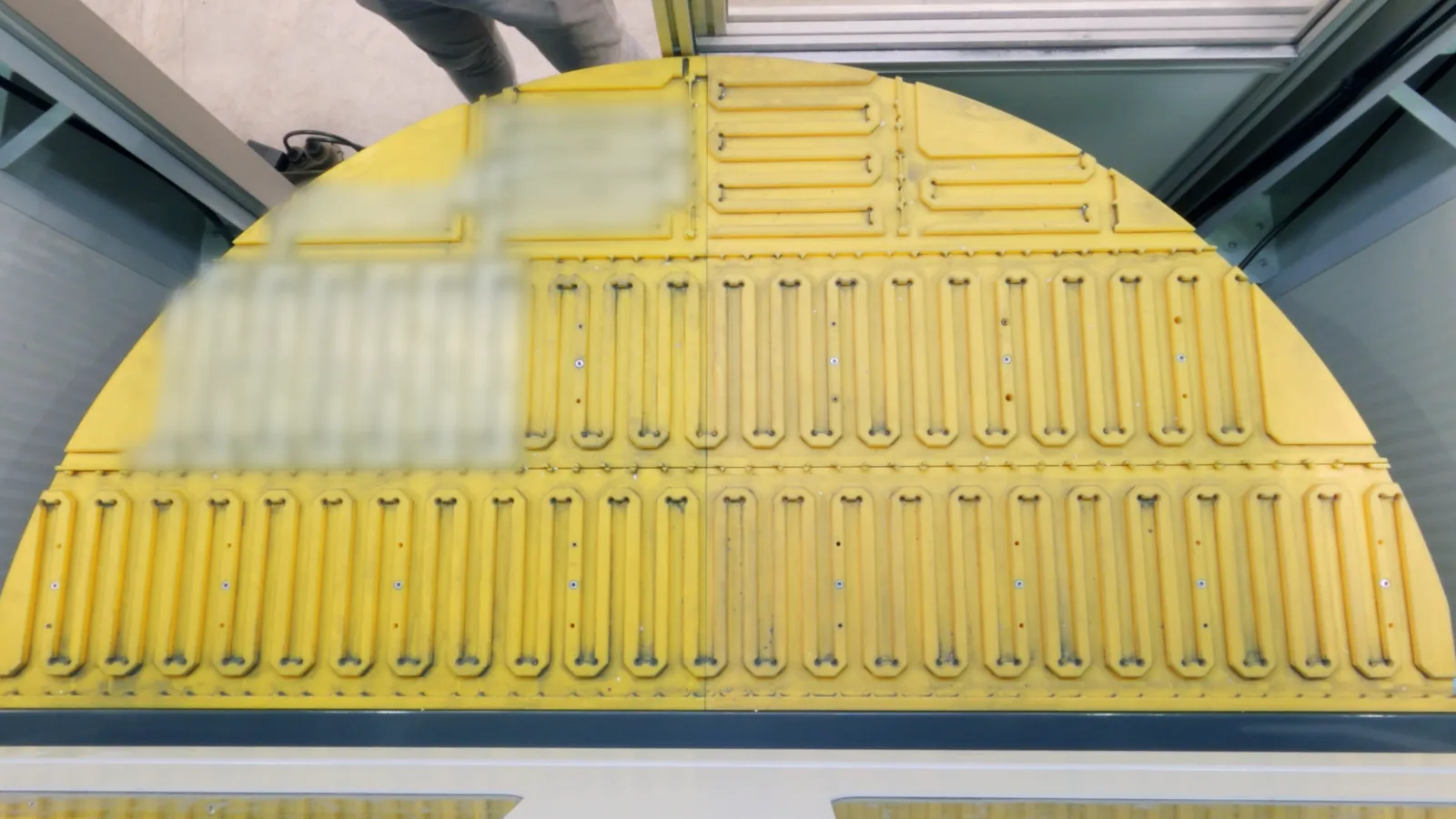
01Loaded from outside 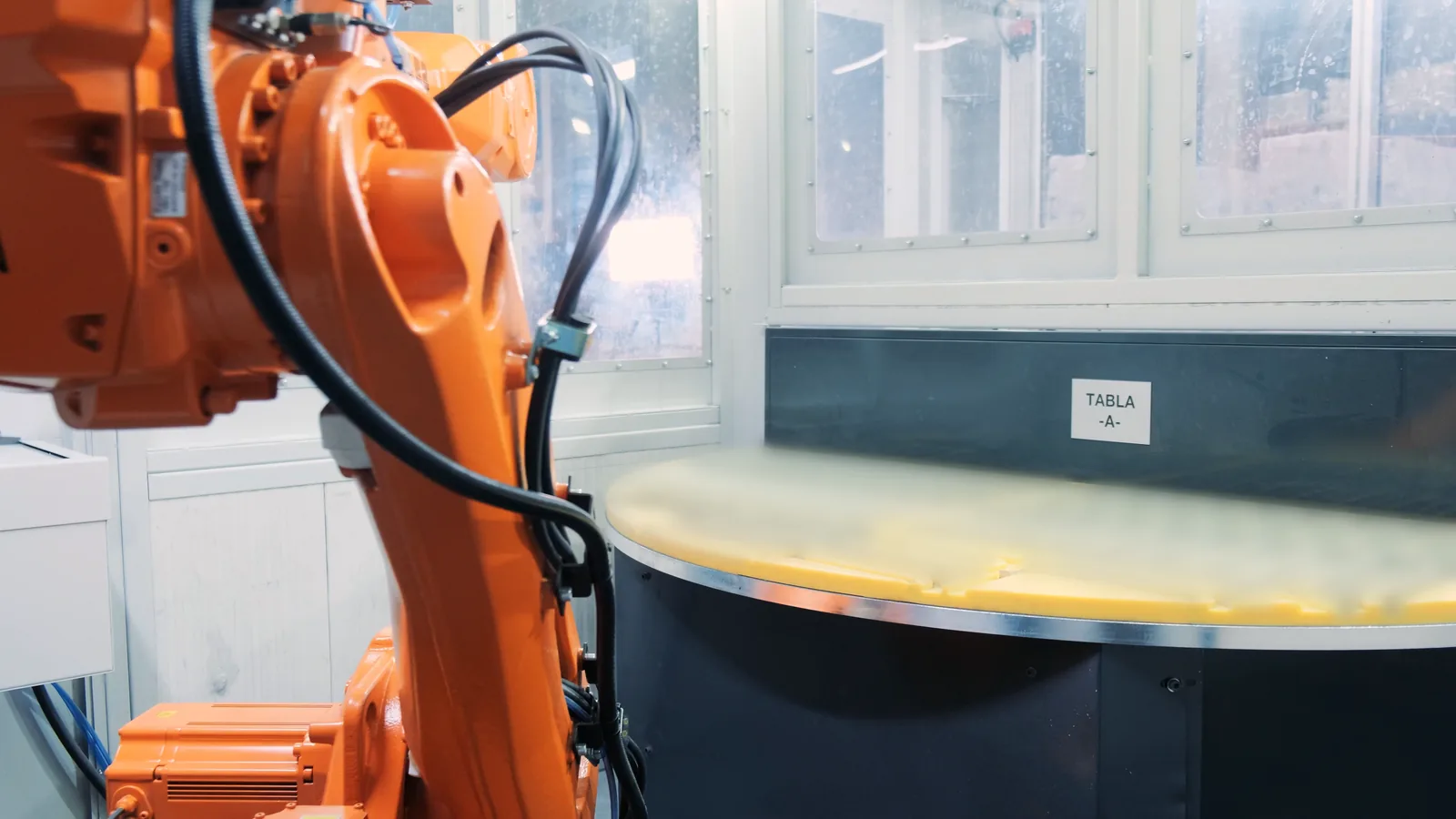
02Picked inside 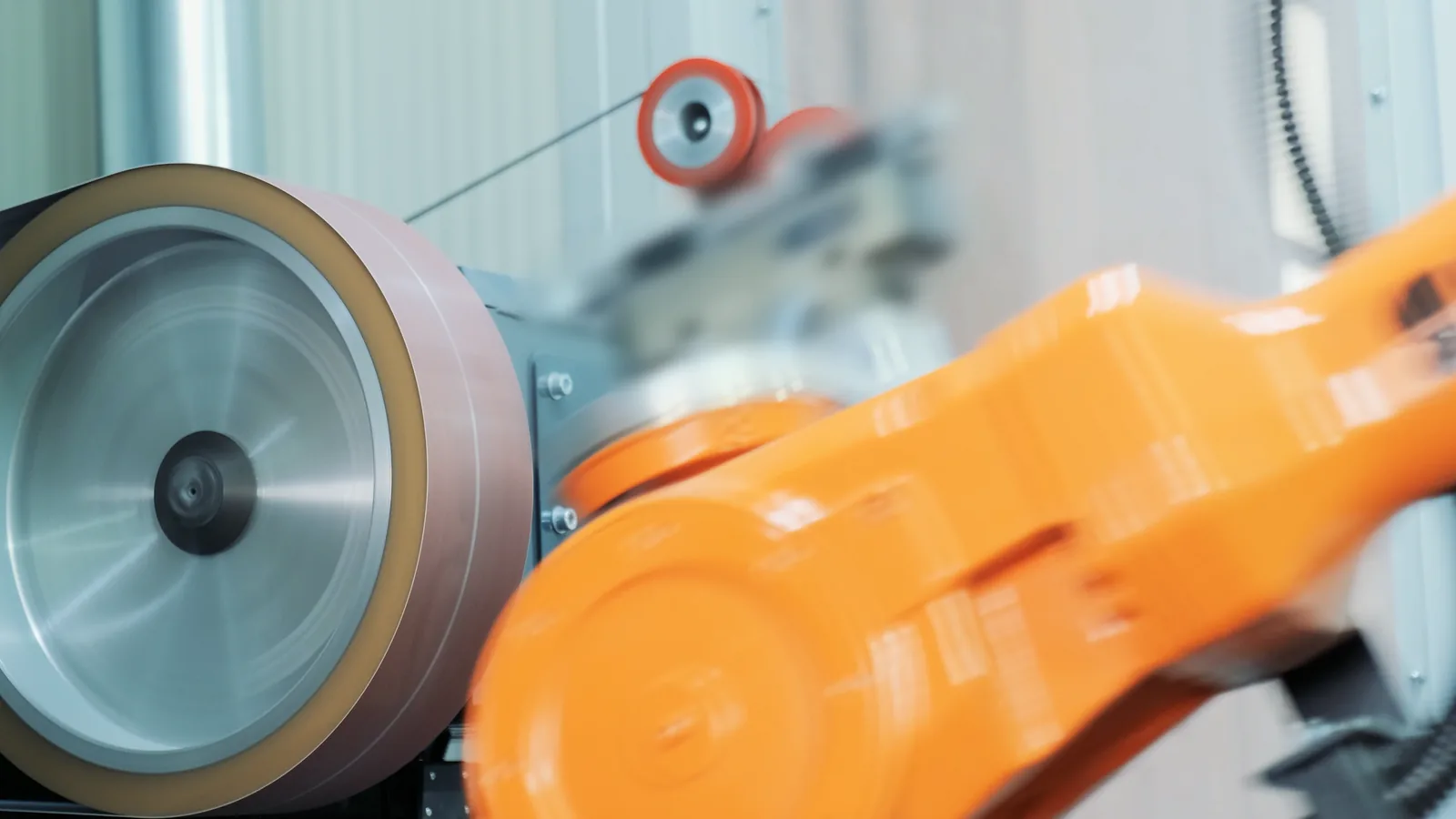
03Sanded on the belt 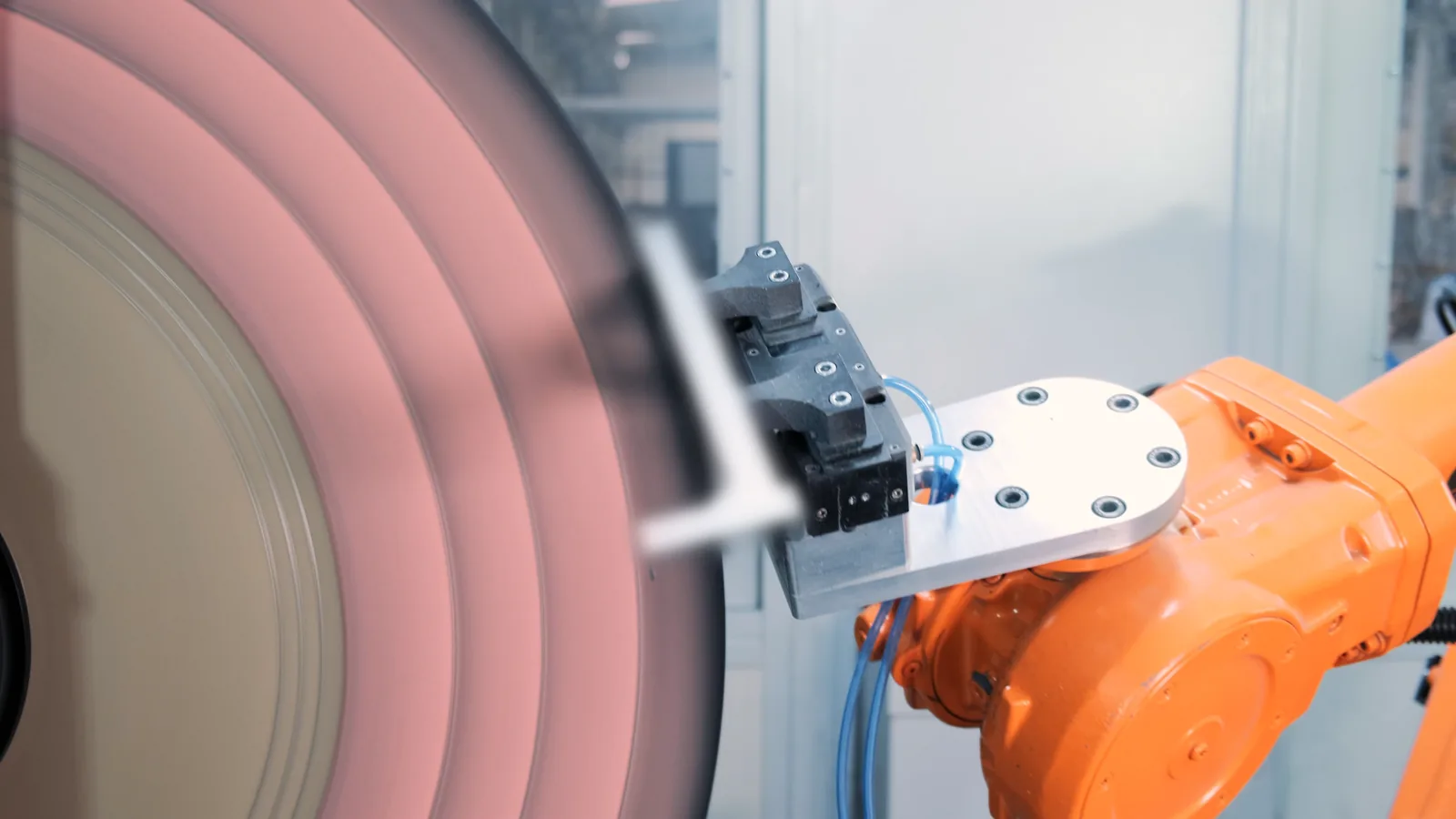
04Polished on the wheel
The parts are blurred in our videos and photos to protect our customer’s design.
Keep people out of the dust
Sanding and polishing manually is dusty, loud and tiring work, and the finish depends on who does it. In this cell, the operator only loads the table.
- 01
Away from the finest dust
Sanding and polishing zamak and brass throws off fine metal dust, and the polishing wheel sheds lint. The operator loads outside the cell; the dust stays inside and goes to the extraction.
- 02
Noise and vibration stay inside
Belts and polishing wheels are loud, and pressing parts against them all shift shakes the hands and arms. Here the robot holds the part, behind closed walls.
- 03
No hands near the belt or the wheel
Pressing a part manually against a running belt or polishing wheel, a glove or a sleeve can be caught. In the cell, nobody’s hands go near them.
- 04
The same finish on every part
Polishing is cosmetic work, and every mark shows. The robot follows the same path at the same pressure, so every part leaves with the same surface.
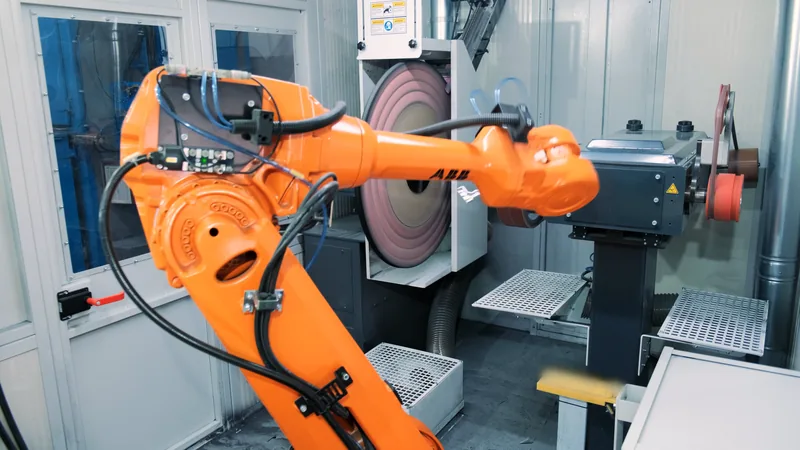
From the table to the conveyor
Sanding takes off the fine burrs the earlier steps leave behind. Polishing then gives the part its bright surface.
- 01
Load
The operator sets the parts in the nests of the rotary table, on the half outside the cell.
- 02
Index
The table turns and carries them through the cell wall. The loading side stays outside.
- 03
Pick
The robot takes a part from its nest.
- 04
Sand
It sands the part on the belt heads, each with the belt width that suits the surfaces it has to reach.
- 05
Polish
On the polishing wheel it brings the surface to a bright finish.
- 06
Out
The finished part goes onto the conveyor and leaves the cell.
Load while it works
The rotary table passes through the cell wall. One half is outside with the operator, the other inside with the robot.
While the operator fills the outer half, the robot works through the parts on the inner half. Then the table turns. Nobody waits, and the loading side never opens onto the dust.
An even pressure, as belts and wheel wear
Parts are never quite alike, and belts and polishing wheels wear as they work. The pressure on the part has to stay the same anyway.
- 01
Compensated belt heads
When the force rises, the head gives way. The pressure stays even from one part to the next and as the belt wears, so the belt is not torn and the surface is not marked.
- 02
A belt for each feature
The heads carry belts of different widths, matched to the size of the features and the surface you need.
- 03
A wheel the robot follows
As the polishing wheel wears down, the robot follows it, and the polishing compound is fed automatically.
Your extraction or ours
The dust and the lint are drawn out of the cell from the top. Where they go is your choice.
One unit, ready to move
Robot, belt heads, polishing wheel, rotary table, conveyor and controls sit on one base and leave our plant as one piece.
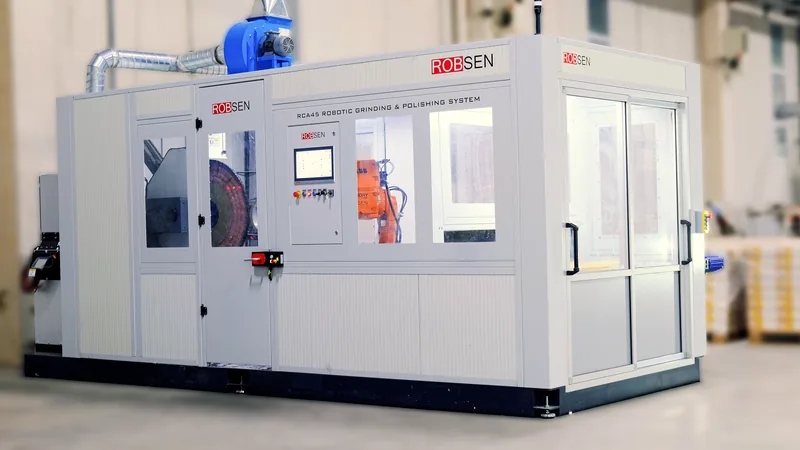 5,200 mm2,300 mm2,600 mm
- 01
Fully enclosed
Walls all round and windows to watch through. The dust, the lint and most of the noise stay inside.
- 02
Quick to start
The cell is built and tested on its base at our plant, so it starts working soon after it is set down and connected.
- 03
Move it when you need to
Unplug it, lift it by its base and set it down where the parts are. See how our cutting cell travels
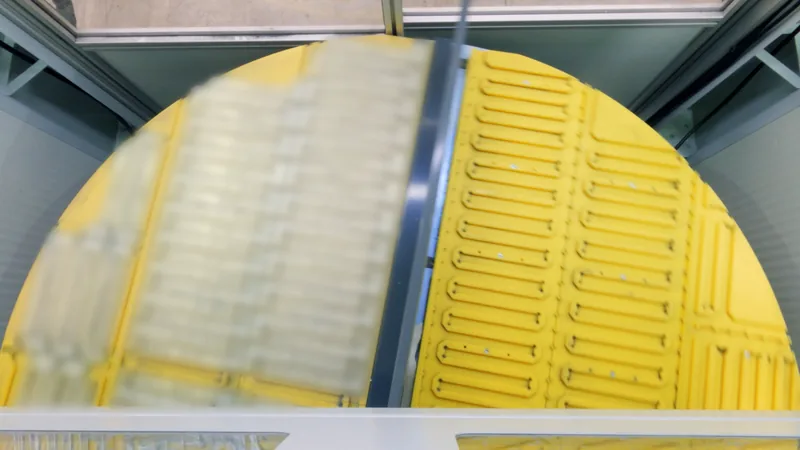
Another part: new nests, another recipe
Each part has its own nest plate on the rotary table and its own recipe in the robot: the paths, the belts and the pressures. Changing over means fitting the plate and selecting the recipe.
Gallery
The film and photos of a grinding and polishing cell we built for zamak parts, in production.

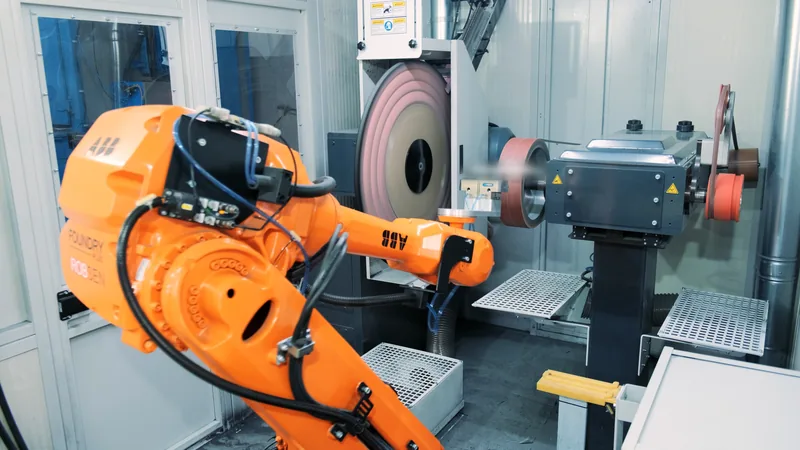
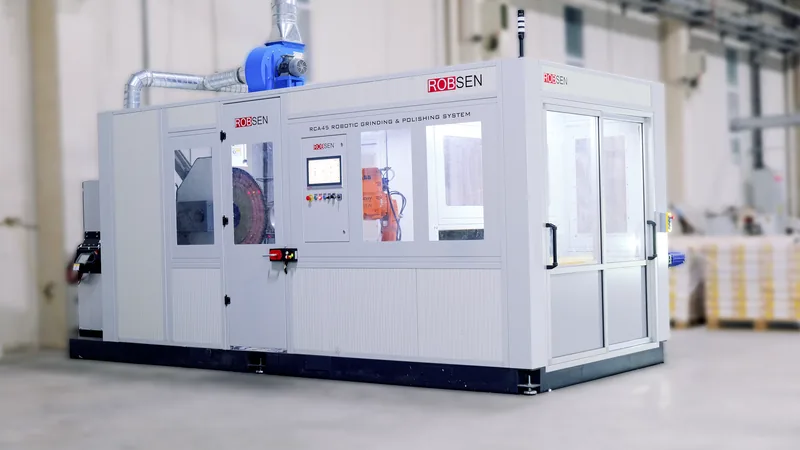
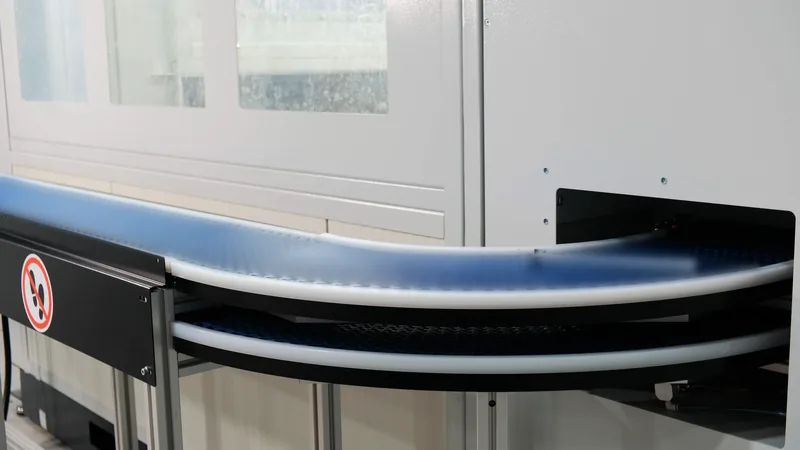
The parts are blurred in our videos and photos to protect our customer’s design.
The cell in brief
- Application
- Belt sanding and polishing
- Solution
- Surface Finishing
- Parts
- Zamak and brass parts
- Robot
- Six-axis robot, sealed for dusty work
- Sanding
- Compensated belt heads, several belt widths
- Polishing
- Polishing wheel, wear followed, compound fed automatically
- Loading
- Rotary table through the cell wall
- Output
- Conveyor out of the cell
- Extraction
- To your system, or our complete package
- Enclosure
- Fully enclosed, windows
- Footprint
- 5,200 × 2,300 mm, 2,600 mm high, one unit
Questions we are asked
Which parts can the cell take?
It was built for zamak parts. Brass parts of a similar size can follow the same path. Send us a part and its drawing, and we will tell you how it would be held, sanded and polished.
Does the robot hold the part or the tool?
The part. It carries the part from belt to belt and on to the polishing wheel, so one robot serves every station.
Do we need our own dust extraction?
No. If your plant has one, the cell connects to it. If not, we deliver the cell with its own extraction and filtration.
Isn’t the dust a fire risk?
Metal dust mixed with lint from the polishing wheel can catch fire in a filter that is not made for it. The extraction we deliver is built for this mix. If the cell goes to your own system, tell us what it is and we will look at it with you.
Does the cell stop while it is loaded?
No. The operator fills the outer half of the rotary table while the robot works on the inner half.
What happens as the belts and the wheel wear?
The belt heads are compensated and keep the pressure even as the belts wear. The robot follows the polishing wheel as it wears down, and the compound is fed automatically.
How fast is it?
The cycle depends on the part: how many surfaces it has and the finish it needs. Send us your part and we will tell you the cycle for it.
How do we change over to another part?
Fit the part’s nest plate on the rotary table and select its recipe.
Why are the parts blurred in the videos?
To protect our customer’s design.
Send us your part
Every cell starts with the part. Send us a part or its drawing, its material, the finish you need and how you load it today, and we will set up the right cell with you.
Talk to an engineer