
R&D
We are an integrator that makes products. When a cell we have built several times settles into a pattern, we turn it into one: vision software, a machine tending cell, a straightening machine. That work happens at our R&D center at GOSB Technopark in Gebze, where the company started in 2013.
Twelve years of products
Each one began as a project for one customer and was built again until it earned a name.
- 2014
IROVISION
Our own vision software begins, together with the first robotic cells for transfer machines.
- 2015
IROCUBE
The first vision-guided machine tending cell, at a FANUC Robodrill. Lathes follow in 2016; the conveyor cells for machining centers are launched at EMO 2019.
- 2020
EQUALIZER
The straightening machine that measures a casting with lasers and presses it back into tolerance. The same year: IROCUBE Plus and IROVISION 2.5D.
- 2021
Measurement in 2D
IROVISION learns to measure and inspect, which opens the assembly and quality control machines of the following years.
- 2026
IROCUBE Mobile
A cobot on an AMR, after our first cobot and AMR integration in 2024, with our own calibration and the FleetBridge fleet software.
The whole timeline, year by year, is on the About page.
The products, in production
Not prototypes: each of these runs in customers' plants today.
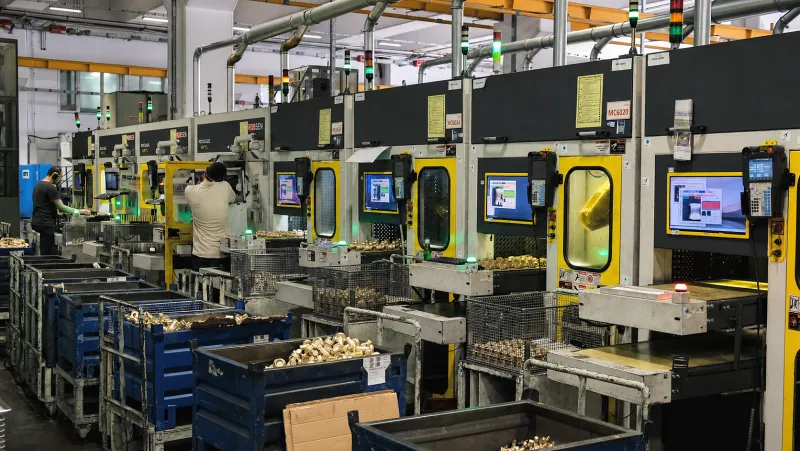
IROCUBE
Vision-guided machine tending cells for machining centers, lathes and transfer machines: the M, T and Plus series, IROCUBE Mobile, and special tending cells such as the MS60L. More than 100 cells delivered.
Machine tending with IROCUBE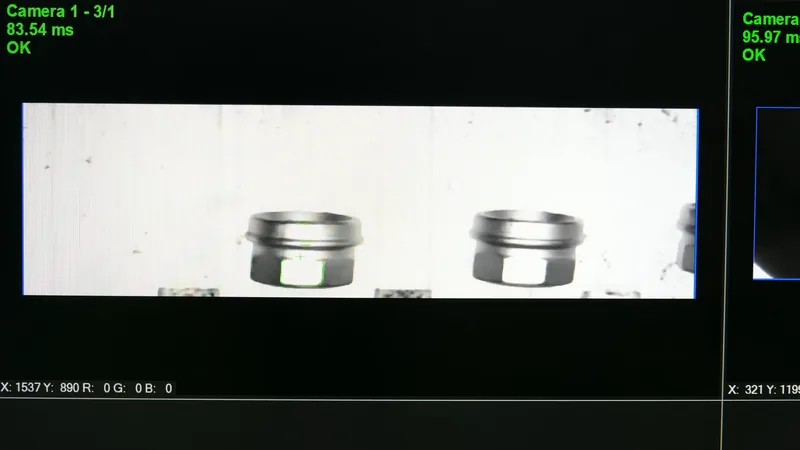
IROVISION and System Manager
The vision software that finds, measures and reads, with more than 500 million parts behind it, and the web-based screen that shows a cell on any device.
Software Development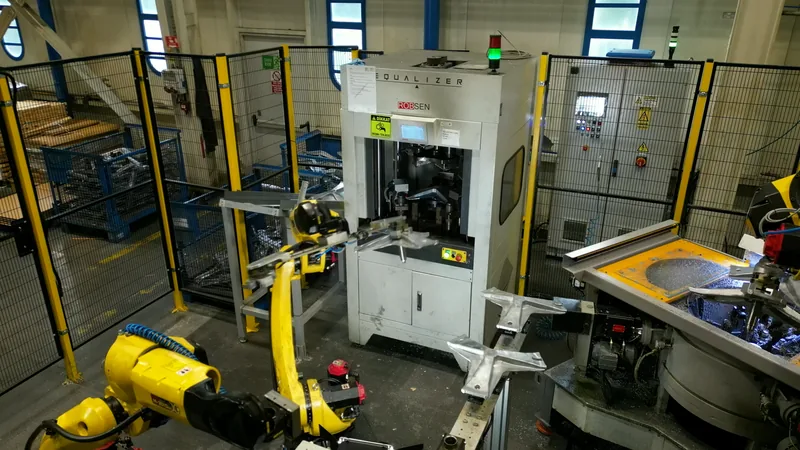
EQUALIZER
A straightening machine for die-cast drum spiders: six lasers, one straightening axis per arm, servo or hydraulic, and our software on its screen. Our first special machine with a name.
The straightening machineHow we decide what becomes a product
Built several times first
Our first robotic cell for a transfer machine was a project in 2014; we have built more than fifteen since. IROCUBE began as one cell at one Robodrill in 2015. A product is a project we have repeated until we trust the pattern.
Kept simple on purpose
A screen that operators learn in under an hour, a cell on one frame that ships in one piece, a new part taught once. The research goes into taking things out, not putting them in.
Still a project when it must be
A 25 kg part, a six-robot straightening line, a valve assembly machine with a leak test: those stay projects, built on the same software and the same frames, and quoted as projects.
- Also in Long term
- Service
- All nine
- How we work: the nine capabilities and the loop they form
Have a problem we have not solved yet?
Tell us about the part and the process. If it fits a product we have, we will say which; if it does not, we will say what it would take.
Talk to an engineer