
Design
Everything that decides how a cell runs is drawn by our own engineers: the frame, the gripper, the conveyors, the guarding, the cabinet and the safety concept. What is only metalwork, such as sheet metal and welding, we buy from specialists.
Four things we design for every cell
The robot is bought. Almost everything around it is designed for your part, your machine and your hall.
- 01
The gripper
We have designed about 500 of them, for aluminium, brass, magnesium and plastic parts, many of them hot-forged or die-cast. Pneumatic, electric, magnetic or vacuum, with part-specific fingers in aluminium or cast polyamide and wear pads that can be swapped. The first took weeks of trial before it held a part right; a new one now takes us about three days.
- 02
One platform
Robot, conveyors, cabinet and guarding on one welded frame. The cell is wired once, at our plant, ships in one piece and is not taken apart on site. It fits a truck trailer or a standard container, and it moves when your line does.
- 03
The electrics and pneumatics
The control cabinet, the safety circuit and the pneumatics are engineered and documented by us. Years later, service is done by people who know the drawings because they drew them. At a die casting machine, that means cables in high-temperature hoses; at a transfer machine, a robot that survives coolant.
- 04
Safety
We judge a cell by its riskiest piece of equipment, not by its robot, and apply ISO 10218-2 whichever robot it uses. The safety concept is fixed before the cell is built, every safety function is tested at the FAT and again at the SAT, and the cell comes with its risk assessment and CE marking. Guarding is not traded away for a lower price, even when it costs us the order.
Designed around the hard part of the job
The design of a cell is mostly the design of its worst moment: the heat, the mist, the weight, the hall it has to fit.
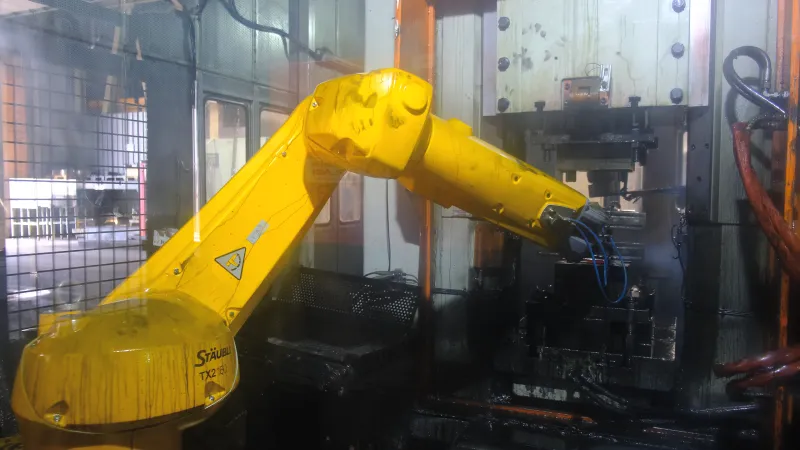
Heat
Only the arm and the gripper go into the press. The robot stays back, in a protective jacket or behind a longer tool whose length comes out of a thermal analysis.
Hot forging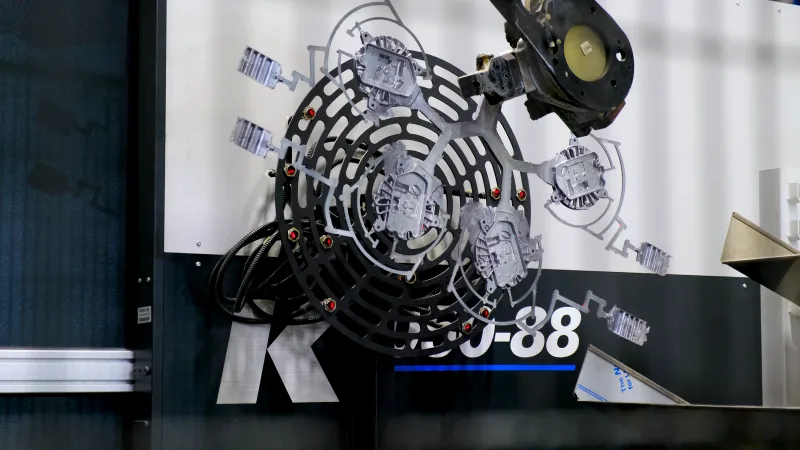
Mist
At the die we check that the whole casting came out with a sensor plate, not a camera: a sensor at the metal keeps working where a lens would need cleaning.
The sensor plate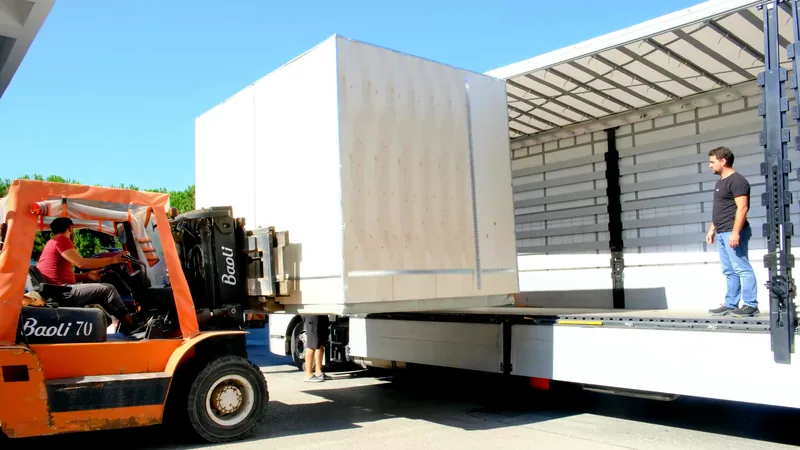
Size
Feeding, assembly, measuring and packing on one base that still fits a truck trailer, so the machine leaves our hall as one piece.
Final inspection and packagingWhat we draw, what we buy
After the robot, machining and sheet metal are our biggest costs, yet we own no CNC machine or welding shop.
Drawn by us
Mechanical design, electrical and pneumatic engineering, the safety concept and its documentation, the gripper and the fixtures the cell needs.
Made by specialists
Sheet metal cutting, welding, painting, large steel structures and some CNC machining, by suppliers who do nothing else.
Why we split it that way
We measure our savings by how well we do our own work, not by owning a press brake. The drawings, and the responsibility for them, stay here.
- Also in Plan
- Investment Consulting · Simulation
- All nine
- How we work: the nine capabilities and the loop they form
Send us the part
A photo, a drawing or a sample tells us most of what the gripper will have to do. The machine and the hall tell us the rest.
Talk to an engineer