
Investment Consulting
The expensive mistakes in a robot project are made before the order: the wrong first application, a concept sized for a target that does not pay, a cycle time taken from a catalogue. We spend the first weeks on exactly that, in your plant, before we quote.
From the shop floor to a roadmap
Five steps, in this order. Most of them happen in your plant, with your operators, before anyone opens a CAD program.
- Process and habit analysisHow parts are loaded today, what the machine waits for, how setups and shifts really run. We watch the line; we do not only read the drawing.
- Goals and the investment viewCapacity, quality, staffing, lead time, risk: which of them the robot has to move, and by how much.
- Concept optionsTwo or three concepts at different levels of technology, capacity and budget. The simplest one that scales is usually the right first step.
- ROI and OEE per conceptThe cycle time assumptions are checked, often in a simulation, and the return and the OEE effect are worked out for each concept, not for a robot in general.
- People and organisationWho runs the cell, who maintains it, who teaches it a new part: the roles, the staffing and the profiles, written down before the order.
What we have learned to say early
Two hundred projects leave patterns. These are the ones that come up in almost every first meeting.
- 01
Measure before you buy another machine
In the worked example on our blog, the same CNC runs at 54% OEE with manual tending and at about 89% with a robot feeding it. The machines you have usually hold more capacity than a new one would add, and a robotic cell is the cheaper way to reach it. So the first number we ask for is the OEE of the machine you want to automate.
- 02
Start where it will scale
Not the hardest bottleneck: a simple job you have many of. Prove it with one cell, then copy it. Our first robotic cell for a transfer machine went to Torun Metal in 2014; by the end of 2025 we had installed 120 of the 140 robots in their plant.
- 03
The last operator costs the most
Taking a line from twenty operators to ten is a modest project. Taking it to five costs several times as much, and a fully unmanned line many times more again. We put the target where the return is, and we say so when the target you have in mind sits past it.
- 04
Count the machine, not the robot
A machine waiting for the robot is a loss; a robot waiting for the machine is not. One robot for two machines looks like a saved robot, but it needs more reach, gets bigger and slower, and in our experience costs 1.5 to 1.8 times as much as a one-machine cell.
- 05
Sometimes the answer is no
One customer asked us to automate the counting of zipper parts. After the analysis, the whole day’s work turned out to take one operator two and a half to three hours, and the payback came to about 40 years. We said so, and the project was not built.
- 06
Simple first, on purpose
A cell with an operator laying parts on a belt and a camera finding them is often the better first concept than a bin-fed system that never needs the operator: it costs less, it starts sooner, and it earns the next project. We offer both and tell you which one we would buy.
Where to see it
Three decisions that were made in the consulting phase, and the cells they became.
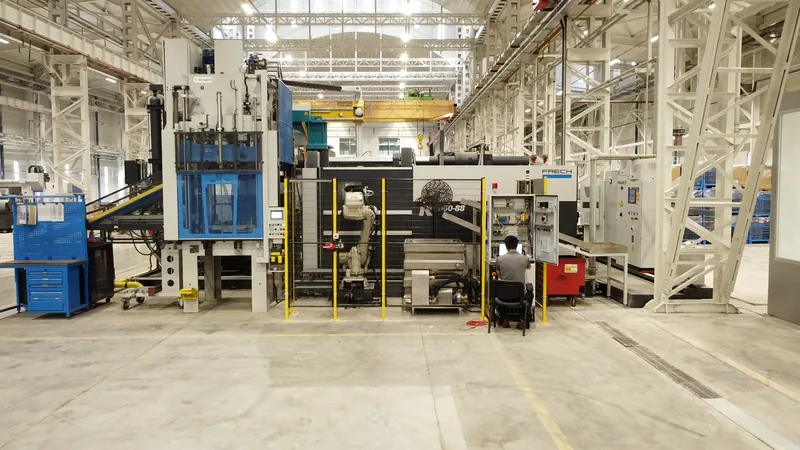
One cell, then thirteen more
A die caster invested in fourteen machines. We built the first robotic cell, proved it at one machine, and then built the cells for the other thirteen.
Die casting extraction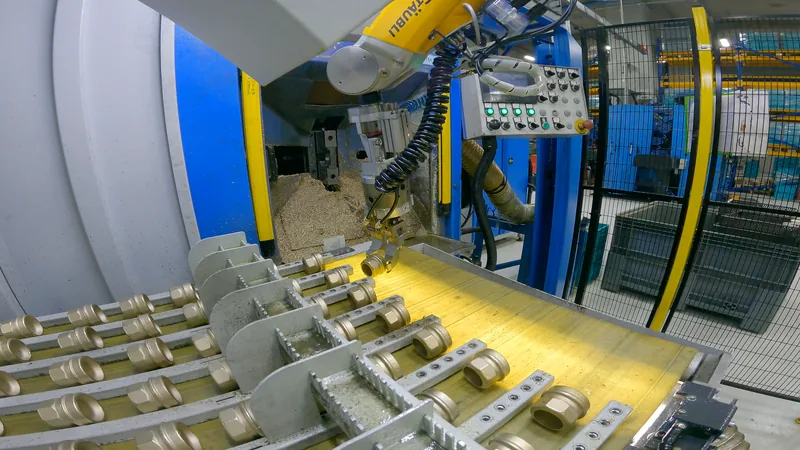
The simpler concept, chosen on purpose
At KAS Group the operator still lays the parts on the belt and the cell runs on half an operator. A bin-fed system was the other option; this one started sooner.
Transfer machines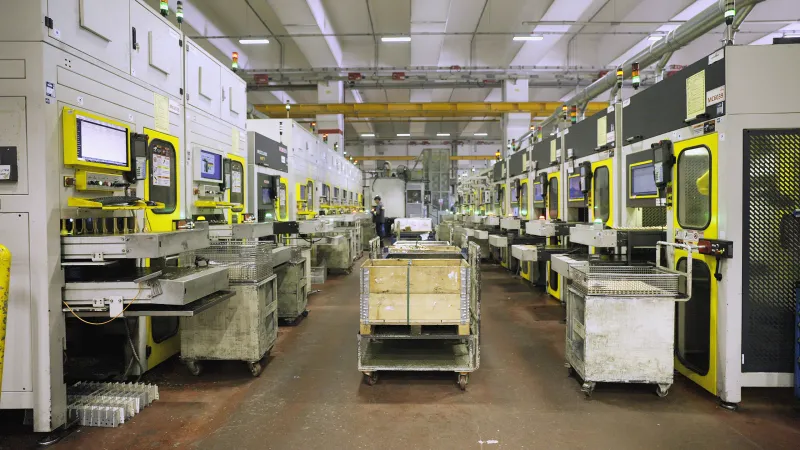
One cell, then sixty
Torun Metal: 60 Robodrills, 60 IROCUBE cells, 9 operators, grown from one cell by copying what worked.
Machine tending- Also in Plan
- Design · Simulation
- All nine
- How we work: the nine capabilities and the loop they form
Bring us the part, not the robot
Tell us what you make and what your machine waits for. We will tell you whether a robot pays off, which concept we would choose, and what it would have to earn back.
Talk to an engineer