
IROCUBE Mobile: a cobot on an AMR
One robot that drives to the work. IROCUBE Mobile puts a collaborative robot on an autonomous mobile robot, so it can tend several machines in turn, palletize from many stations or carry parts across the plant, with its arm corrected by a camera to ±0.2 mm at every station. No rail, no fixed layout.
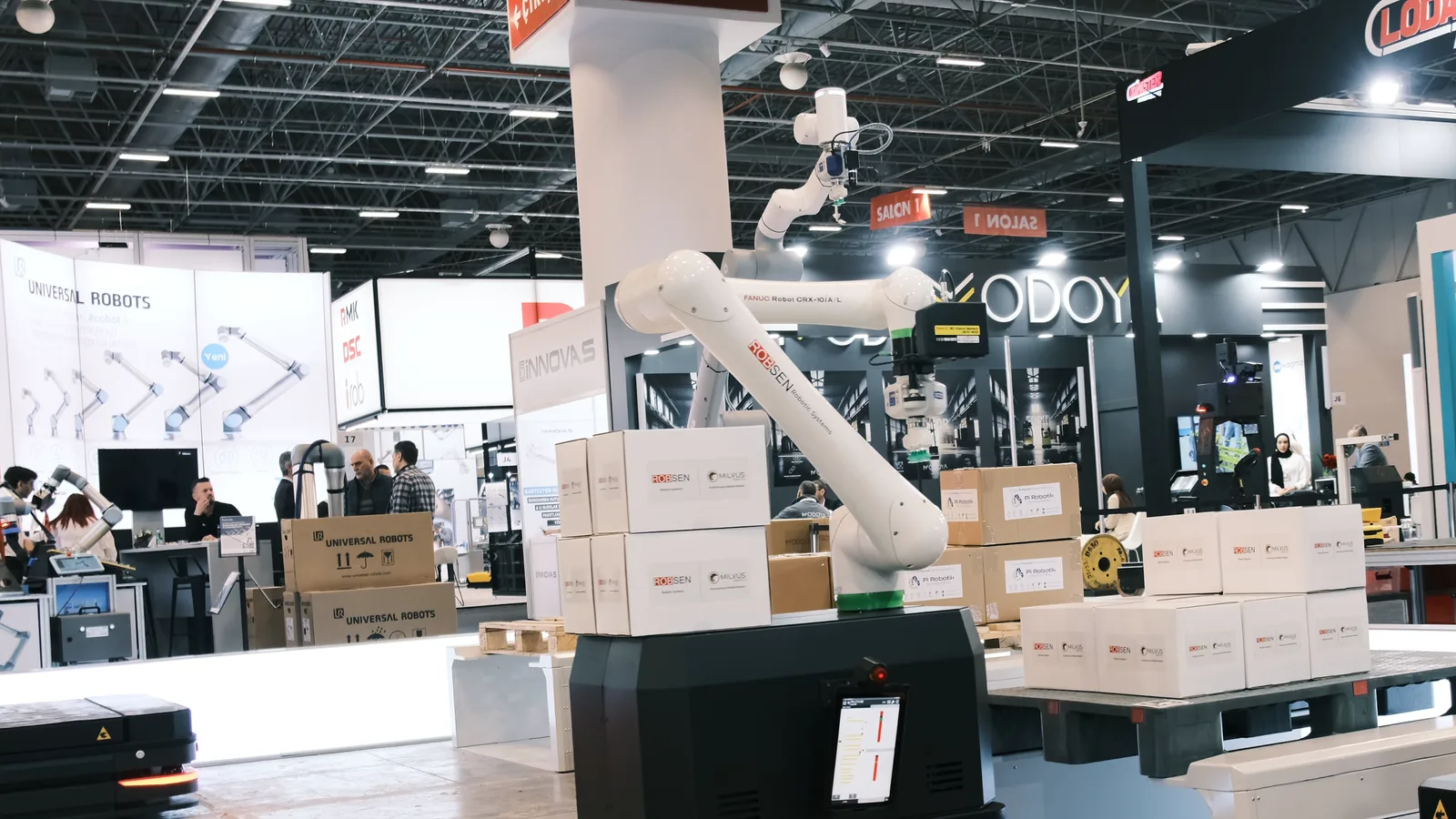
01Arrives and docks 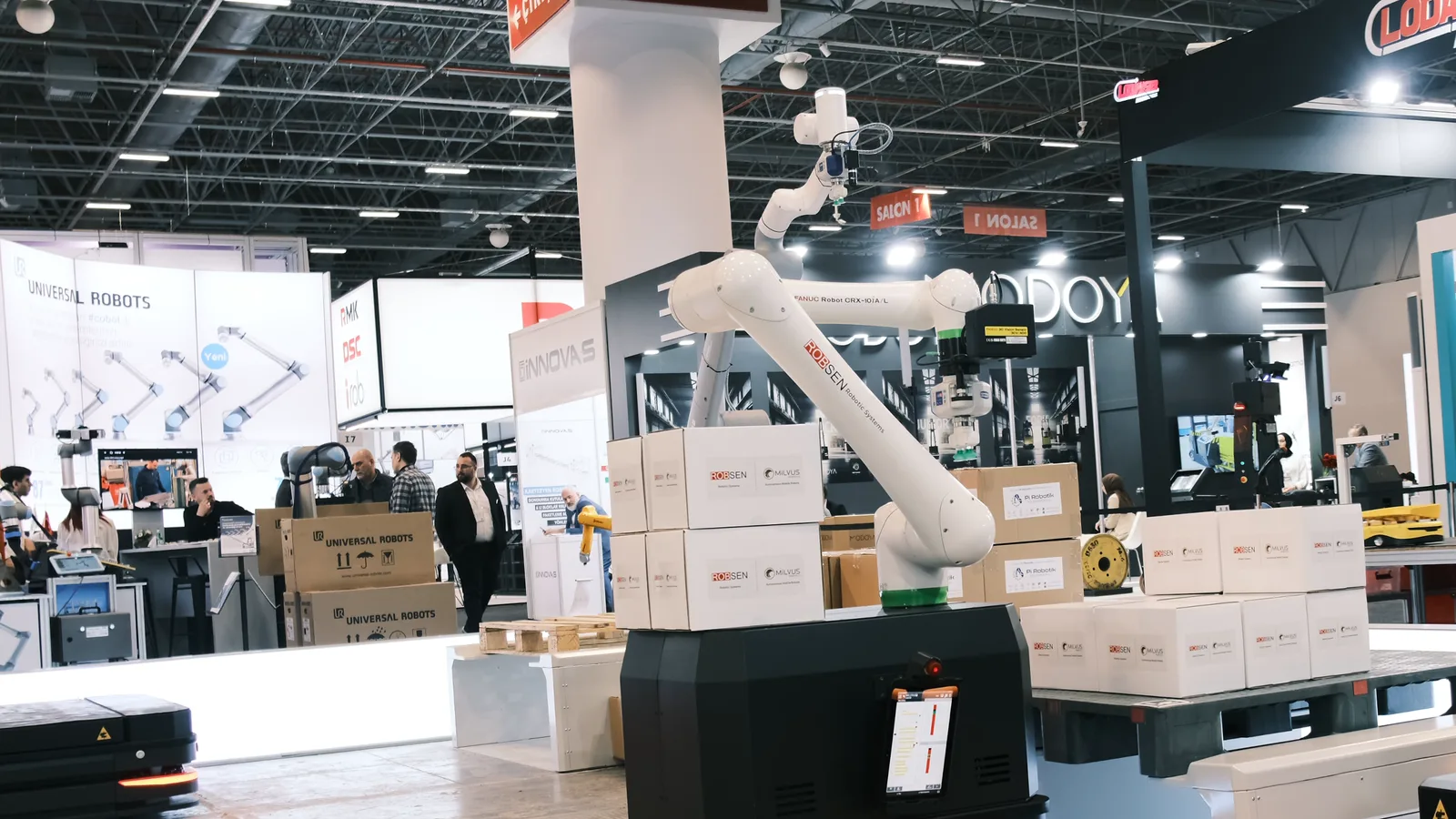
02Reaches for a box 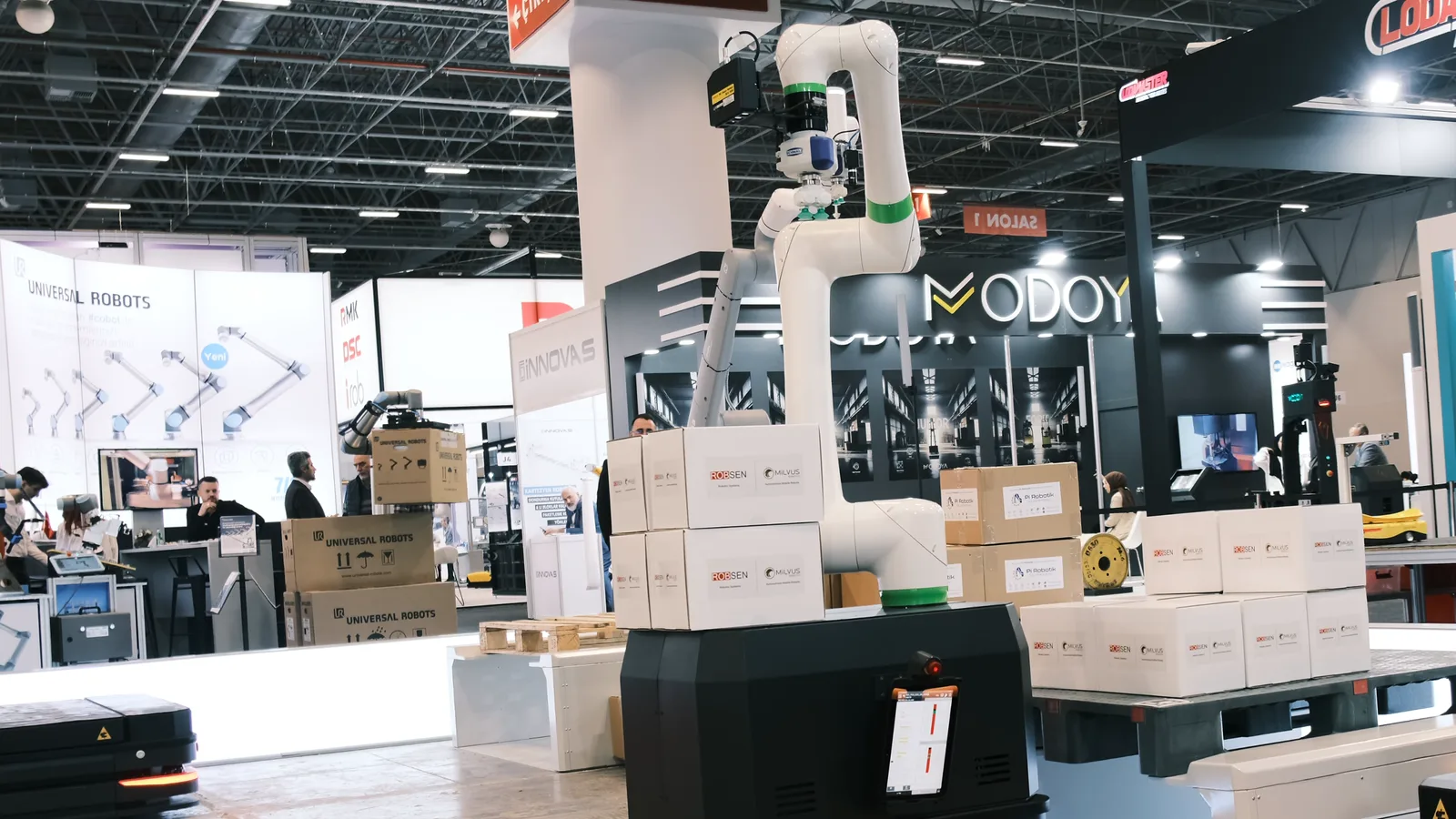
03Picks and places 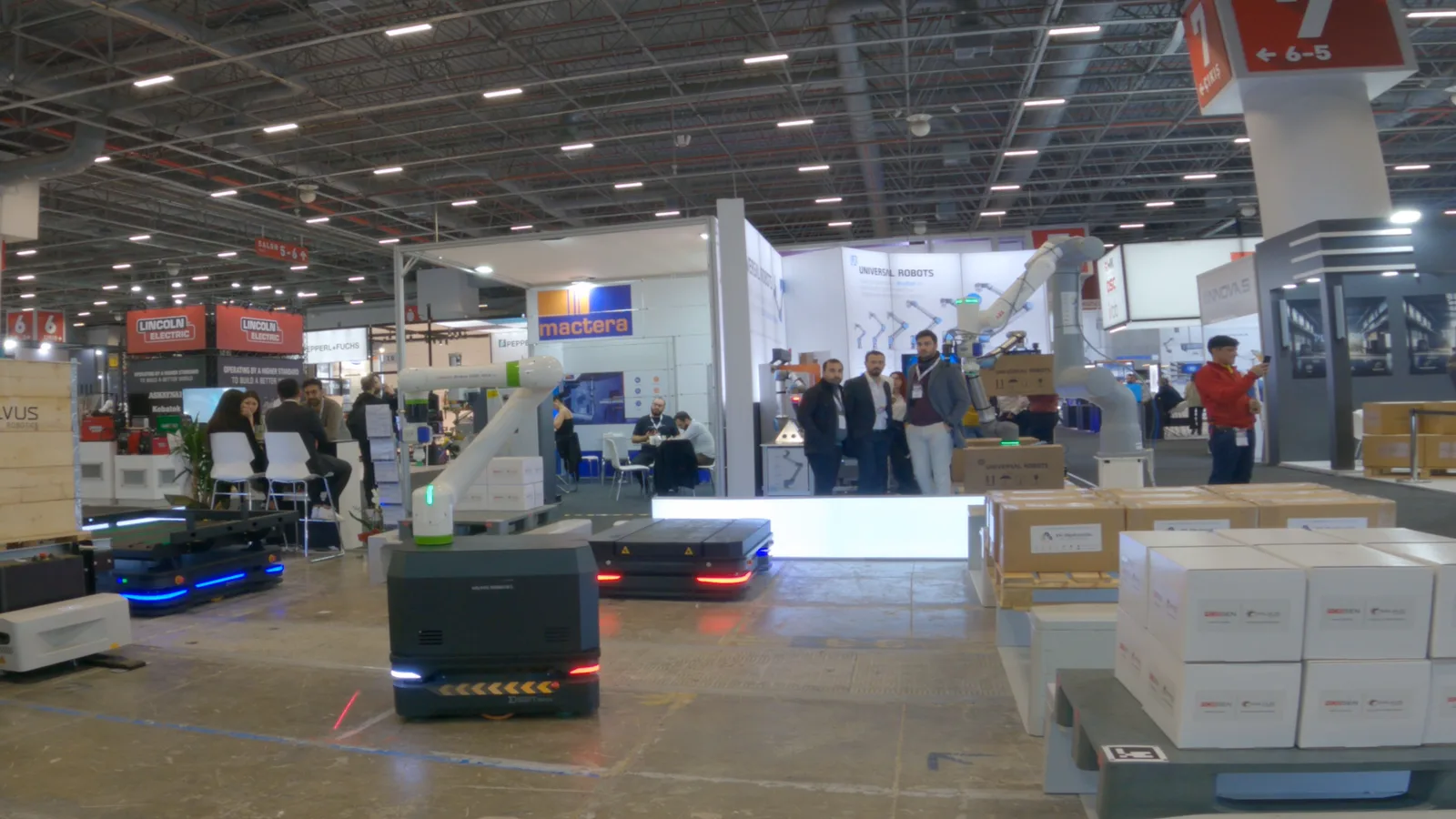
04Across the hall
Three jobs for one mobile robot
The same unit, a cobot on an AMR, does the work that used to need a fixed robot at every station, or a person with a trolley.
Machine tending
Several machines with long cycle times and a changing part mix: one mobile robot loads them in turn, and the layout stays as it is. One robot, multiple machines, zero fixed layout.
Palletizing
Pick from several stations and build the right pallet by destination, order or customer. A new SKU needs no new layout. In the busy season, add another unit.
Intralogistics
Kits from the warehouse to the line, samples to metrology and back, work in progress between lines, a spare part to the technician, rejects to quarantine, with nothing mixed up.
Placed to within ±0.2 mm
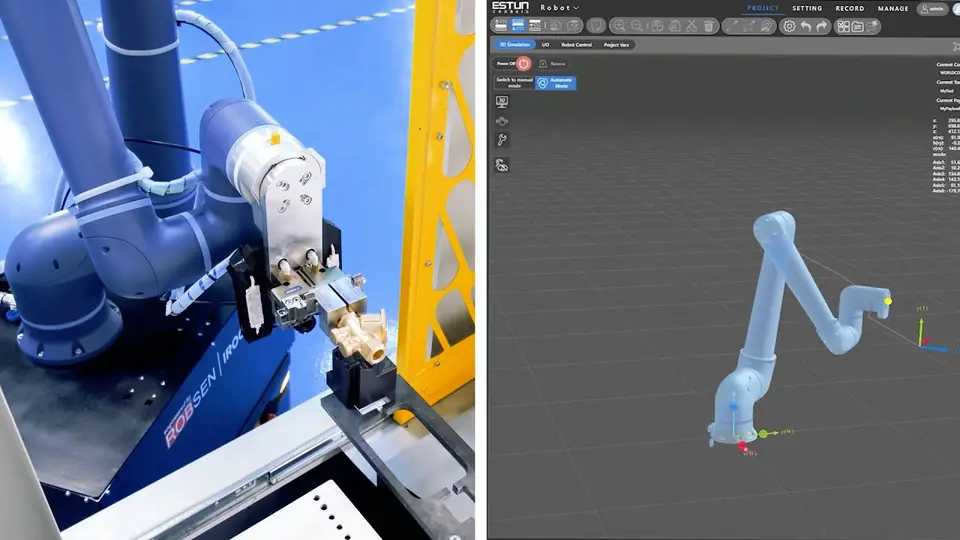
An AMR repeats its position to 2 or 3 mm. That is fine for driving, and not enough for picking a part or loading a chuck. So before every critical move, the cobot checks where it really is.
- 01
Go to the station
The AMR finds its way by LiDAR, wheel odometry and SLAM, with no tape on the floor, and docks at the pick station.
- 02
Calibrate
The camera on the cobot’s tool photographs a calibration target at the station. The offset is updated automatically, in less than a second.
- 03
Pick the part
Every approach is re-aligned before the gripper touches the part.
- 04
Go to the machine, calibrate again
The same photograph at the machine’s target, the same correction.
- 05
Place the part
Loaded to the accuracy the machine needs, whatever the AMR’s exact stop.
- AMR repeatability
- 2–3 mm
- At the pick and place points
- ±0.2 mm
- To recalibrate
- < 1 s
A robot on a rail, or a robot on wheels?
A seventh axis, a rail, is the usual way to give one robot several machines. We have built both. Here is why we put the robot on an AMR when the cycle allows it.
| Rail robot (7th axis) | Mobile cobot (AMR and cobot) | |
|---|---|---|
| Accuracy | Repeatability driftsWear and backlash reduce the accuracy over time. | Stays consistentAuto-calibration keeps the pick and place points aligned. |
| A stop | One stop stops allMaintenance can pause the whole rail line. | One stop doesn’t stop allThe other stations keep running during an intervention. |
| Layout | The layout serves the railMore space, more guarding, less flexibility. | No rail, no fixed layoutWorks with the plant as it is today. |
| Scaling | Not modularMore capacity means more rail and more complexity. | ModularAdd another mobile unit when demand rises. |
| Scheduling | More machines, more conflictsTravel time and collisions complicate the cycle planning. | Less conflict, more controlThe fleet software coordinates routes and missions. |
Efficiency is not one robot for many machines. It is flexibility.
Many stations, many pallets, one system
Several mobile cobots, many pick-up points, mixed box types: FleetBridge, the task management software behind IROCUBE Mobile, keeps it all organised, live.
- 01
Task dispatch
Assigns jobs automatically by station, order, pallet or destination.
- 02
Task optimization
Balances the workload to cut waiting and keep the throughput steady.
- 03
Path optimization
Picks the best route in real time, around traffic and obstacles.
- 04
Fleet coordination
Shares status and splits the work, so units don’t conflict or overlap.
- 05
Priority and recovery
Re-ranks the tasks when a cobot is charging, paused or in maintenance, and hands its work to the others.
- 06
One gripper for mixed boxes
For palletizing, one servo gripper with force control carries boxes of different sizes and weights, so the stations need no change of tooling.
IROCUBE Mobile at work
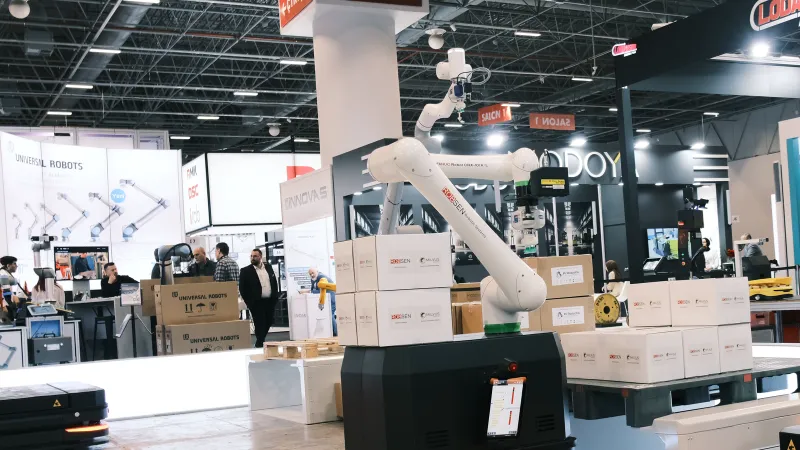
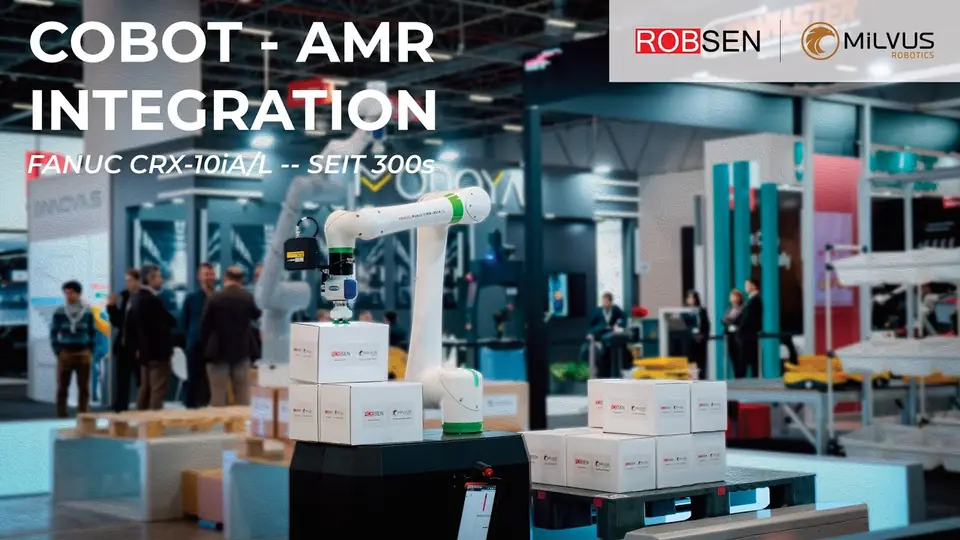
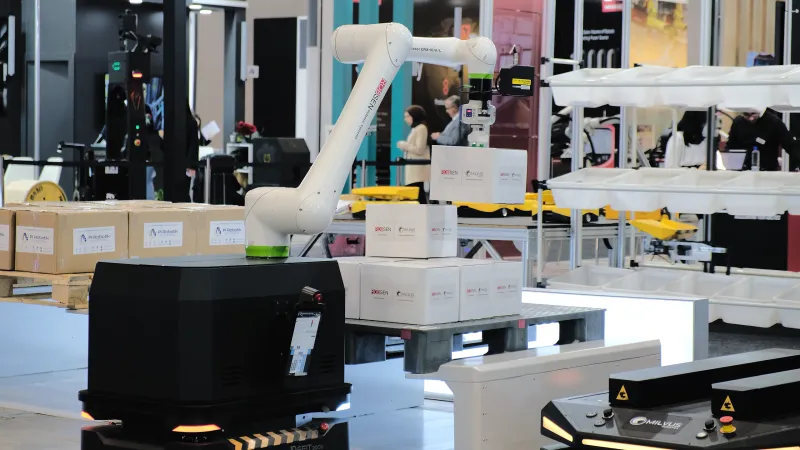
Filmed at a trade fair: the mobile robot shuttles between two stations, picks a box at one and stacks it at the other. Nearly five minutes of the demonstration in twenty seconds.
Built with Milvus Robotics
Our AMR partner since we put our first FANUC CRX cobot on one of its robots in 2024. Milvus Robotics, founded in Ankara in 2011 with an office in Atlanta, builds the SEIT mobile robots under IROCUBE Mobile and the fleet manager that runs them.
- Milvus robots in the field
- 1000+
- Countries
- 30+
- AMRs in one fleet
- 100+
- Projects delivered
- 200+
- Of our projects are vision-guided
- 95%
- FANUC Authorized System Integrator
- Since 2025
- First cobot on an AMR
- 2024
IROCUBE Mobile in brief
- Application
- Machine tending, palletizing, intralogistics
- Solution
- Mobile Robot Solutions
- Cobot
- FANUC CRX series, from the CRX-5iA to the CRX-30iA
- AMR
- Milvus SEIT 300S, SEIT 500 or SEIT 1500S
- Model names
- Mobile 03-10L: a SEIT 300S with a CRX-10iA/L
- Docking accuracy
- ±0.2 mm at the pick and place points
- Recalibration
- Automatic, by the tool camera, under 1 s
- Navigation
- LiDAR, wheel odometry and SLAM; no tape, no rail
- Fleet software
- FleetBridge: dispatch, routes, priorities and recovery
- Palletizing gripper
- Servo gripper with force control, for mixed boxes
- Delivery
- Set up and tested at our plant, commissioned at yours with the targets at your stations, supported remotely afterwards
Questions we are asked
A fixed cell or a mobile one: which pays?
A fixed IROCUBE cell stands at one machine and keeps up with short cycles. IROCUBE Mobile suits several machines with long cycle times, where one robot can load them in turn, and jobs that move: palletizing from many stations, deliveries across the plant. A cobot moves slowly to stay safe around people, so for one machine with a short cycle the fixed cell makes more parts. Tell us your machines, parts and cycle times and we will suggest the one that fits.
How does it dock accurately enough to load a machine?
The AMR itself repeats its position to 2 or 3 mm. Before each pick and each place, the camera on the cobot’s tool photographs a calibration target at the station and the offset is updated automatically, in less than a second. The cobot then works to ±0.2 mm at the pick and place points, whatever the AMR’s exact stop.
Does it need floor tape, rails or a new layout?
No. The AMR navigates with LiDAR, wheel odometry and SLAM, not with tape or rails, so routes can change and the layout stays as it is. A rail robot fixes the layout around the rail, and when it stops, everything on it stops. A mobile unit works with the plant as it is, and when one unit is out, the others keep running.
What happens when a unit stops to charge or for maintenance?
The others keep working. FleetBridge re-ranks the open tasks when a cobot is charging, paused or in maintenance, and hands its work to the units that are free.
Can it palletize mixed boxes?
Yes. One servo gripper with force control carries mixed box sizes and weights, and pallet patterns and missions change with the part mix, without a new layout. It can pick from several stations and build the right pallet by destination, order or customer.
Is a cobot safe without guarding?
A cobot is built to work near people, but the application decides: a sharp part, a hot part or a heavy box still needs its risk assessment. We judge every system by its riskiest piece, apply ISO 10218-2, and test every safety function at the factory acceptance test before the system ships.
Tell us about your machines
Which machines, which parts, which cycle times, and how the plant is laid out. We will tell you whether a mobile robot fits, how many units the work needs, and what the cell at each station looks like.
Talk to an engineer