
Hot forging press tending
Robots carry the hot billet from the induction heater into the die and the forged part out to cool. The press keeps its rhythm, and nobody has to stand at it.
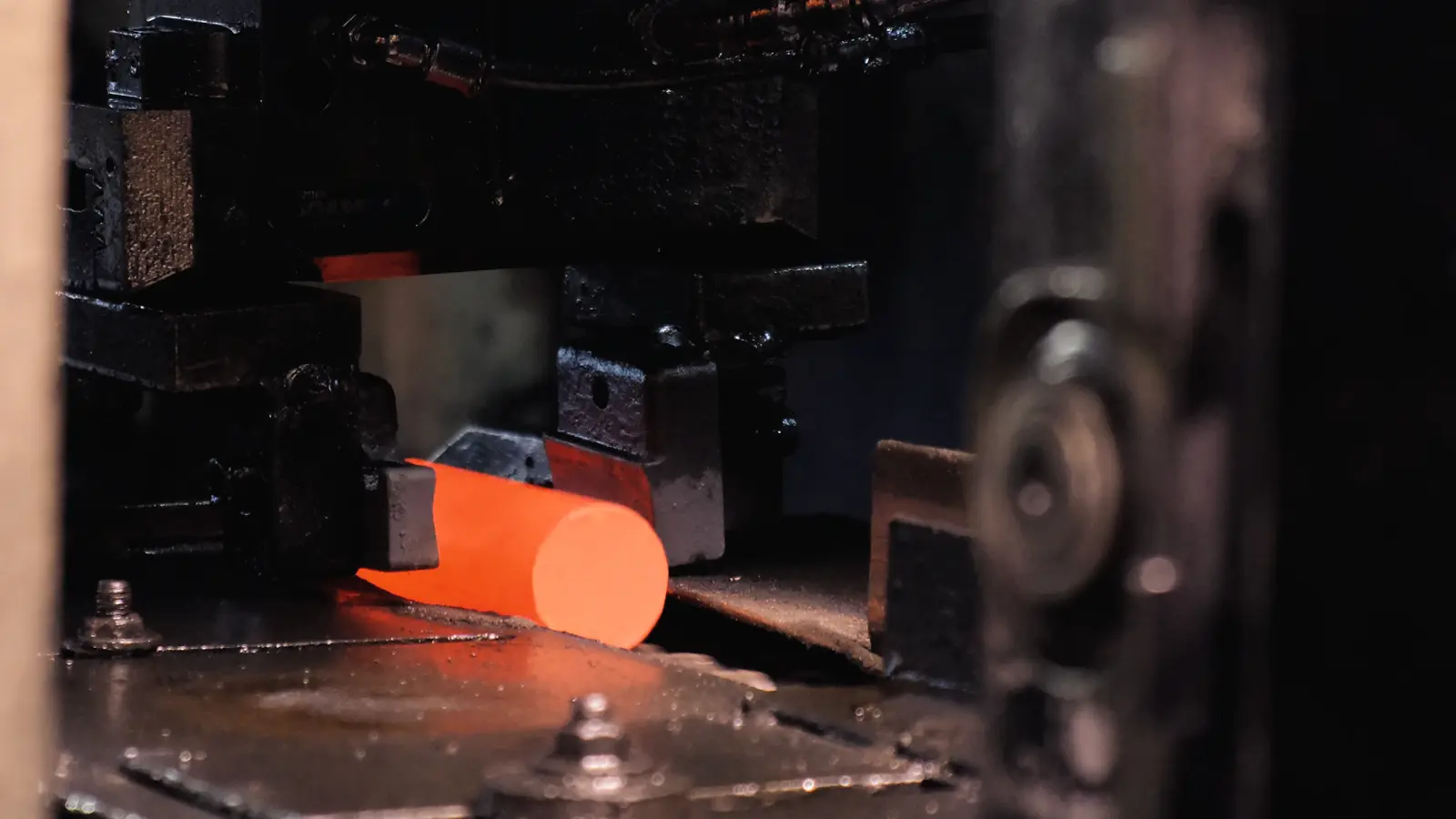
01Out of the heater 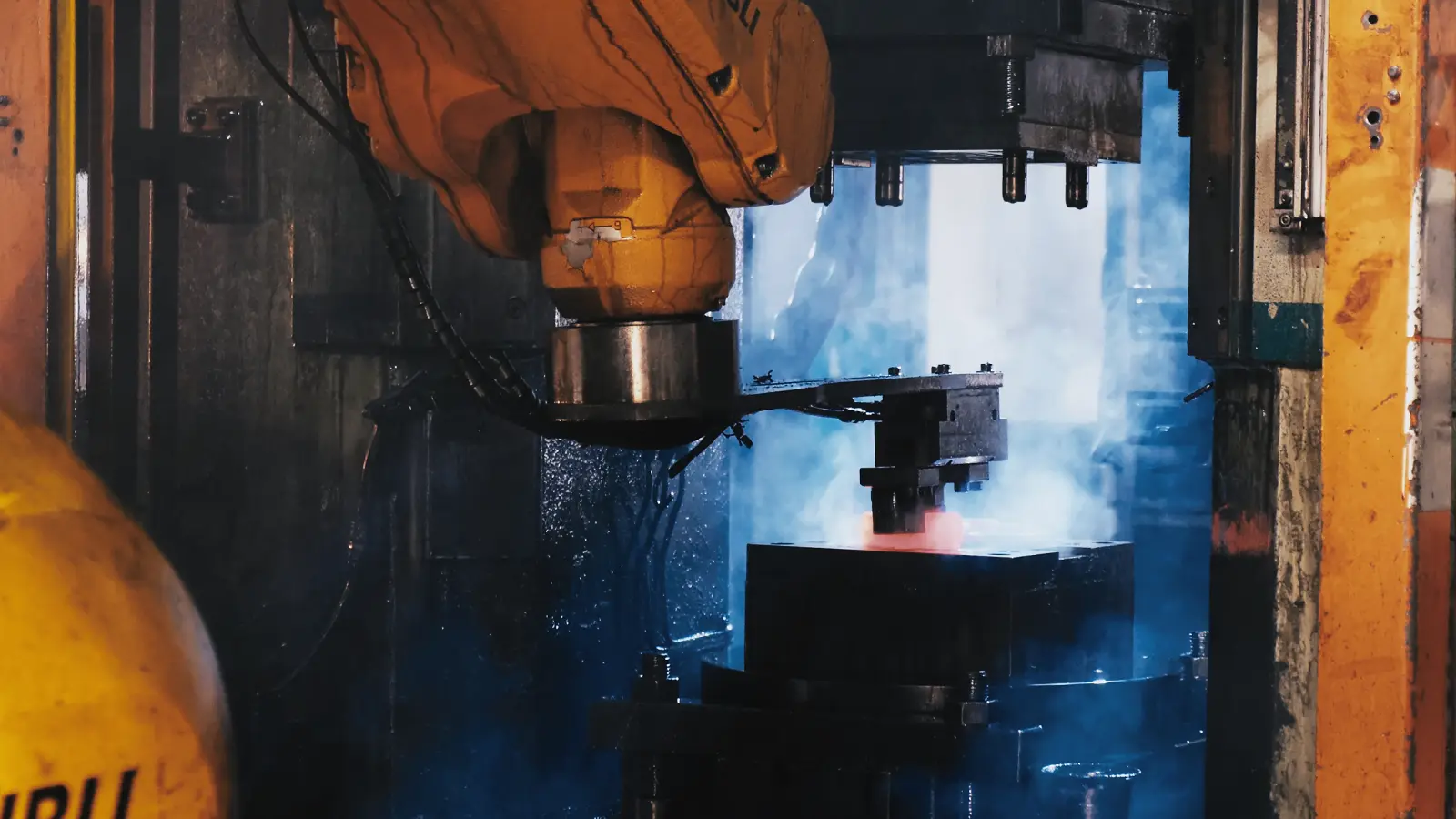
02Into the die 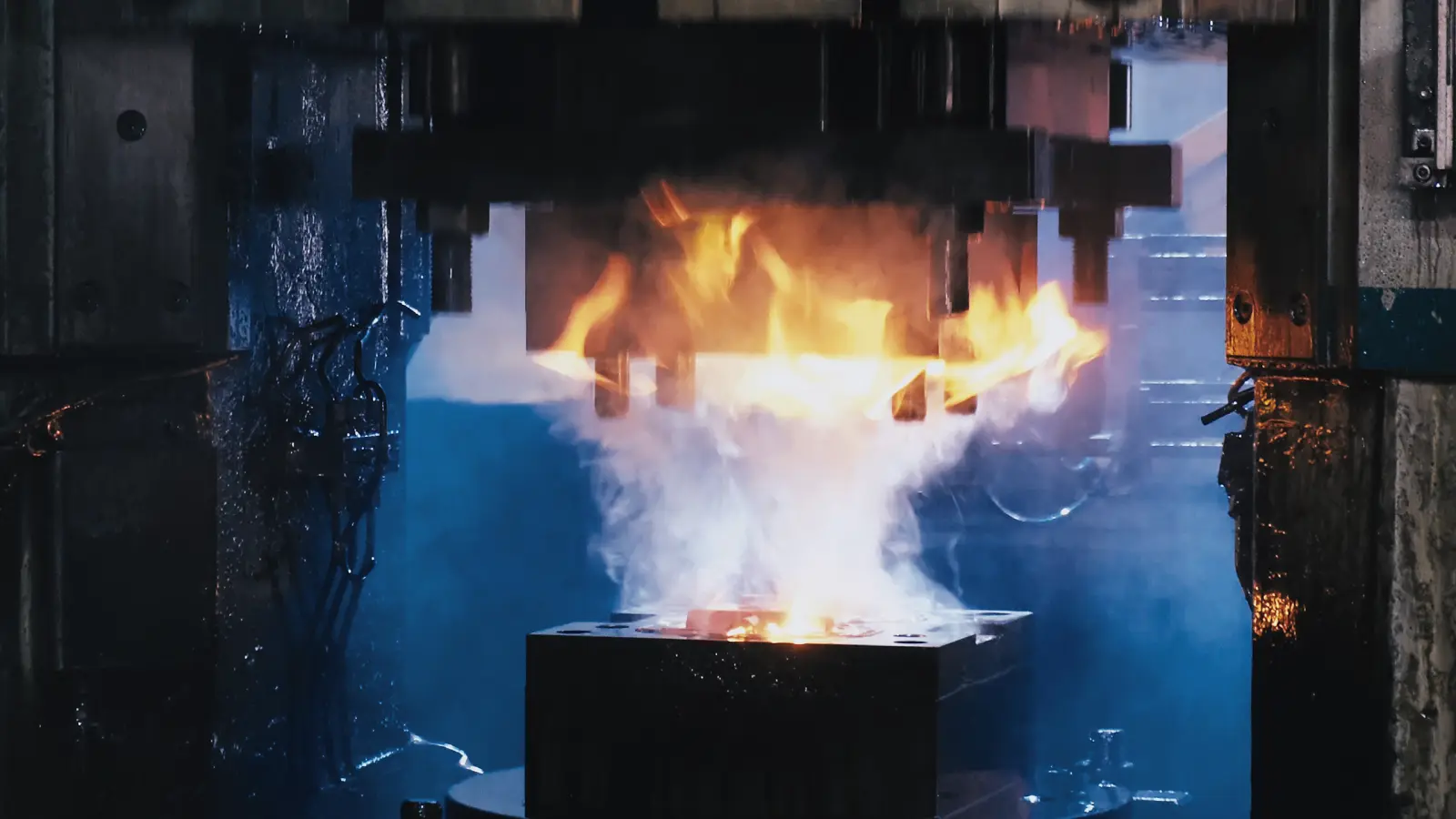
03The stroke 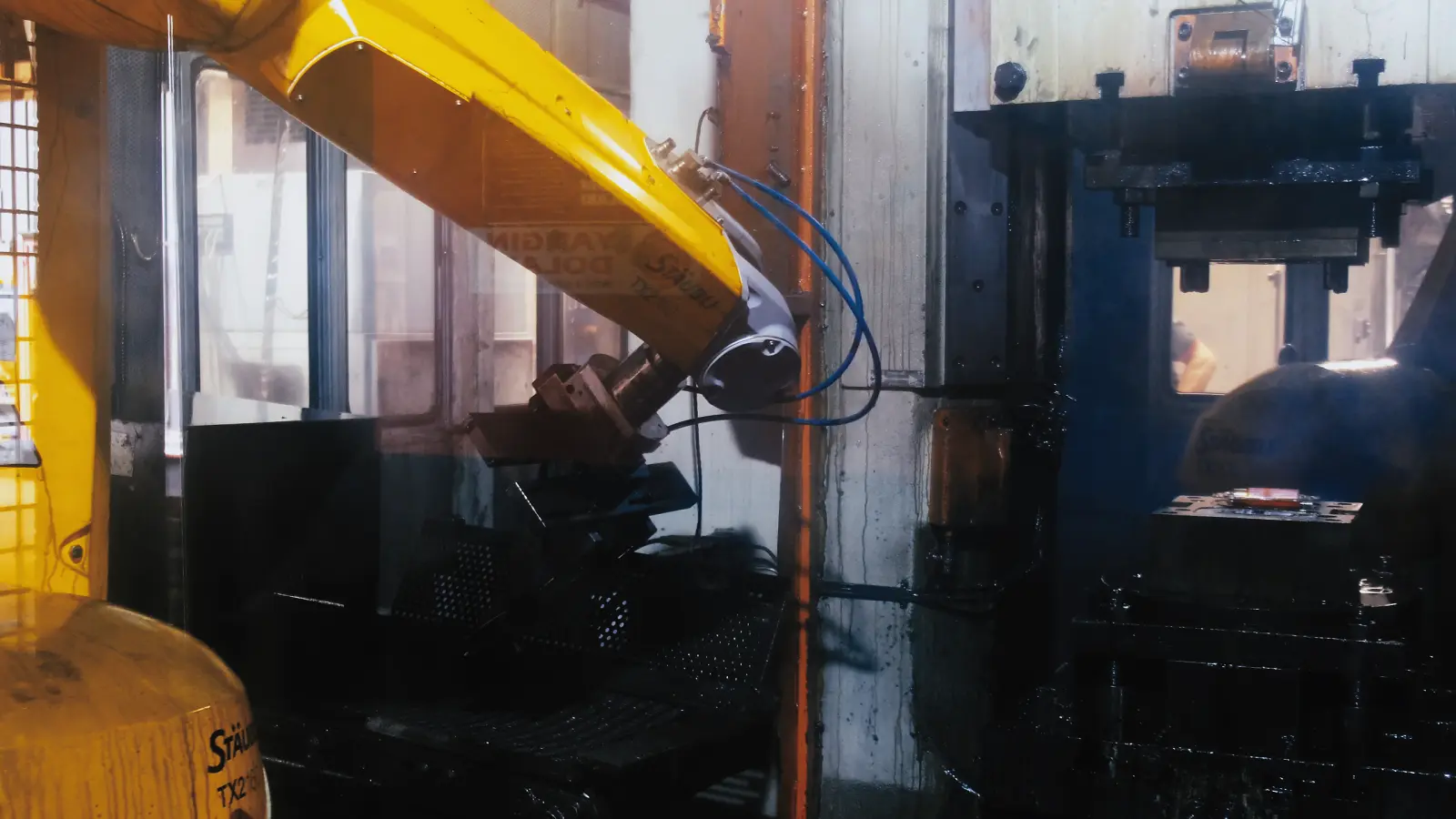
04Out to cool
Let the robot take the heat
Feeding a forging press manually means glowing billets, oil mist and the same reach every few seconds. With a robot at the press, the operator keeps a safe distance and looks after the whole cell instead.
Out of the heat
No hands near a glowing billet or a closing press.
Out of the dirt
Scale, smoke and oil mist stay at the press.
Out of the routine
The robot repeats the same move all shift; people do the work that needs them.
From the heater to the bin
The drawing shows one of our cells at work: a robot on each side of the press.
The drawing runs slower than the real cell.
- The induction heater brings each billet up to forging temperature.
- Heat-resistant conveyors carry the billets out one at a time, spaced apart, and stop each one in front of the robot. On the way, the temperature of each billet is measured. A billet outside its range is set aside into a reject bin, so only billets at forging temperature reach the die.
- The robot takes the billet and lays it in the die.
- The press forges it, and the forged part is taken out on the other side.
- The parts cool along a corridor of fans and drop into the bin.
One robot or more. We size the cell to the cycle you need: one robot can load and unload, or one loads while a second unloads.
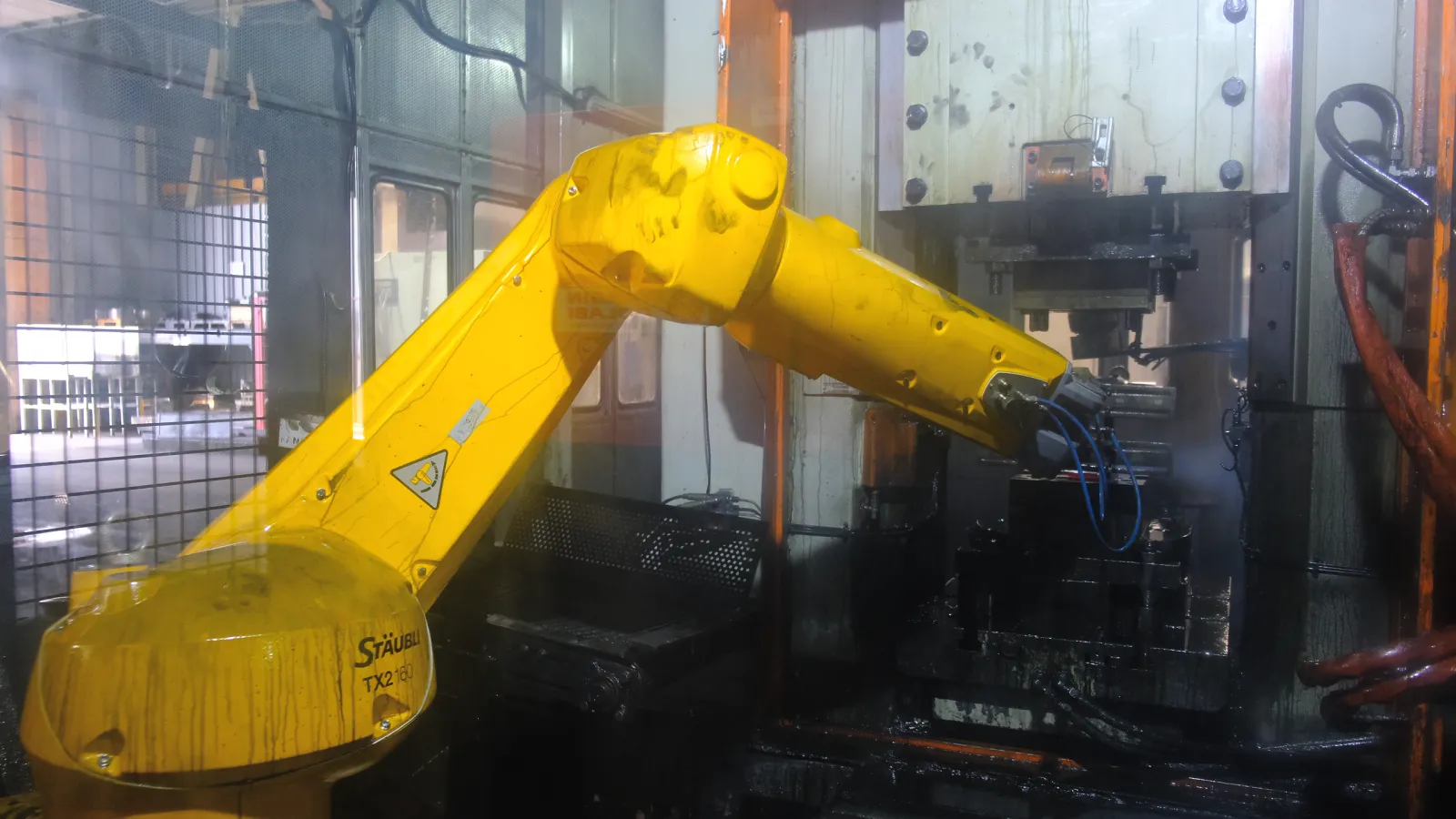
Keeping the robot out of the heat
The heat that is bad for the operator is bad for the robot too. We protect it in one of two ways, or both.
- 01
A protective jacket
The robot is dressed in a cover that keeps the heat and the dirt off it.
- 02
A longer tool
Where there is room, we run a thermal analysis and lengthen the tool, so the hot part stays a safe distance from the robot.
We run this analysis for your part, your press and your layout.
Built around the press
The robot is one part of the cell. Most of the engineering goes into what moves the hot metal to it and away from it.
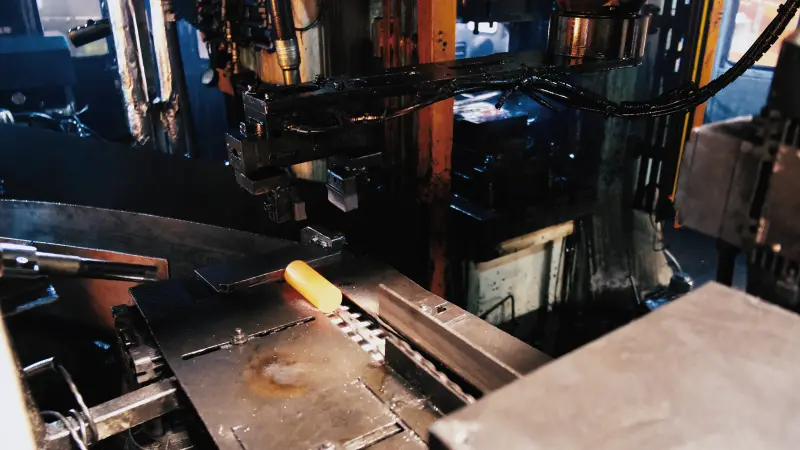
Heat-resistant conveyors
We select, test and build the conveyors that carry the hot billets to the robot.
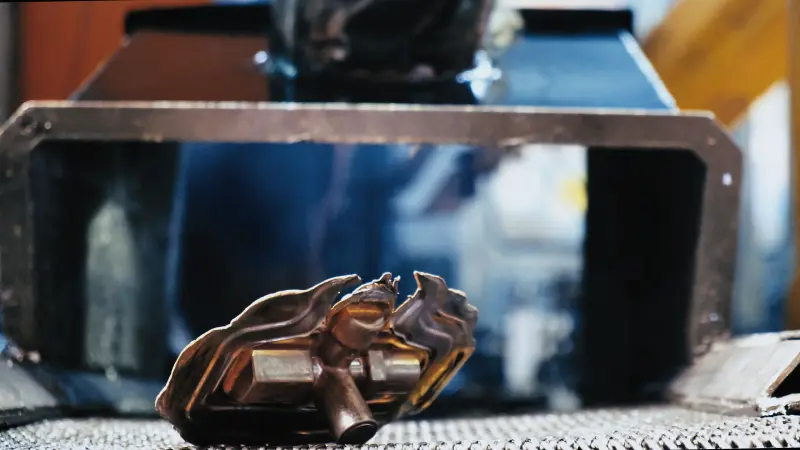
A cooling corridor
Fans along the conveyor cool the forged parts on their way to the bin.

A closed cell
We enclose the cell in sandwich panels. The die lubricant that evaporates on the hot die stays inside, away from the operator.
- Also in the cell
- Furnace exit conveyor, billet temperature measurement, heat protection package, high-temperature gripper. The grippers are designed in house for hot forging geometries.
The cell at work
A hot forging cell we built: loading, forging, unloading and cooling.

Hot forging press tending, the real cellWatch on YouTube
The cell in brief
- Application
- Hot forging press tending
- Solution
- Material Handling
- Cycle time
- Set by a simulation of your cell
- Robots
- One or more, sized to the cycle
- Robot protection
- Protective jacket; a longer tool after a thermal analysis
- Around the robot
- Heat-resistant conveyors, billet temperature measurement, cooling corridor, closed cell in sandwich panels
Next in the line: trimming
The forged part still carries its flash. A trimming line takes it off: bin tipper, vibratory bowl, camera, robot and trim press.
Questions we are asked
What cycle time can we reach?
It depends on more than the robot. Your part, where your furnace and your press stand, and how quickly the press and the furnace answer the robot all change the cycle. So do the robot's position and its tool.
That is why we take the project far enough to simulate the cell with your values, and give you a cycle time that comes out of the simulation rather than a catalogue.
Will it work with our own press?
Share your press's details with us and we will tell you. Even a press that was never meant to talk to a robot can be connected; there are several ways to do it.
One thing every press needs: the dies must open wide enough for the robot's tool to reach in between them. Contact us and we will give you example values for your part.
How quickly can we switch to a new part?
Most billets are cut from bar stock, so moving to a new part in the same family takes a few quick adjustments on the gripper fingers.
Do you test the cell before it ships?
Yes. The cell runs at our plant first, in a factory acceptance test, and again at yours after installation, in a site acceptance test.
The right cell starts with your part
The robot, its protection, the tool, the conveyors: each is a careful choice that depends on your part, your press and your cycle. Talk to our team and we will set up the right project with you.
Talk to an engineer