
Final inspection and packaging
Brass fittings come in on trays and leave in cartons. On the way, a robot fits the o-ring, a camera measures every part, the rejects are sorted out and the good parts are packed. One operator keeps it running for hours.
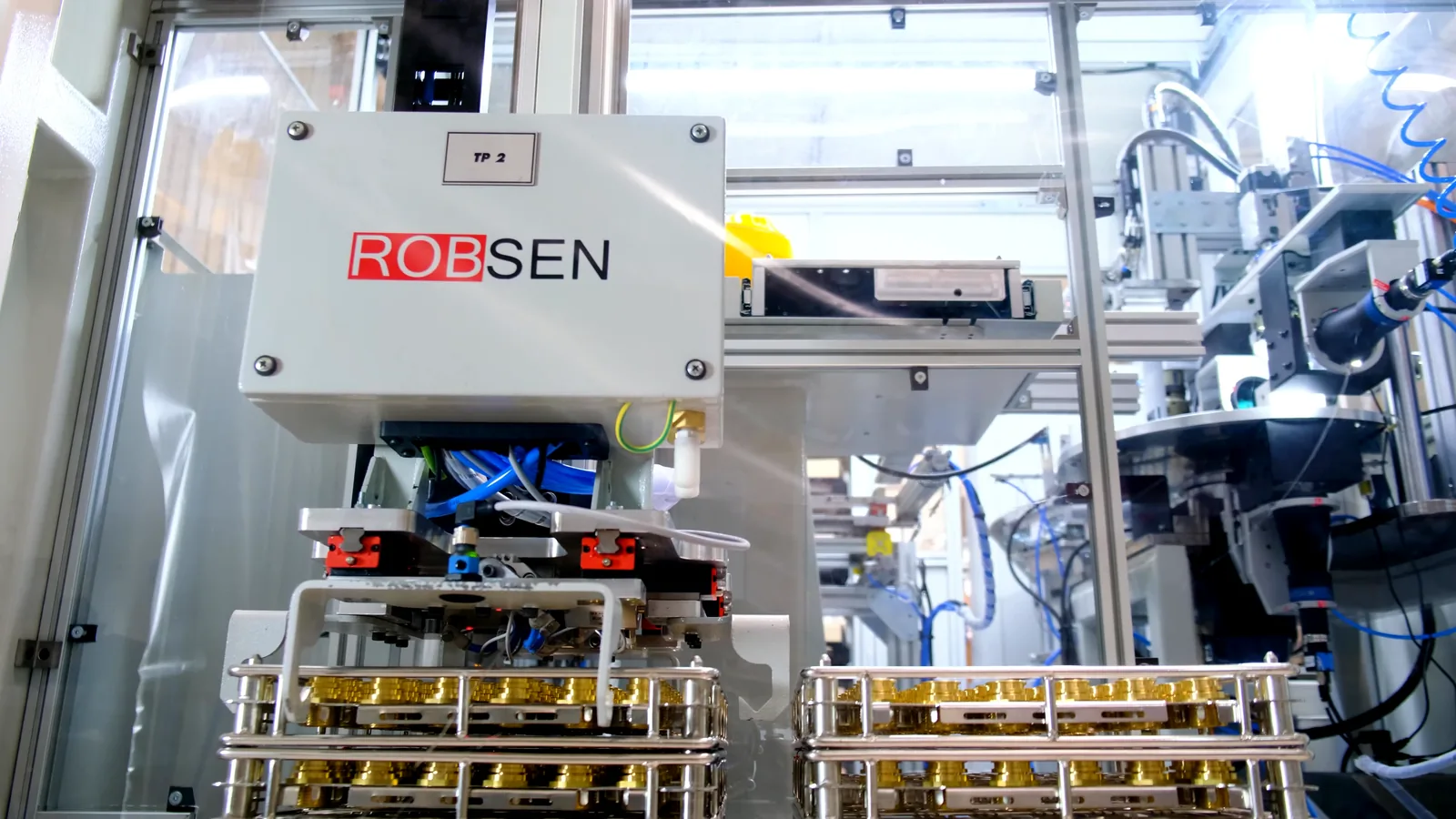
01Trays come in 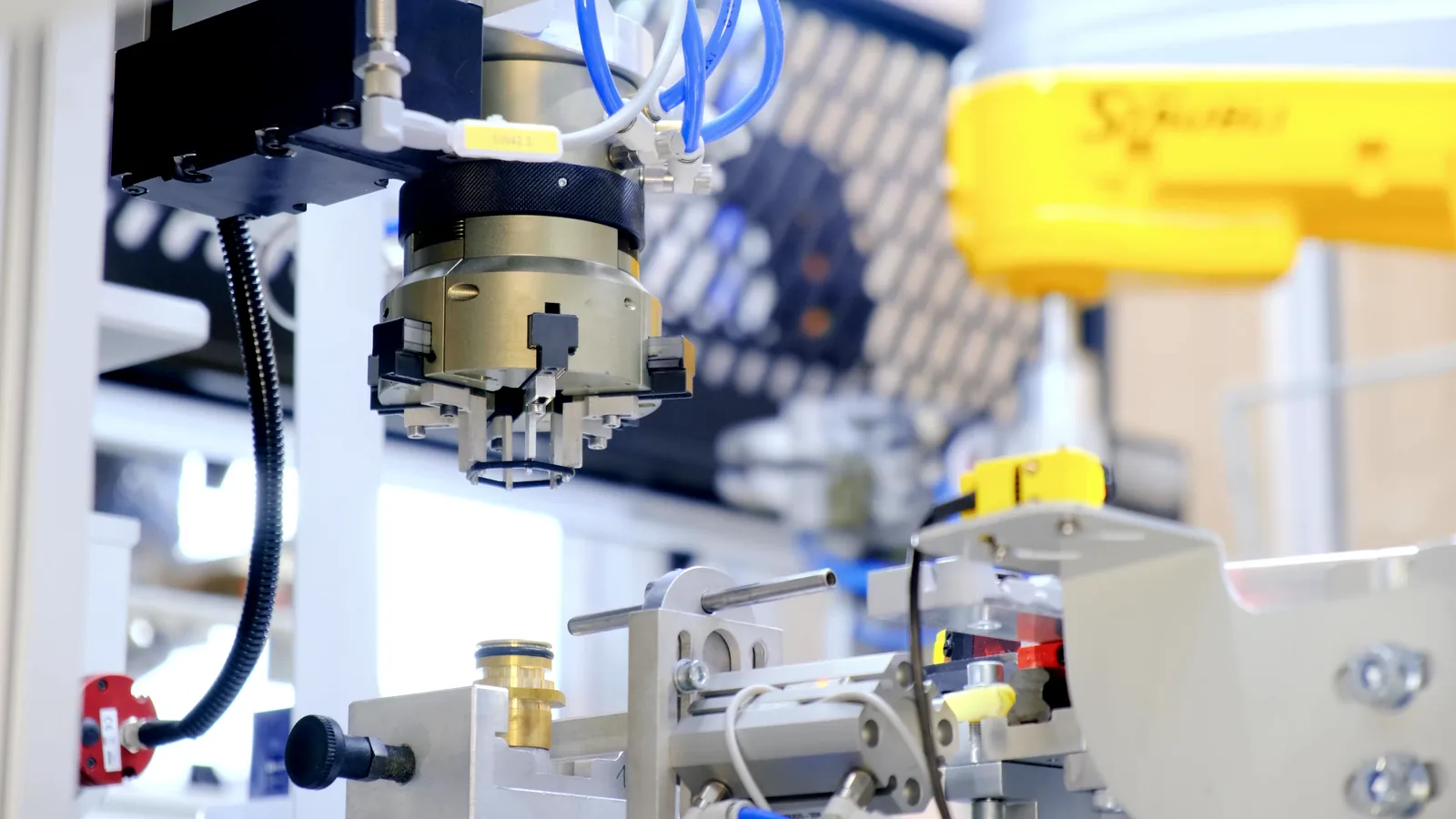
02O-ring fitted 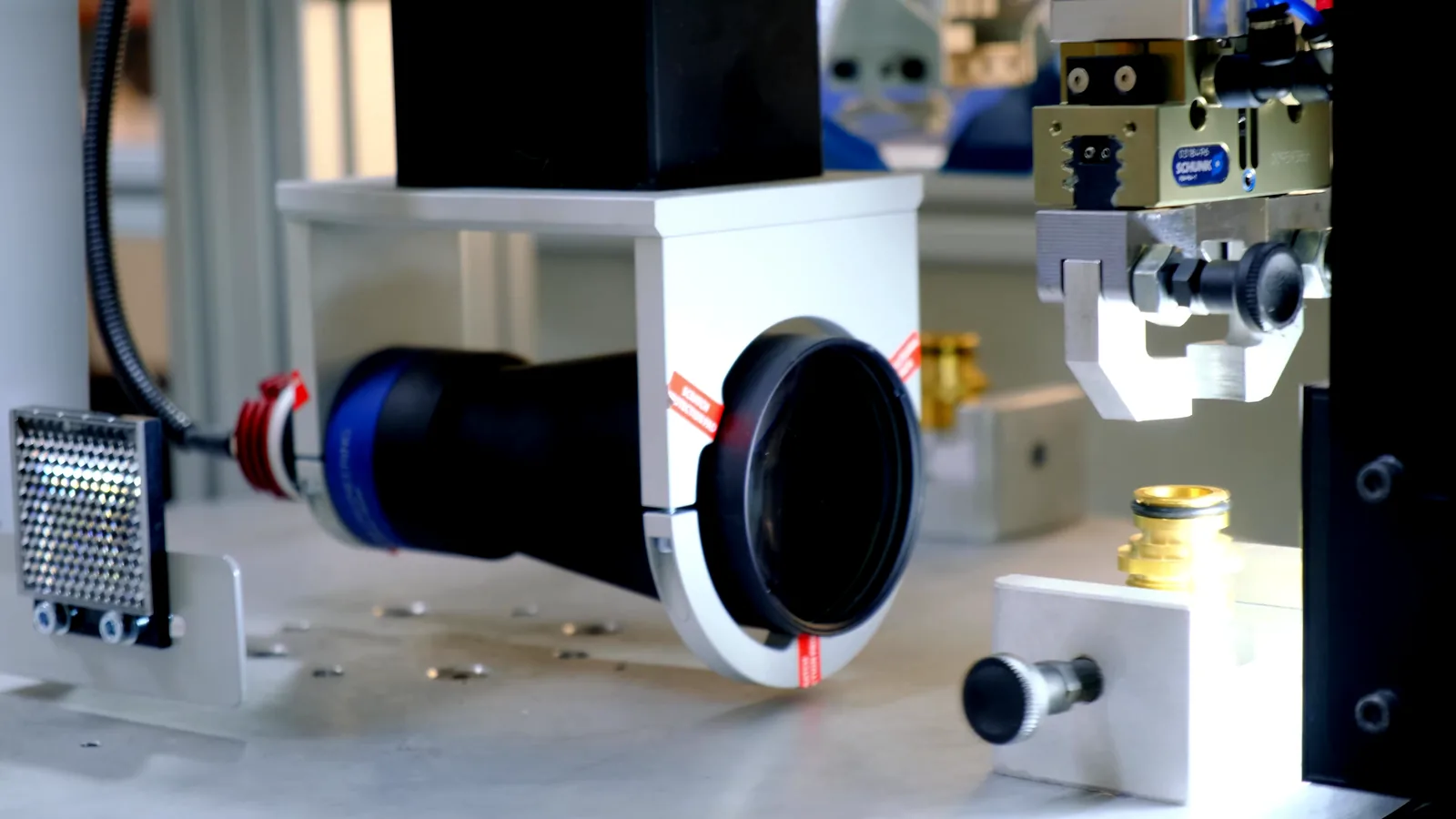
03Measured by camera 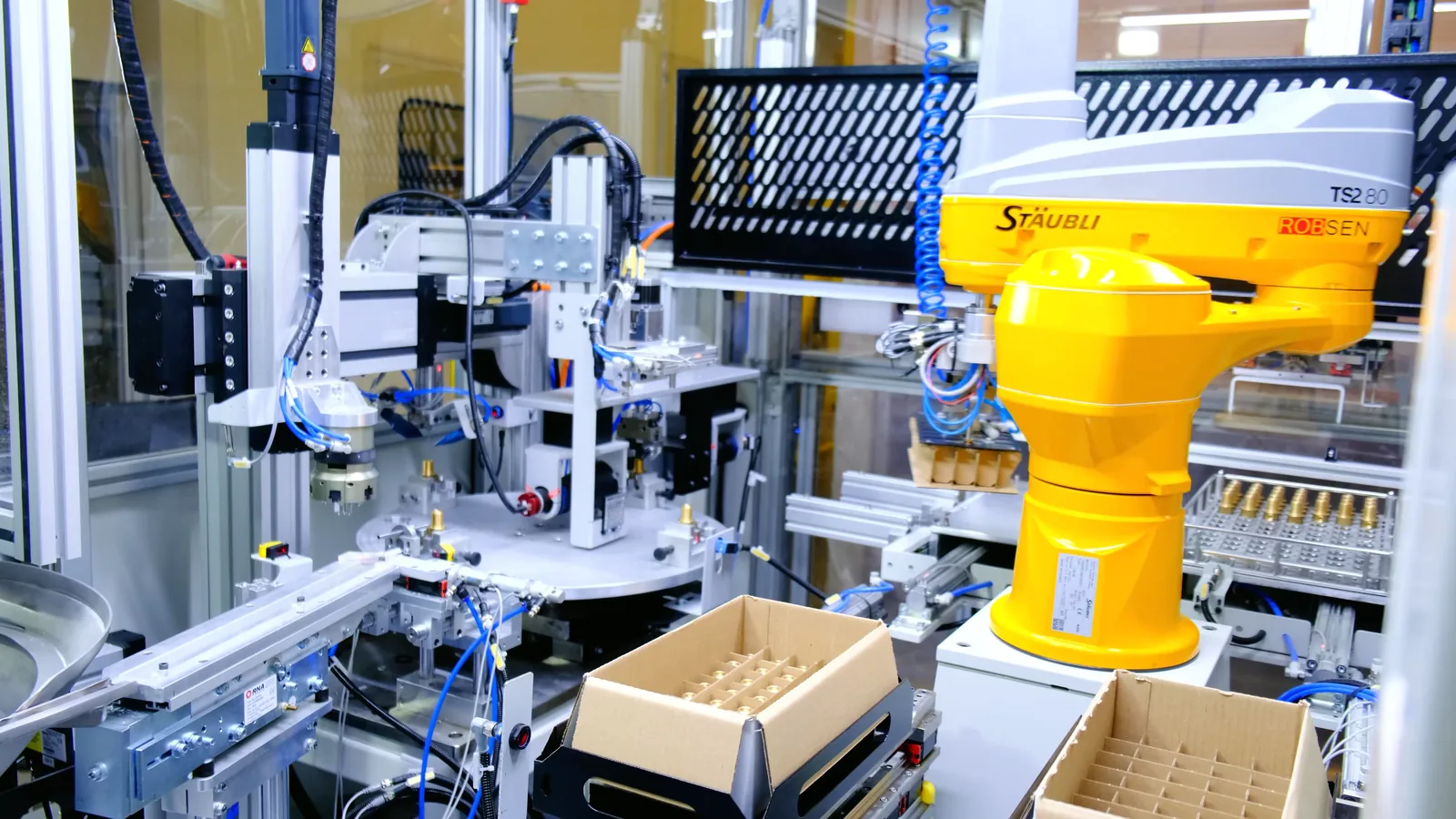
04Packed in cartons
A team’s work, in one machine
Before this machine, a team of seven fitted the o-rings, checked every fitting for surface defects, burrs, holes and threads, and packed them manually. Parts slipped through, and the quality depended on the day.
- 01
Every part, every check
Nothing is checked on a sample. Each fitting is measured and inspected before it may go into a carton.
- 02
The same judgement all shift
A camera does not tire. A part that passes at the start of the shift is judged the same way at the end.
- 03
Rejects sorted by fault
Parts that fail go into trays by type of fault, so you see at once what went wrong upstream.
- 04
One operator
The operator brings trays and takes the full cartons away. The machine does the rest.
From tray to carton
Fittings come from washing in trays. They leave checked, with their o-ring, in cartons ready to ship. Hover over a step to watch it.
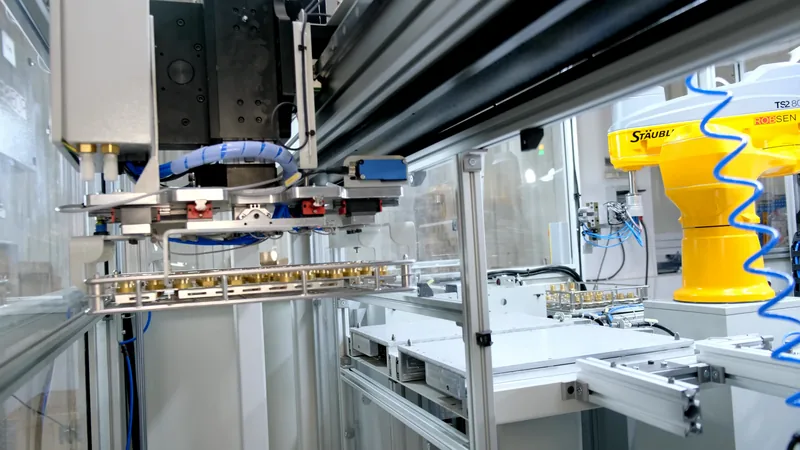
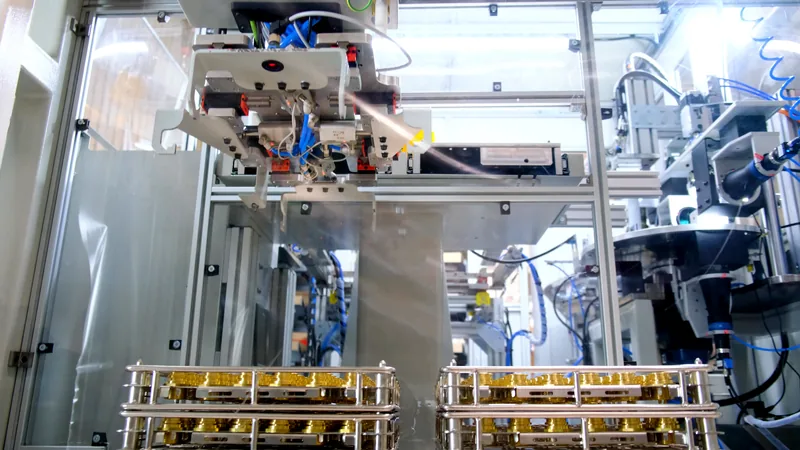
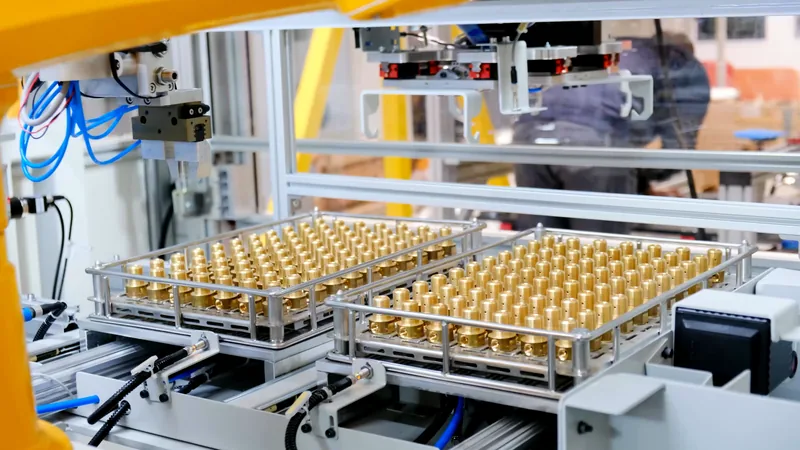
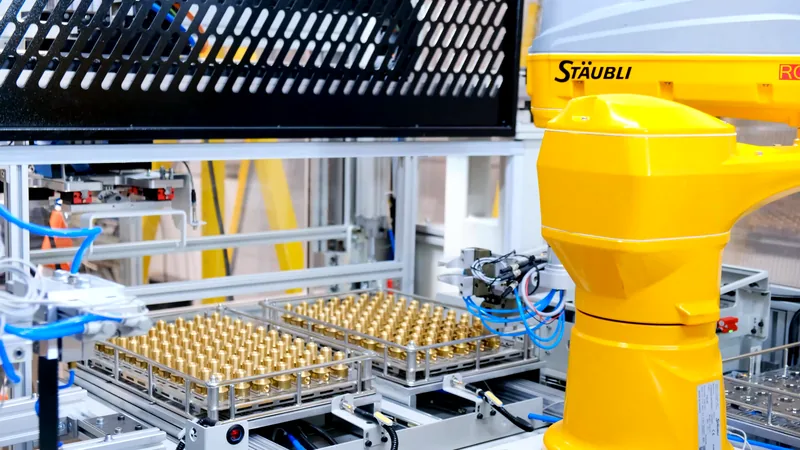
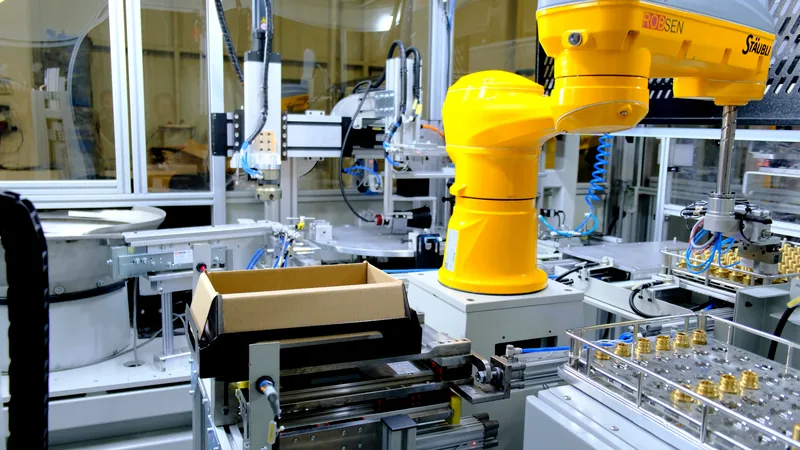
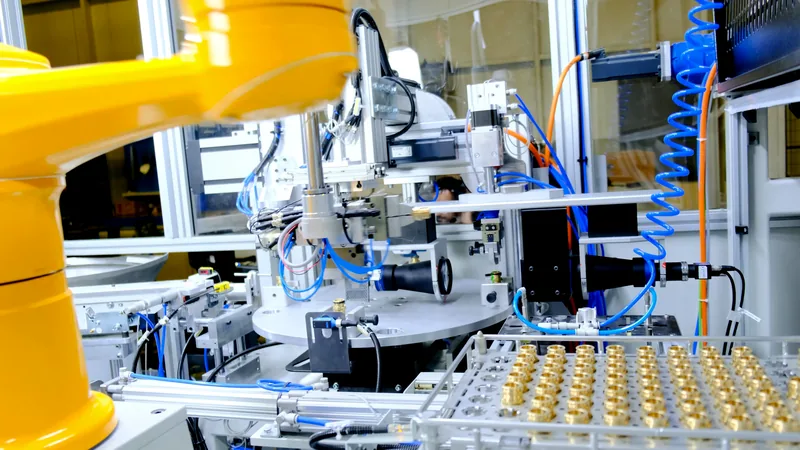
01Trays inA rack holds up to 50 trays, about 4,000 parts. A Cartesian robot brings each tray to the pick position. 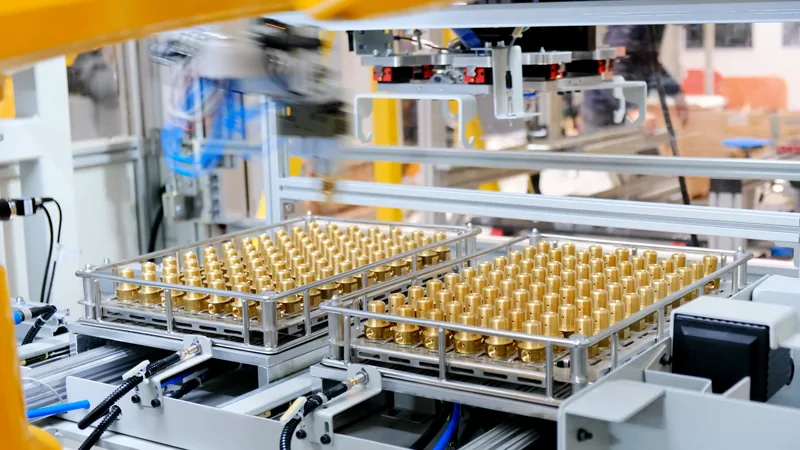
02PickedA SCARA robot takes the fittings from the tray, one by one. 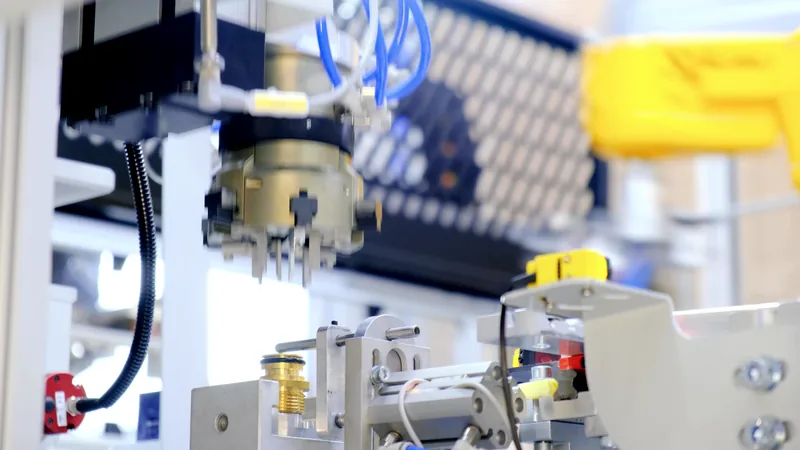
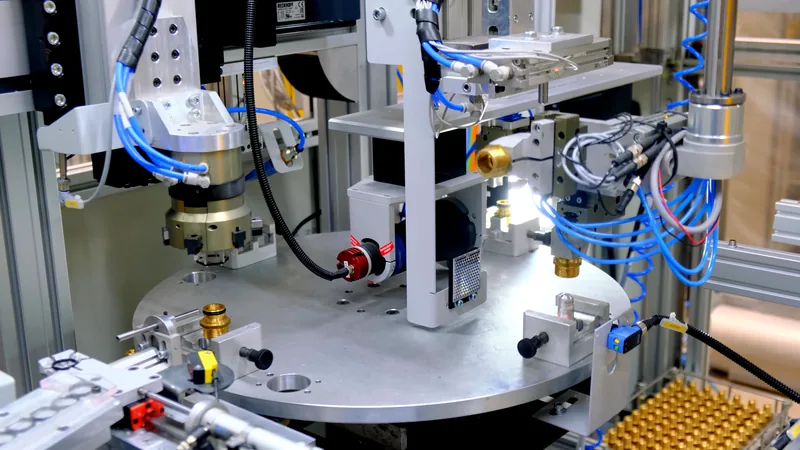
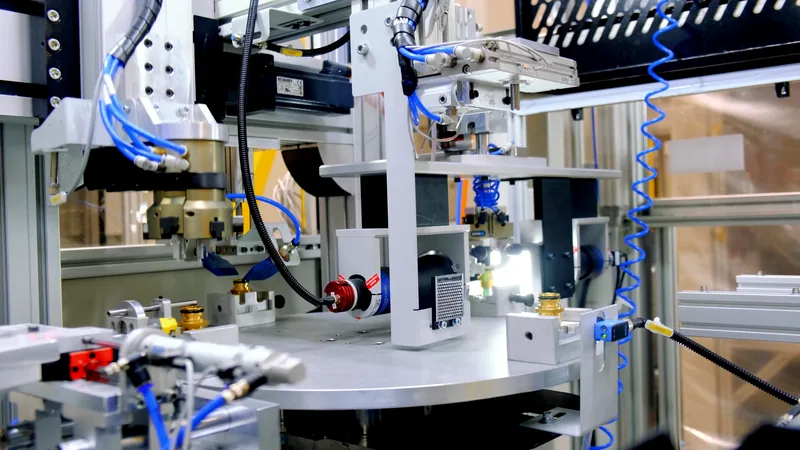
03O-ringThe rotary table carries each fitting to the o-ring station. 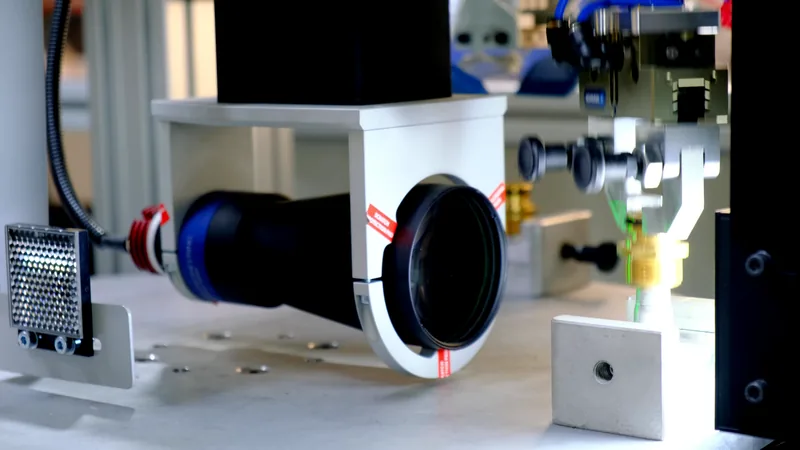
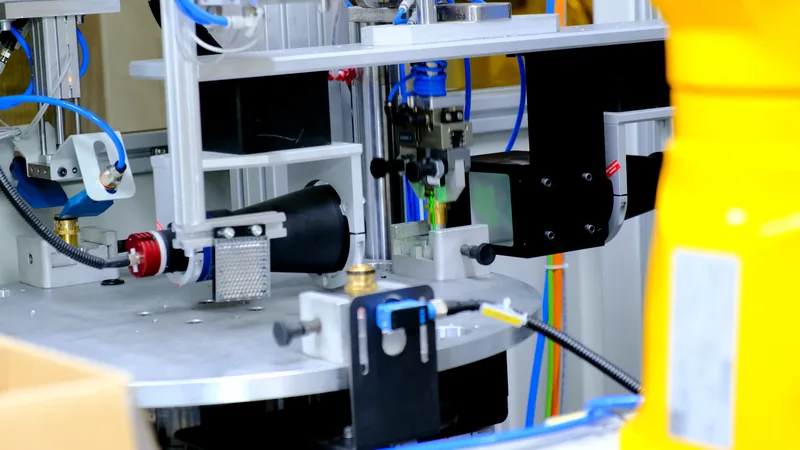
04Measured and inspectedDimensions, surface, burrs, thread and the o-ring, through a telecentric lens. Parts that fail go into trays, sorted by fault. 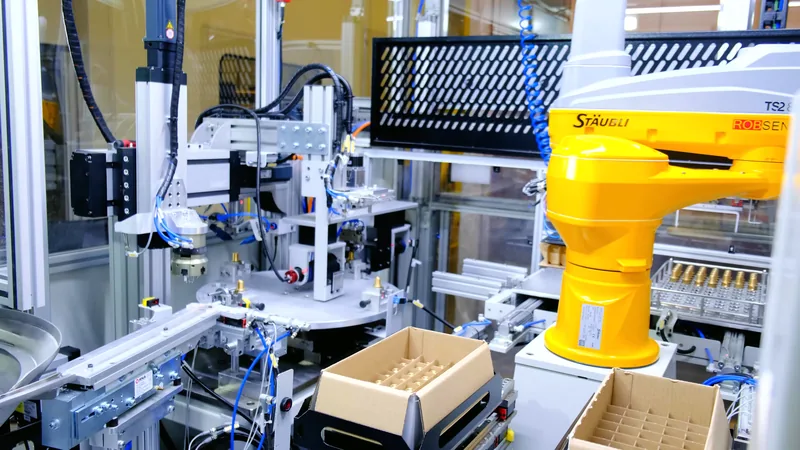
05PackedA second SCARA robot packs the good parts in cartons. 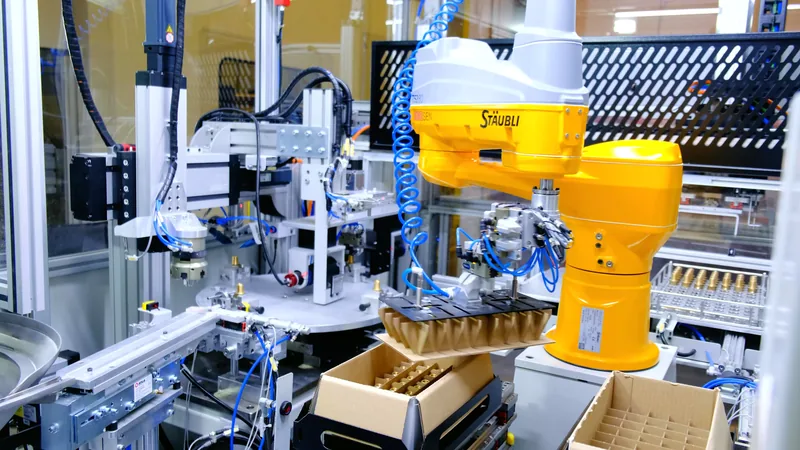
06Second layerA separator goes on the full first layer, and the second layer on top.
Measured without touching
A telecentric lens sees the part without perspective: an edge measures the same whether the part sits a little nearer or farther.
- 01
A sharp outline
Lit from behind, the part shows a clean silhouette, and its dimensions are measured in the image.
- 02
Burrs and surface
The same camera looks for burrs, surface defects and the condition of the thread.
- 03
Our own software
IROVISION, the vision software we write ourselves, does the measuring and decides OK or not OK.
Two cartons, never waiting
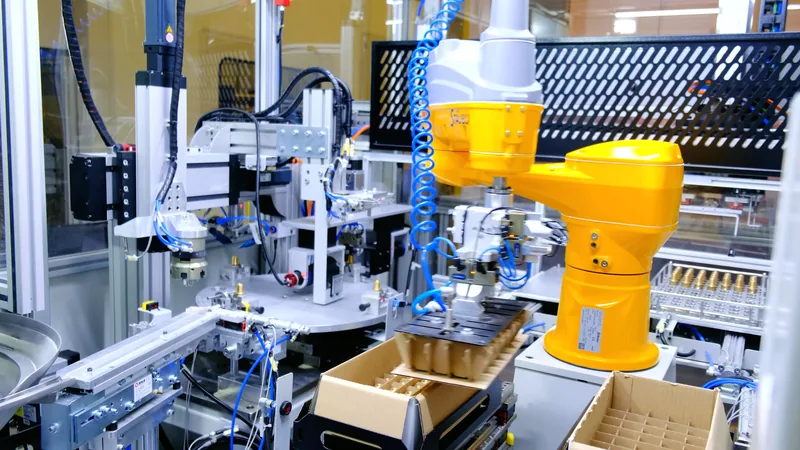
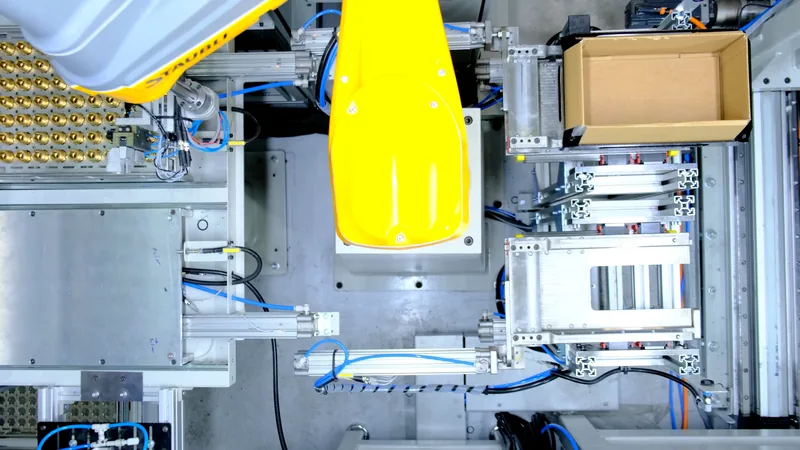
Two cartons stand side by side. While the robot fills one, the other is ready, so packing never stops for a carton change.
When the first layer is full, a vacuum gripper lays a separator on it, and the second layer goes on top.
Seven hours with one operator
Empty cartons wait on a shelf of 25. A Cartesian robot takes an empty one to the packing robot and puts the full one back. With a full tray rack and a full shelf, the machine runs for up to seven hours; the operator refills it and takes the cartons away.
One platform, on one truck
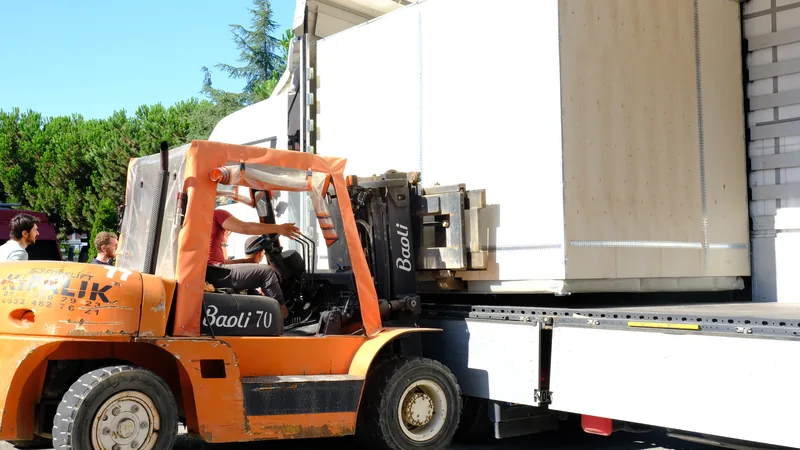
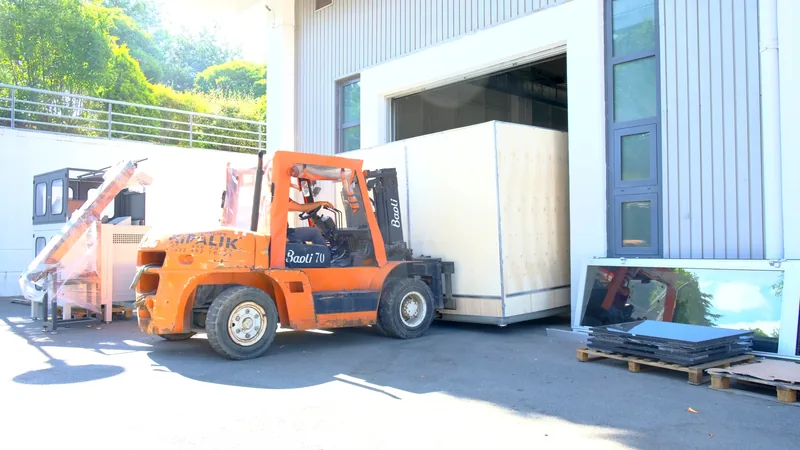
Robots, rotary table, camera, tray rack and carton shelf sit on one base. The machine was built and tested at our plant and left on a standard trailer, in one piece.
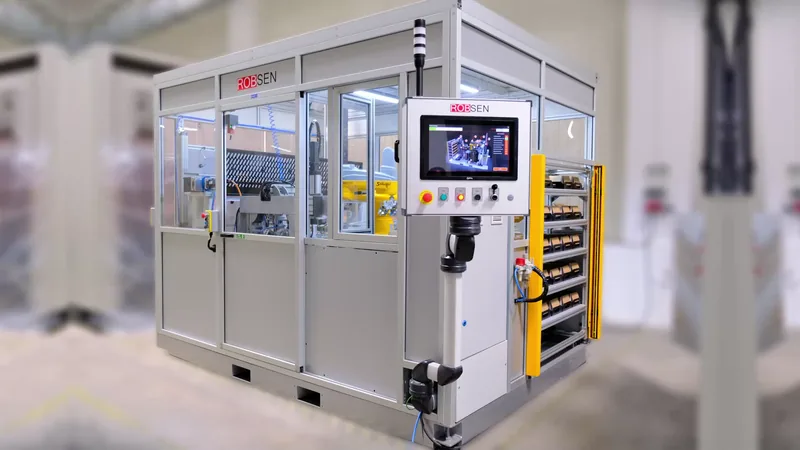 3,200 mm2,300 mm2,400 mm
- 01
Plug and play
Set it down, connect power and air, and it is ready to start.
- 02
Fits a trailer
The footprint was chosen so the whole machine travels on a standard truck trailer.
- 03
Safe to work beside
Glass walls all round; the carton shelf opens to the operator behind a light curtain.
What a machine like this takes
This machine fits, measures, sorts and packs every fitting, with several checks each, on a footprint that fits a trailer.
- 01
Short cycles, hard problems
Many parts, many checks, little time per part. We take on that kind of problem and design every move around the cycle your plant needs.
- 02
SCARA robots near their limits
We tune the moves, grippers and timing until the robots run close to what they can do, without slowing for the stations around them.
- 03
Everything on one platform
Feeding, assembly, joining, marking, inspection and packing fit on one base. It is built and tested at our plant and leaves as one piece.
- 04
Vision we write ourselves
IROVISION is our own software, written by our own team: matching, measuring, surface defects, fine measurements in the image, telecentric optics. When a check needs something new, we add it.
Gallery
The film of the machine in production, and a few more views of it.

The machine in brief
- Application
- O-ring assembly, final inspection and packaging
- Solution
- Assembly and Quality Control
- Parts
- Brass water fittings
- Robots
- Two SCARA robots, two Cartesian robots
- Feeding
- Up to 50 trays, about 4,000 parts
- Inspection
- Telecentric lens, backlight, IROVISION
- Checks
- Dimensions, surface, burrs, thread, o-ring
- Rejects
- Sorted by fault into trays
- Packing
- Cartons, two layers with a separator
- Running alone
- Up to 7 hours, one operator
- Footprint
- 3,200 × 2,300 mm, 2,400 mm high, one platform
Before: machine tending with IROCUBE
Fittings are machined first, then come here to be checked and packed.
Also: safety seal assembly
Eight stations on one rotary table: clips, plugs, welding, marking and a camera at every step.
Also: valve assembly and testing
Three parts joined, two screws torqued, a leak test through the full travel, a code on every valve.
Questions we are asked
Which parts can it take?
It was built for brass water fittings. Parts of a similar size and shape can follow the same path. Send us your parts and their drawings, and we will tell you how they would be fed, checked and packed.
What does the camera check?
The dimensions, the surface, burrs, the thread and whether the o-ring is there. The checks are set per part, in IROVISION, our own vision software.
What happens to a part that fails?
It goes into a reject tray, sorted by the fault that was found, and never reaches a carton.
How long does it run on its own?
Up to seven hours, with a full tray rack and a full shelf of 25 cartons. One operator refills it and takes the cartons away.
How fast is it?
Fast enough to replace the manual line it was built for. The cycle depends on the part and on the checks it needs; send us yours and we will tell you the cycle for it.
How is it delivered?
In one piece, on its own base, on a standard truck trailer. It is built and tested at our plant first.
Send us your part
Every machine starts with the part. Send us your parts or their drawings, what has to be fitted and checked, and how they should be packed, and we will work out the machine with you.
Talk to an engineer