
CNC machine tending with IROCUBE
Feed the conveyor with loose parts. Our IROVISION camera locates each one, and the robot loads the machine and takes the finished part out. No part fixtures, and one operator looks after a whole row of machines.
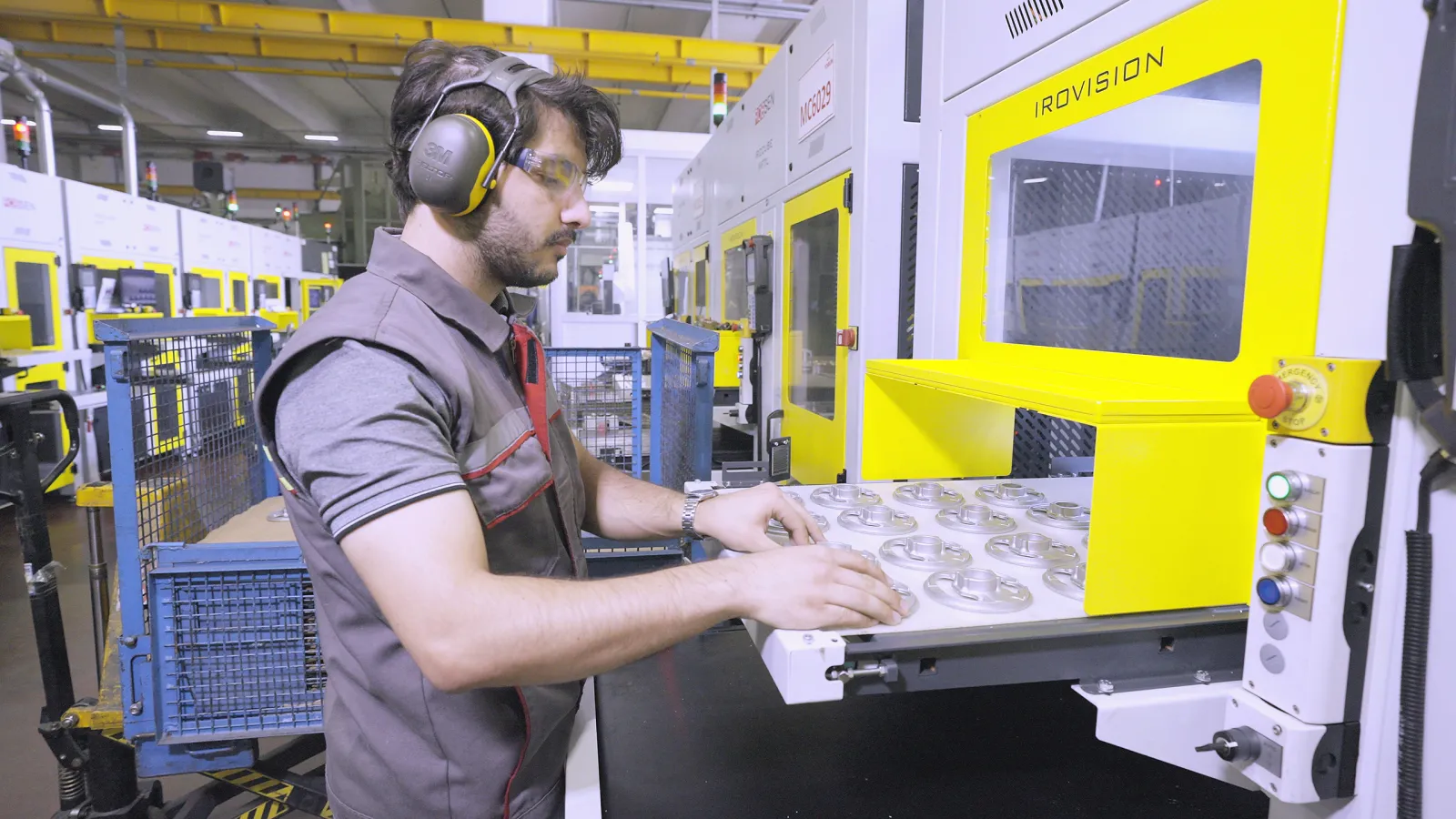
01Feed the conveyor 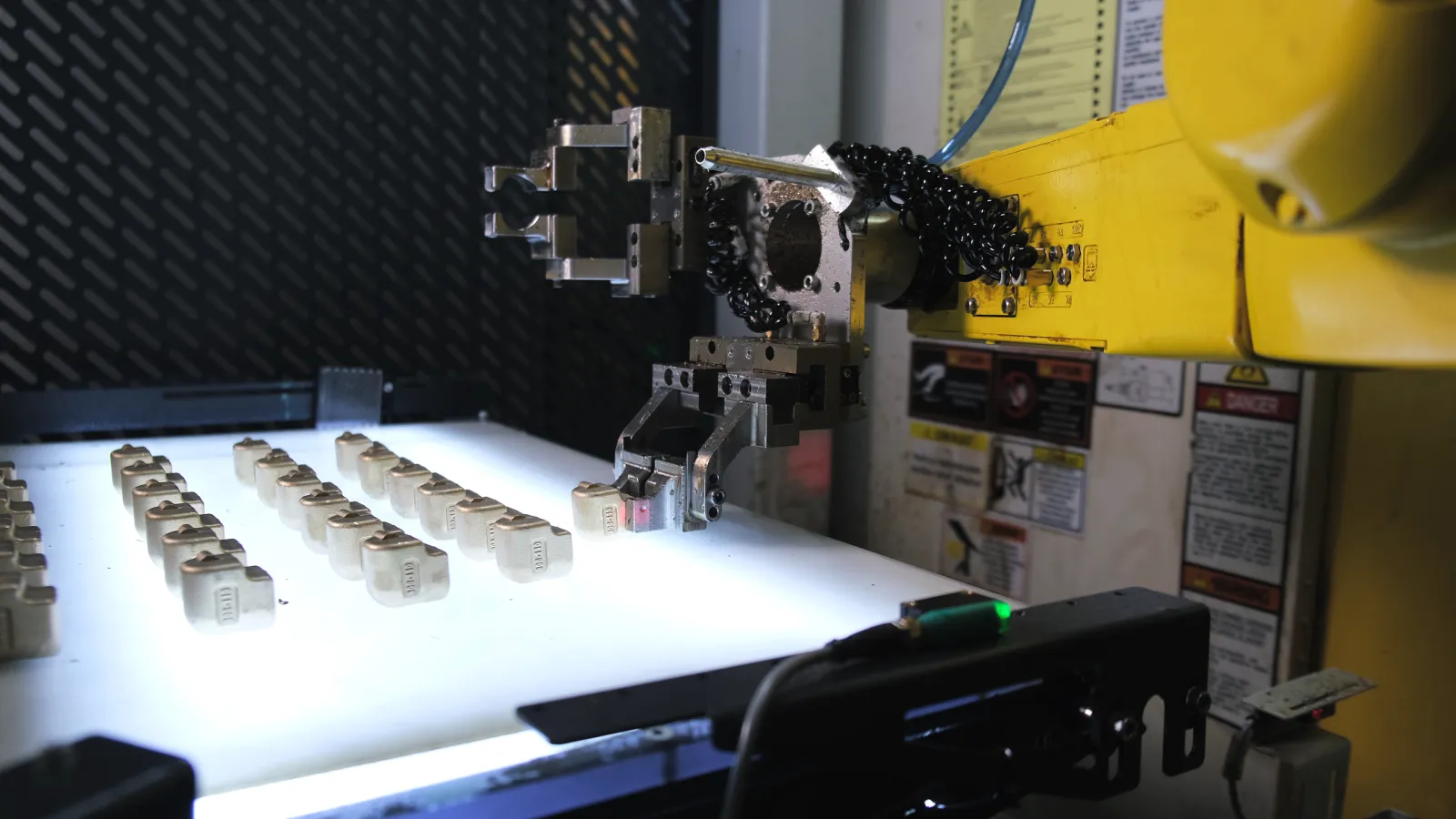
02Located by the camera 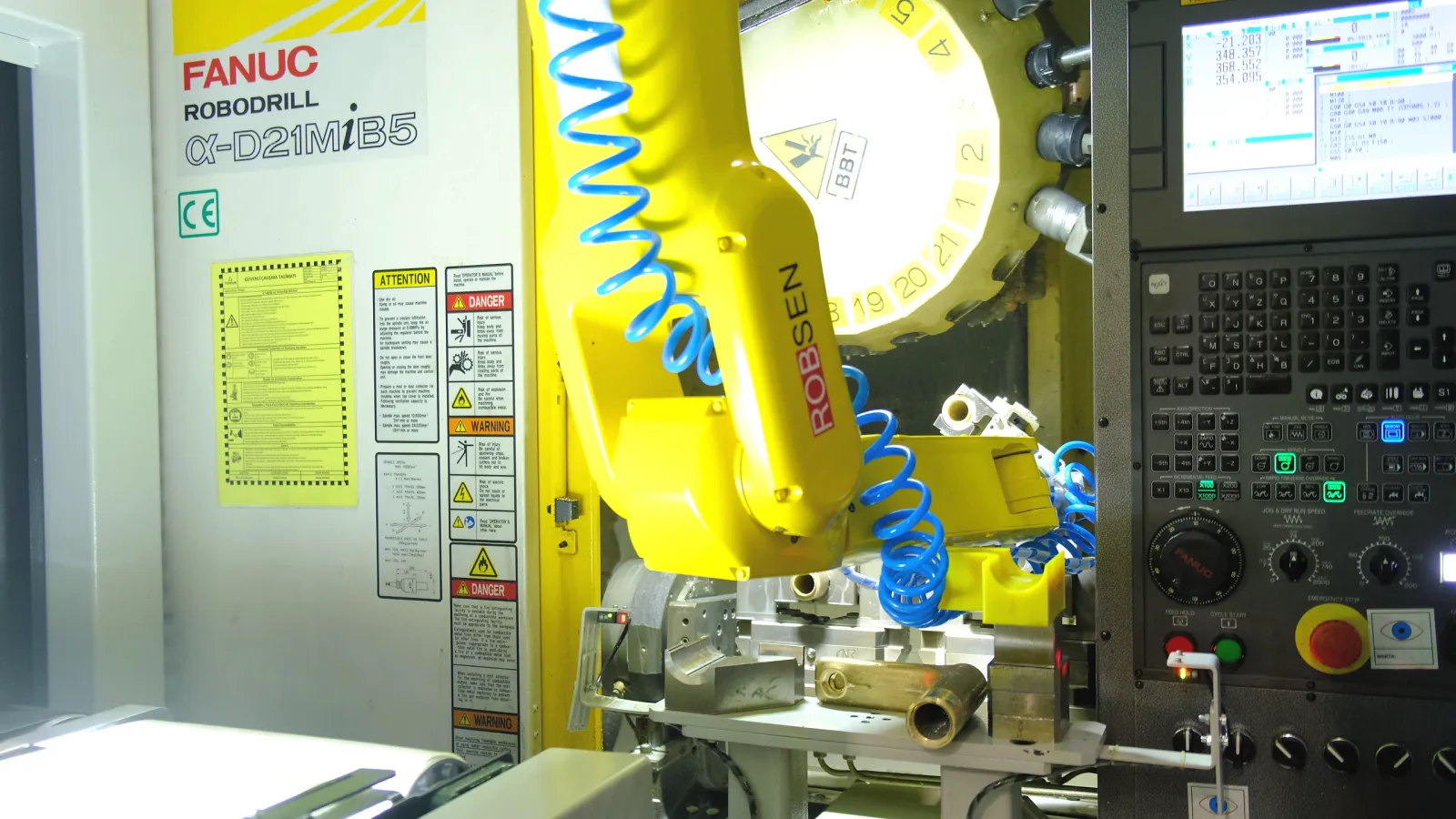
03Into the machine 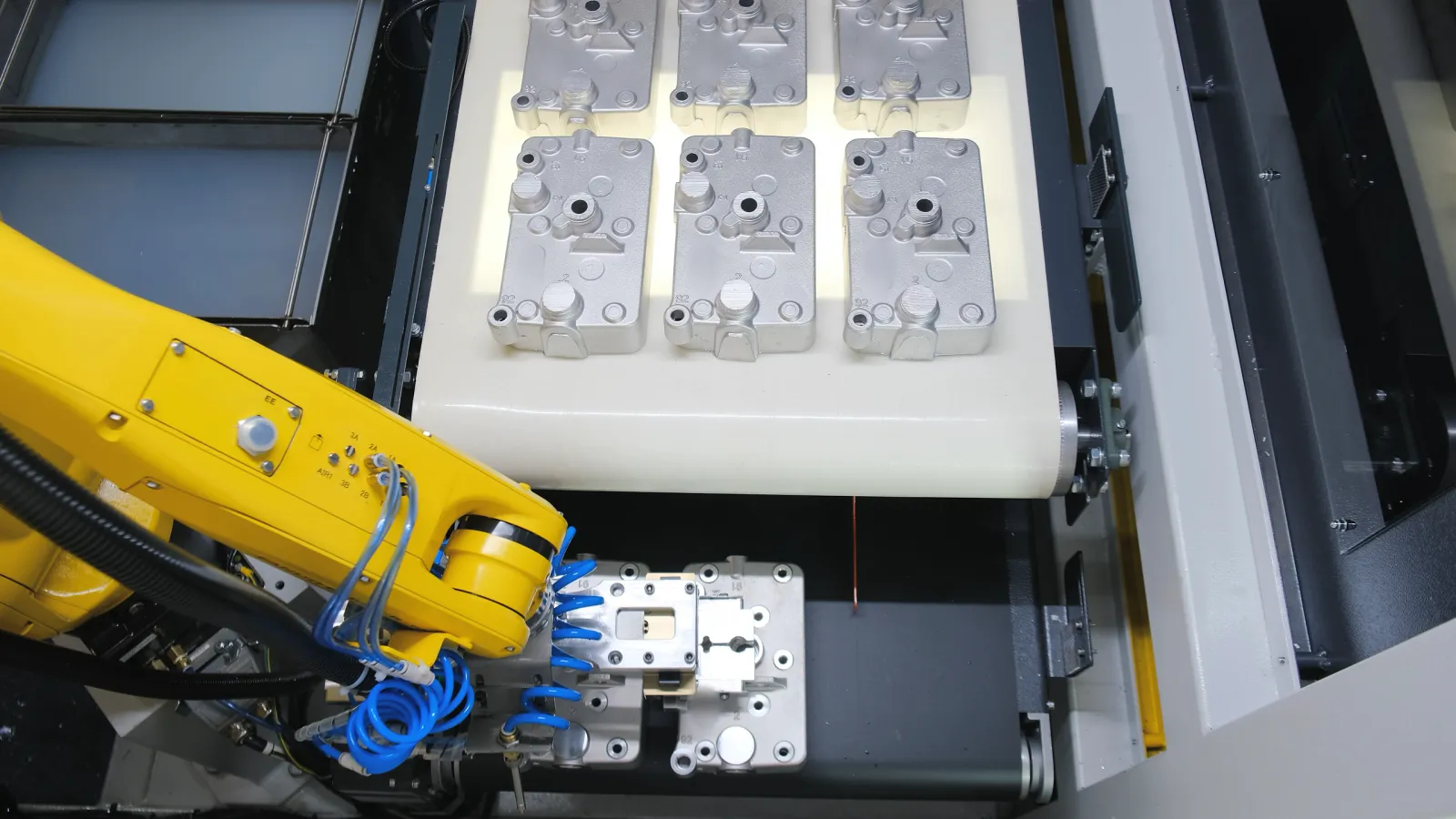
04Finished, back out
Tending guided by vision
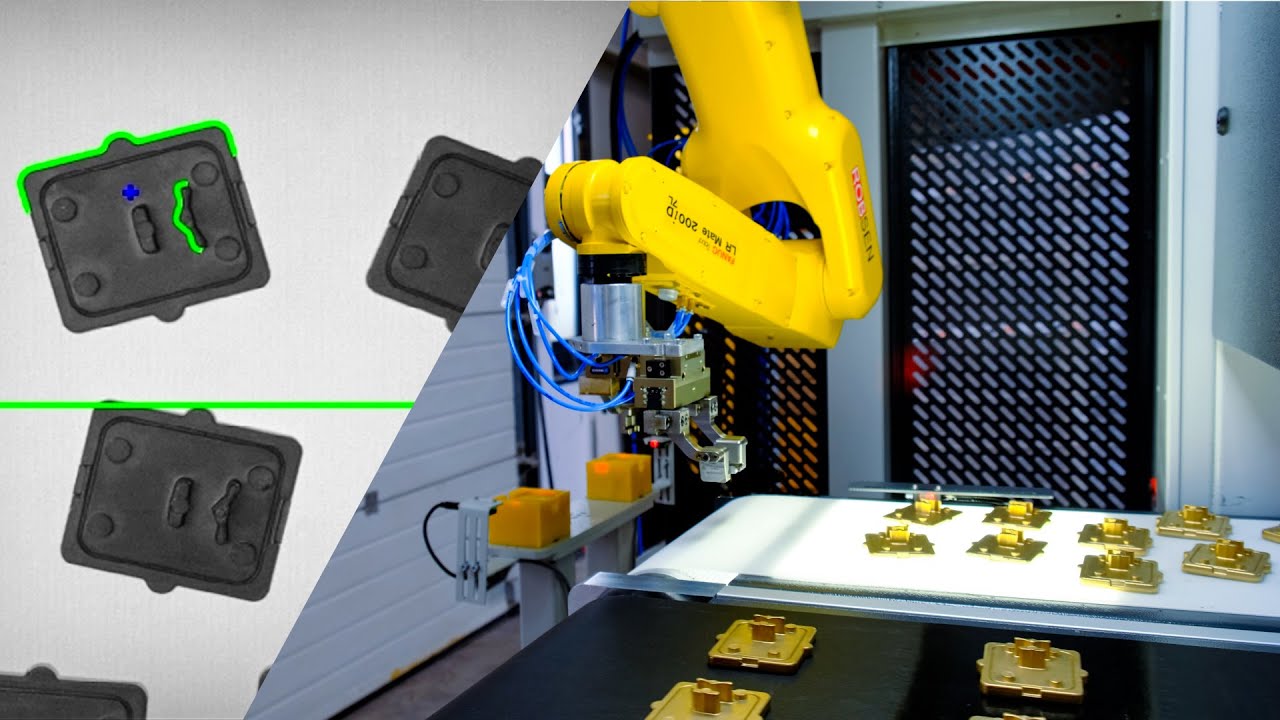
A robot that loads a machine usually needs every part in a fixed place. IROCUBE finds the part itself.
No part fixtures
Parts lie loose on the conveyor. The camera locates each one, however it lies, so there is no fixture to build for every part.
A new part is a new model
Teach IROVISION the part once, from a sample or from CAD. Running it again means choosing its model on the screen. Batches from 50 to 5,000+ parts.
One cell beside the machine
Robot, conveyors, camera and positioner sit on one welded base frame in front of the machine. Cells line up side by side along a production line.
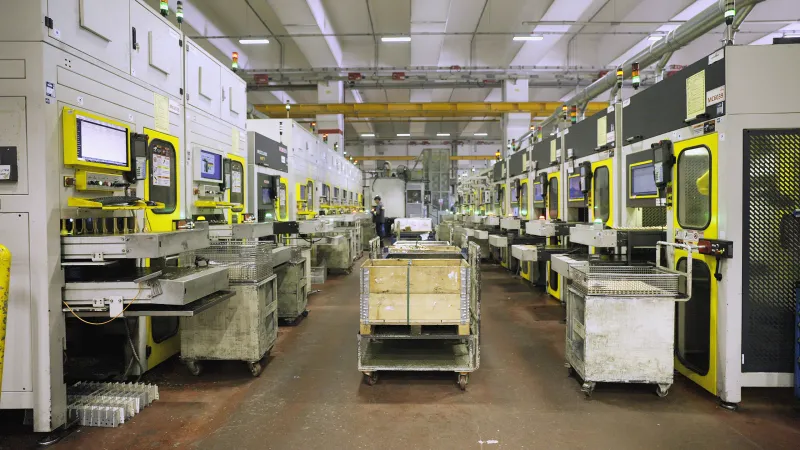
One line, 60 machines
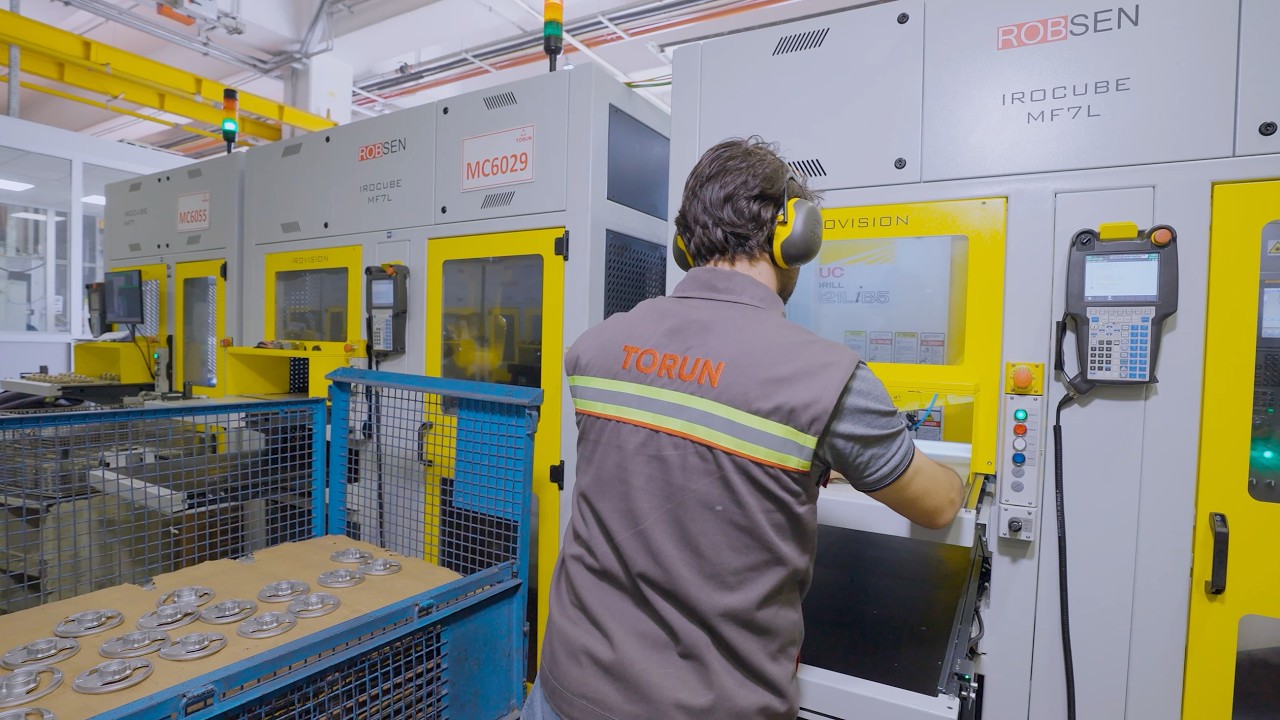
At Torun Metal every FANUC Robodrill in the line has its own IROCUBE. A handful of operators keep the whole line fed.
- FANUC Robodrills
- 60
- IROCUBE cells
- 60
- Operators
- 9
- Projects
- 200+
- Of our projects are vision-guided
- 95%
- Parts located by IROVISION
- 500M+
- FANUC robots tending FANUC Robodrills
- Since 2015
An IROCUBE M7 at work, from every side
The cell as it runs at a FANUC Robodrill, built from its own design data. Turn it, open the door, run a cycle and click any part to see what it does.
Built from the cell’s own 3D design data. The 3D view loads about 6 MB when you open it.
- The operator feeds the loading conveyor with raw parts, loose.
- At the backlit end of the belt, the slider camera moves over the next part and IROVISION locates it.
- The robot picks the part and re-grips it on the positioner in front of the machine.
- In the Robodrill it takes the finished part with its free gripper, turns the gripper 180° and loads the raw part.
- It sets the finished part on the unloading conveyor. When the rows are full, the operator calls the belt and takes them out.
Longer belts, longer runs. How long a cell runs alone depends on how many parts its conveyor holds. At a Chiron machining center, an M12L runs up to 8 hours unattended with about 10 minutes of operator time per shift.
Our own software
IROVISION runs the camera of every cell; System Manager can be added to watch it. We write both ourselves, so we can tune them to your part and your plant.
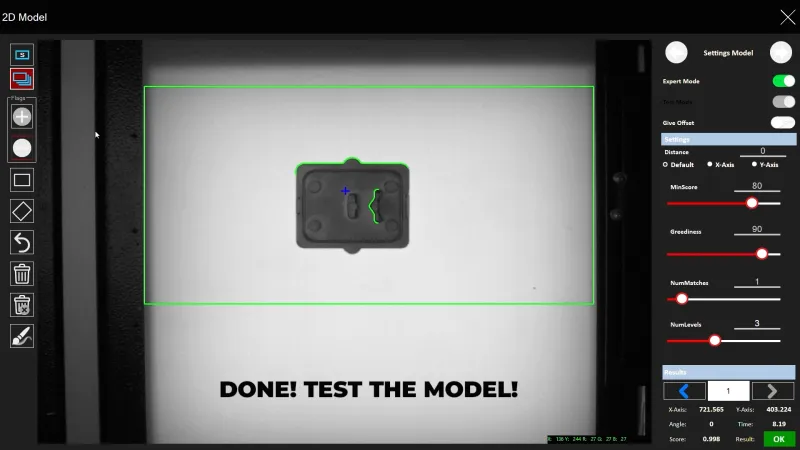
IROVISION locates the part
Built on the HALCON machine vision libraries. It finds parts of any geometry, material and finish in any orientation and sends the exact pick position to the robot. The same camera can check features, measure and read codes.
IROVISION on irocube.com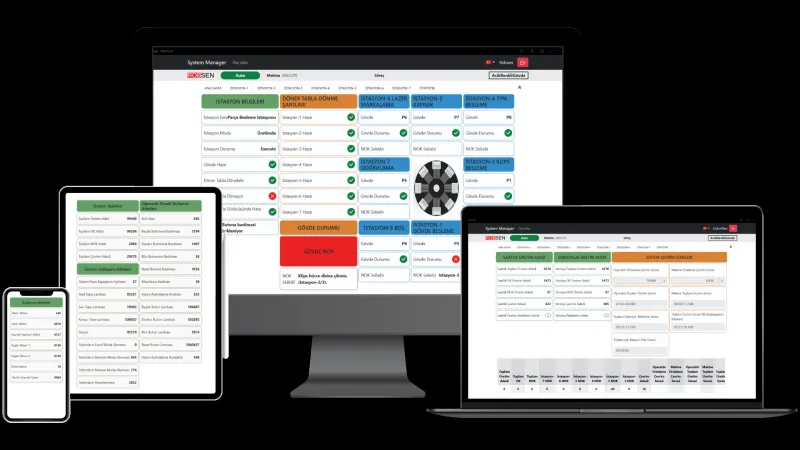
System Manager shows the cell
An option: one web-based screen for the whole cell, on its touchscreen or in any browser: live status, output and OEE, the cause of a stop the moment it happens, and the life of every component.
System Manager on irocube.comA cell for each machine
Every IROCUBE is built on the same platform. Specifications and configurations for each model are on irocube.com.
-
 Machining centers · FANUC Robodrill
M7
The most compact IROCUBE. Its robot hangs from the roof of the cell and moves aside when you set up the machine.
Specs on irocube.com -
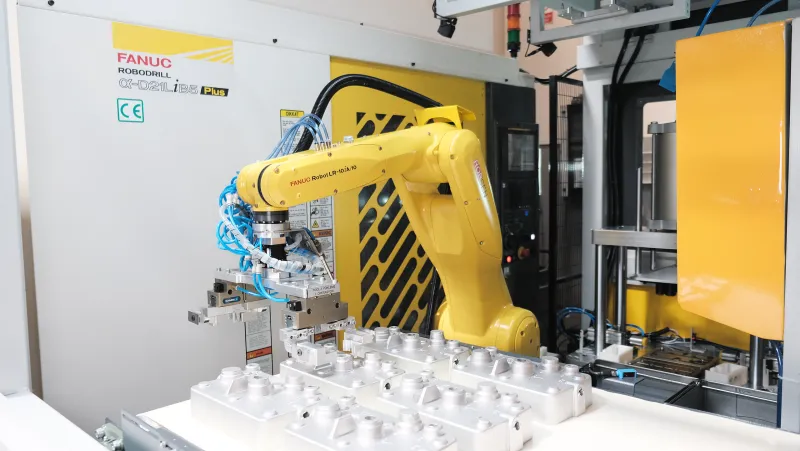 Machining centers
M10L
Longer conveyors for longer unattended runs: more parts on the belt, more hours between operator visits.
Specs on irocube.com -
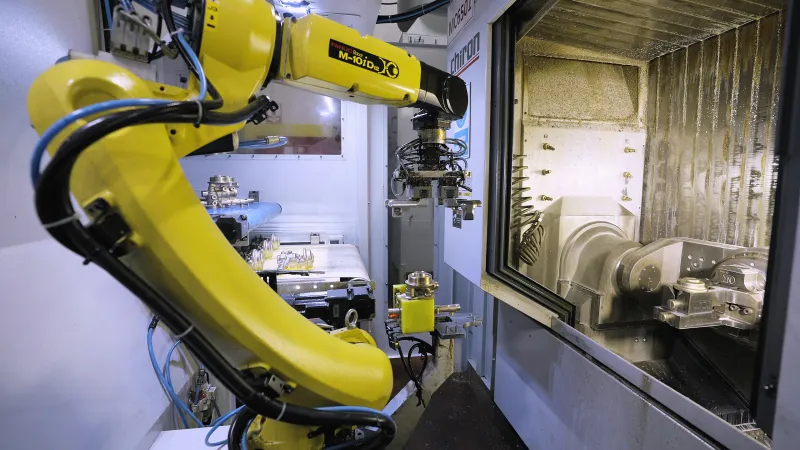 Larger machining centers
M12L
Two modules, 12 kg, one or two machines. At a Chiron it runs up to 8 hours unattended.
Specs on irocube.com -
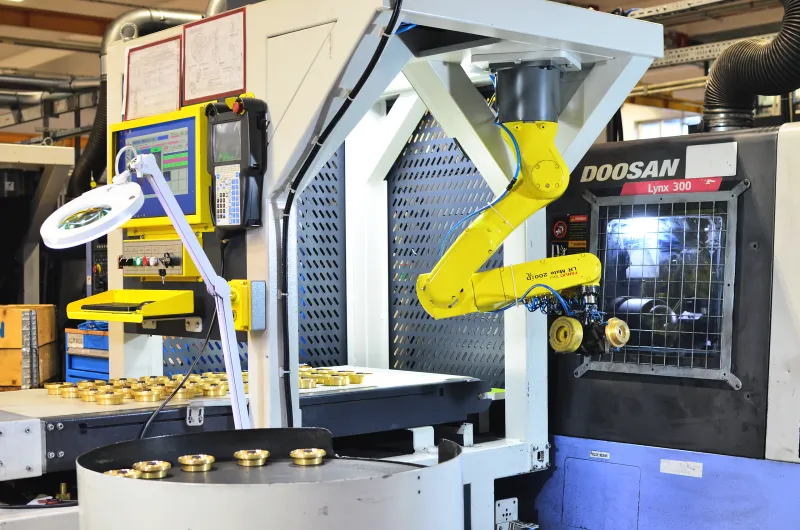 Lathes
T7
Lathe automation inside the lathe's own footprint. Seven years in production on a Doosan Puma.
Specs on irocube.com -
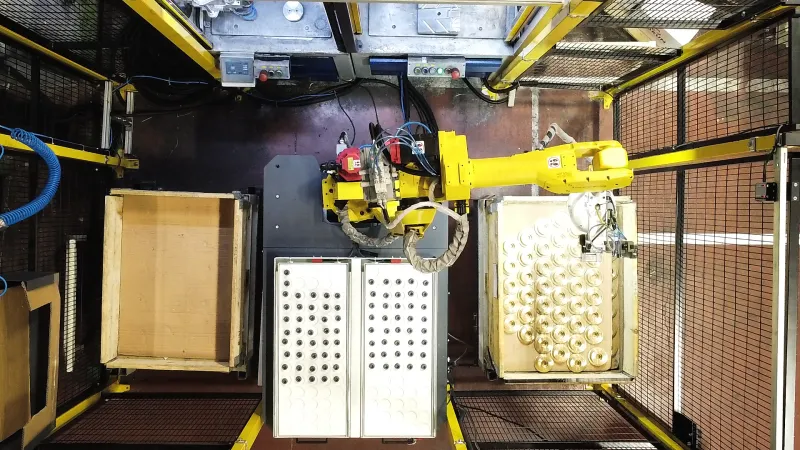 Compact, with drawers
Plus C10 · F10
Fits one Euro-pallet area and moves with a pallet jack: with a cobot (C10) or a FANUC robot (F10).
Specs on irocube.com -
 Several machines
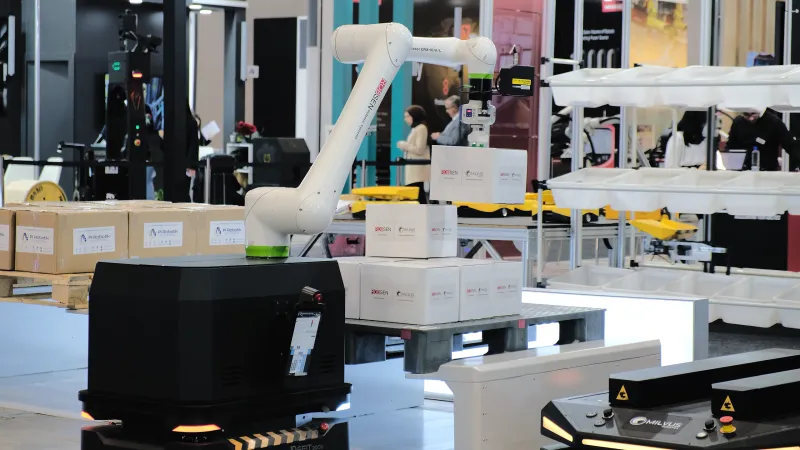
IROCUBE Mobile
A FANUC CRX cobot on a Milvus AMR drives to the machine that needs it; a camera corrects the arm to ±0.2 mm at each docking.
Specs on irocube.com -
 Specialized · transfer machines
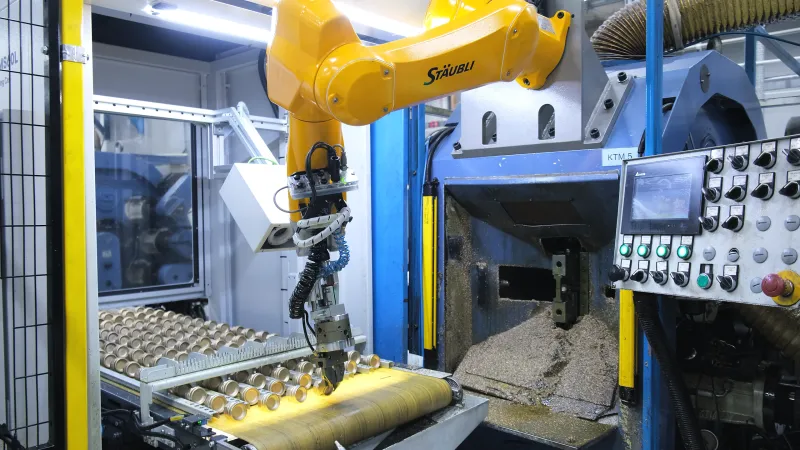
MS60L
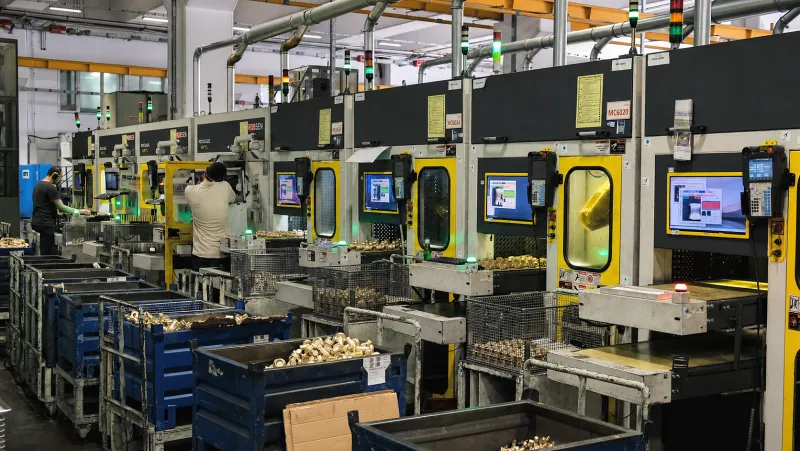
Mounted on the machine itself. At KAS Group it feeds brass valve parts to a transfer machine, one every 4.22 s.
Our transfer machine cells -
Not sure which cell fits?
Send us your part and your machine. We check reach, cycle time and layout, often with a ROBOGUIDE simulation, then suggest the right cell.
Talk to an engineer All models on irocube.com
More than loading
A cell can take over the steps around the machine too. Availability depends on the model and your part.
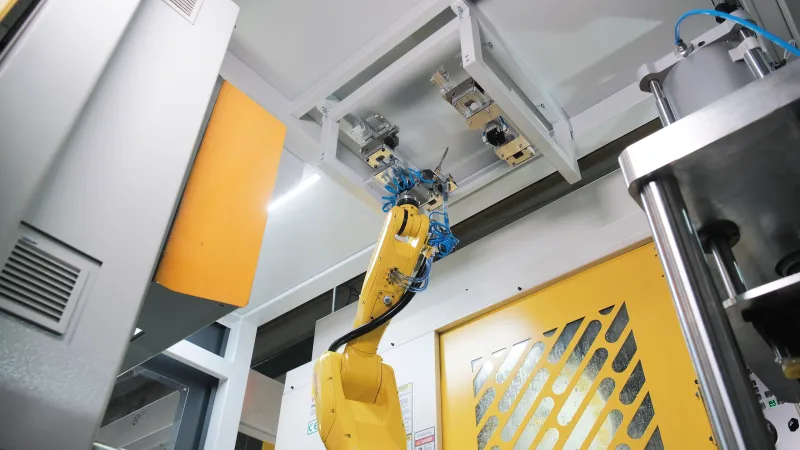
A tool changer
Changes between parts and operations on its own, for example OP10 and OP20 with one robot.
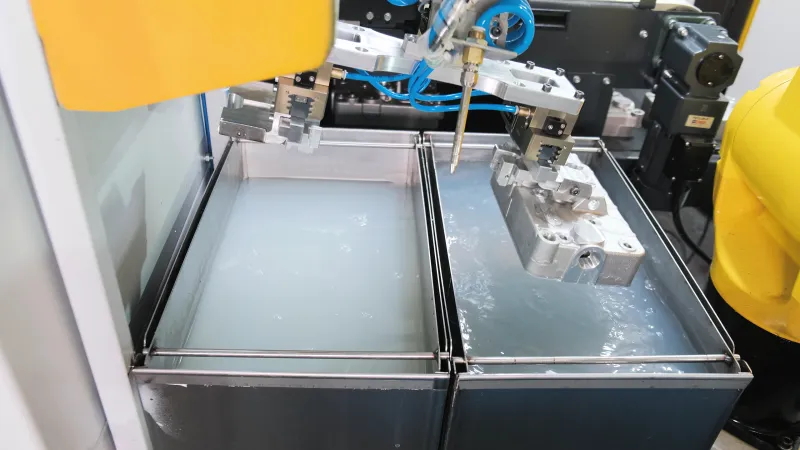
Washing in the cell
A rinse and air-dry tank, or a full wash station before leak testing, measuring or packing.
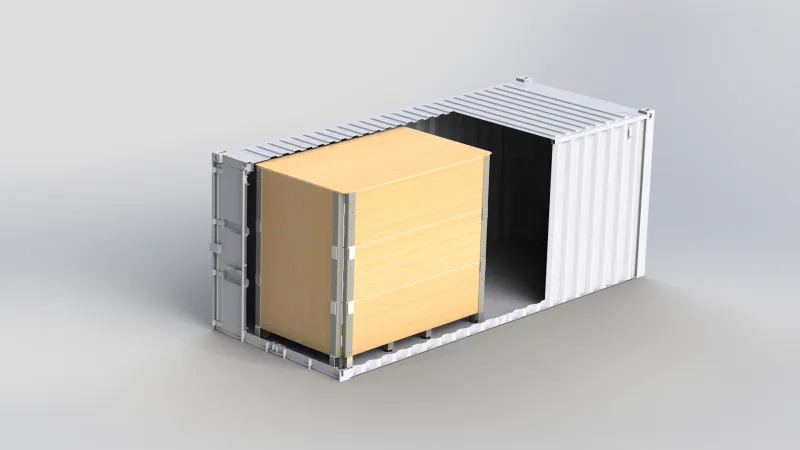
Tested, then shipped whole
We run each cell with your part at our plant before it leaves (FAT). A module ships as one unit and is commissioned at your machine (SAT).
- Also available
- Orientation check camera, seating check in the jaws, extended and long-range conveyors, pallet unloading unit, conveyor cleaning brush, deburring station, leak test, laser marking with a vision check, dimension check camera, VPN remote access, ROBOGUIDE simulation license. All options
The cells at work
IROCUBE cells in production, from a single Robodrill to a line of sixty.


The cells in brief
- Application
- CNC machine tending
- Solution
- Material Handling
- Machines
- Machining centers and lathes
- Batches
- 50 to 5,000+ parts
- Parts
- Loose on the conveyor, located by IROVISION, no part fixtures
- Software
- IROVISION in every cell, System Manager as an option, both written by our own team
- In production
- FANUC robots tending FANUC Robodrills since 2015
Questions we are asked
Which machines can IROCUBE tend?
Machining centers and lathes. The M7 is made for the FANUC Robodrill and similar vertical machining centers, the M12L tends larger centers, one or two at a time, and the T7 works inside a lathe's footprint. For transfer machines and other special cases we build specialized cells on the same platform, such as the MS60L.
Send us your machine and we will tell you which cell fits.
Do we need a fixture for every part?
No. Parts lie loose on the conveyor and IROVISION locates them. What is made for each part is the robot's fingers and the positioner at the machine. The set for your first part comes with the cell.
How do we change over to another part?
Choose the part's model in IROVISION and fit its finger set. If the part is new, teach it once, from a sample or from CAD. With a tool changer, the cell changes between parts and operations on its own.
How long does a cell run without an operator?
As long as its conveyor holds parts: the cycle time multiplied by the number of parts on the belt. Longer conveyors and a pallet unloading unit stretch that. At a Chiron machining center, an M12L runs up to 8 hours unattended.
A cell at each machine, or IROCUBE Mobile?
A cell stands at one machine. IROCUBE Mobile drives between several machines and loads them in turn, which suits long cycles. Each is set up for one job. Tell us your machines, parts and cycle times and we will suggest the one that fits.
How is a cell installed?
We build the cell and run it with your part at our plant (FAT). It ships in one piece per module, and we commission it at your machine (SAT). How a FAT works.
Bring us your part and your machine
We check reach, cycle time and layout, often with a ROBOGUIDE simulation, and suggest the cell that fits your machine and your batches.
Talk to an engineer