
Robotics
The robot is the least special part of a cell, and the one everybody asks about first. We choose it after we understand the process: payload, reach and speed for your part and your machine. Then we make sure it knows what it holds.
How a grip is verified
Six steps, in this order. The robot is chosen at step four, when the first three have said what it has to do.
- 01
Part geometry and variation
Castings and forgings are never twins. We look at the spread of the real parts, not the nominal drawing, and at what flash, draft and warp do to the grip.
- 02
Gripper design and verification
The gripper is designed for that spread and proven on parts before the cell is built. Analogue feedback from the gripper tells the robot whether the grip is OK or not OK, every time.
- 03
Reach and path safety
The paths are run in simulation against the machine, the fixtures and the guarding, and compensators between robot and tool take the shock when a part is not where it should be.
- 04
Robot selection
Payload, reach and speed follow from the first three steps. Most of our cells run FANUC robots; we have been a FANUC Authorized System Integrator since 2025. We integrate Stäubli, ABB and ESTUN robots when a project calls for them.
- 05
Fixture and clamping
The machine is not allowed to start on hope. Clamping is read from the chuck or the fixture, by pressure or a sensor, and where a part has to seat, the robot touches a reference and corrects its offset.
- 06
Process rules
Each process adds its own checks. At the die, a sensor plate confirms that every casting came out whole. At a transfer machine, light curtains confirm the robot is out before the cycle starts.
Where to see it
Three cells where the robot had to do more than move.
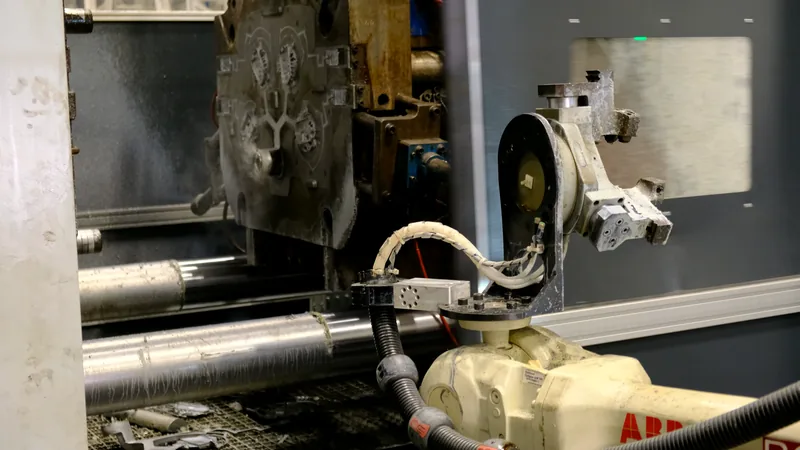
Into the die
A foundry robot with a sensor gripper takes the casting out of the open die, and the sensor plate then confirms that every part of it came out.
Die casting extraction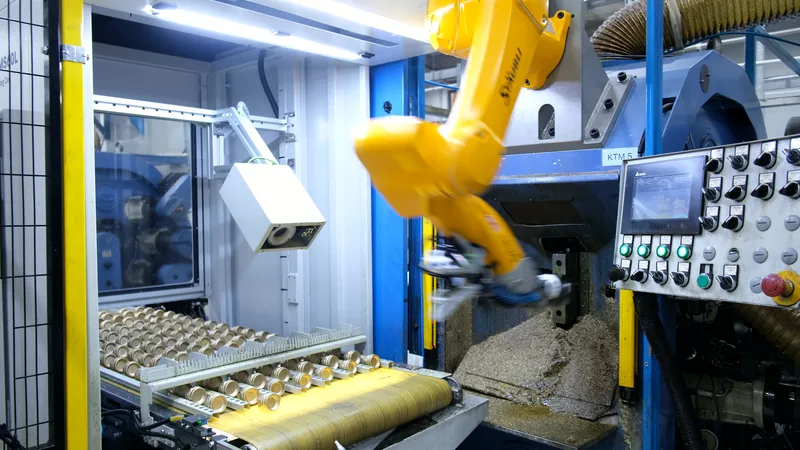
Over the machine
Mounted upside down on the machine for the shortest path. For maintenance the operator moves it to a saved position with the teach pendant, and the front of the machine is free.
The cell on the machine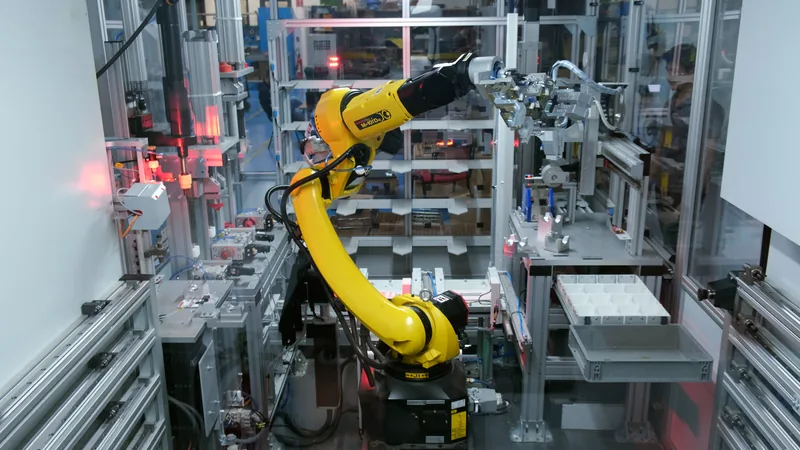
One robot, every station
A single six-axis robot feeds assembly, screwdriving, leak test, marking and packing, with every move, grip and hand-off tuned until nothing waits for the robot.
Valve assembly and testingThree things we say before you ask
We choose the robot for the application
Short cycles and heavy or hot parts call for an industrial robot. Long cycles, several machines or work that moves around the plant suit a cobot, as on IROCUBE Mobile. With either, the drill, the hot part or the sharp finger on the arm still needs guarding. We judge the application, then choose the robot.
A robot is not a person
Six axes, no sense of force, no eyes of its own. It belongs on work that repeats and has a defined tolerance. The eyes we give it are a camera and sensors; the judgement stays with your operator.
Bigger robots are a project, not a problem
Our standard cells carry 7 to 12 kg. A 25 kg part, a 40 kg part with a double gripper, a foundry robot at a die casting machine: those are projects we have done, and they are quoted as projects.
- Also in Technology
- Software Development · Measurement · Mobile Robotics
- All nine
- How we work: the nine capabilities and the loop they form
Which robot? Ask us last
Tell us the part, the machine and the cycle you need. The robot follows from those, and we will tell you which one and why.
Talk to an engineer