
Valve assembly and testing
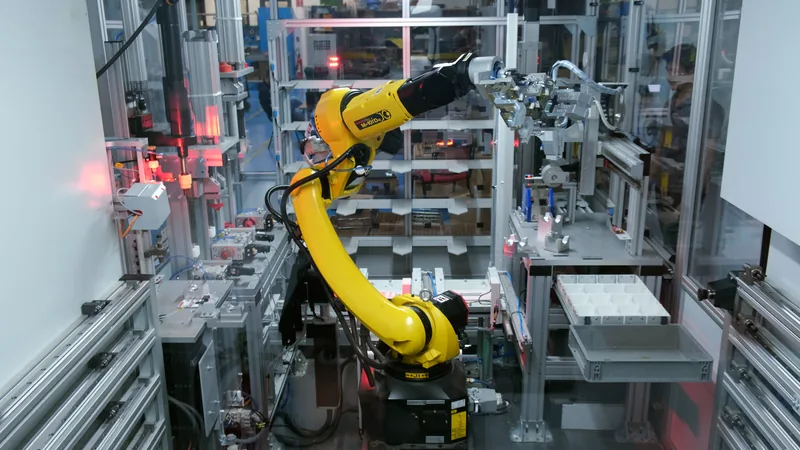
Brass valve components go into the drawers once a shift. A six-axis robot picks every part, checks the o-ring, joins the three components, drives two screws with torque control and leak-tests the valve through the full travel of its stem. Each valve is laser-marked, read back and packed in a KLT box. The operator comes by once per shift. Built for FIRST, a manufacturer of valves and actuators in Slovenia.
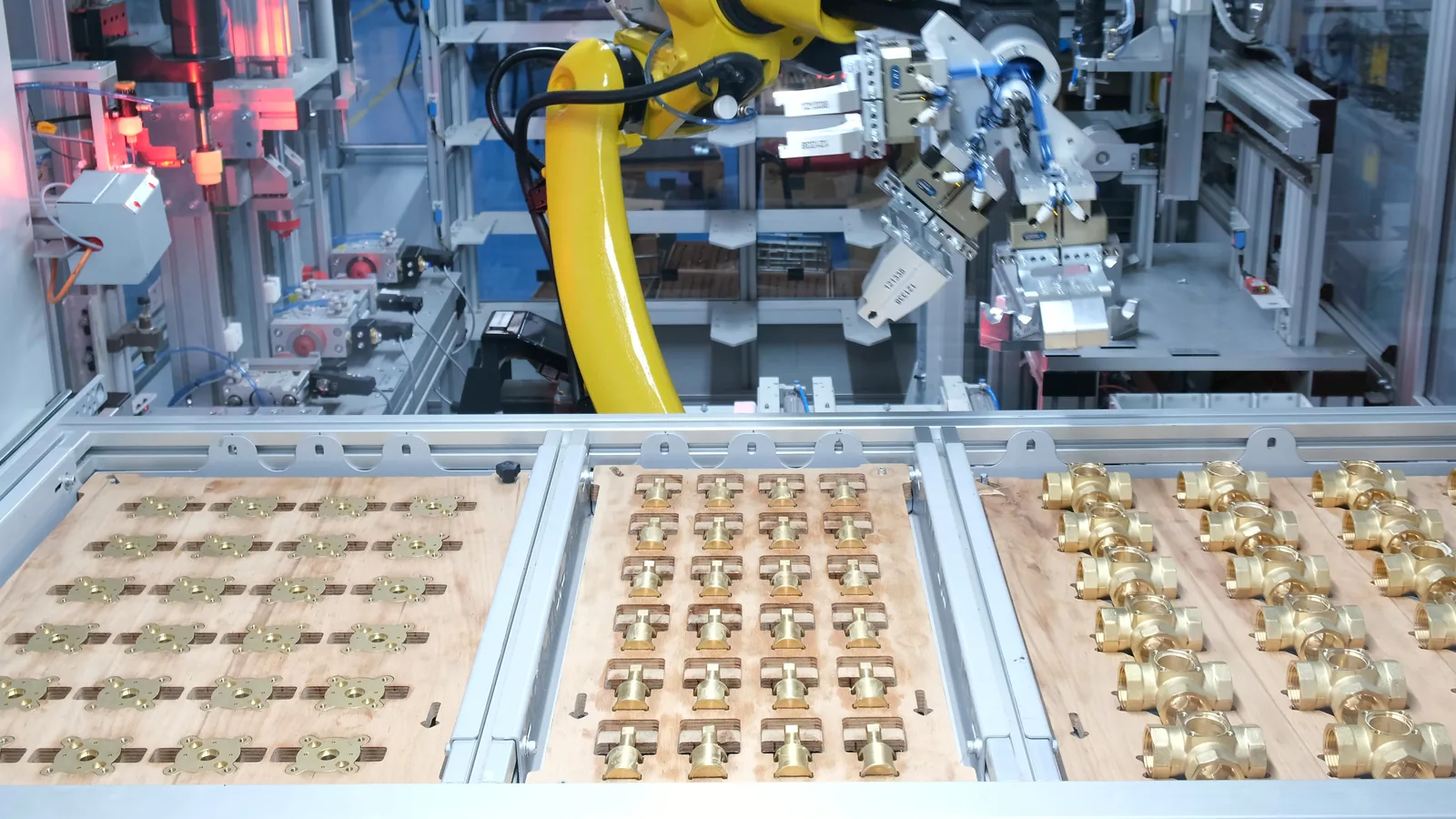
01Picked from the drawer 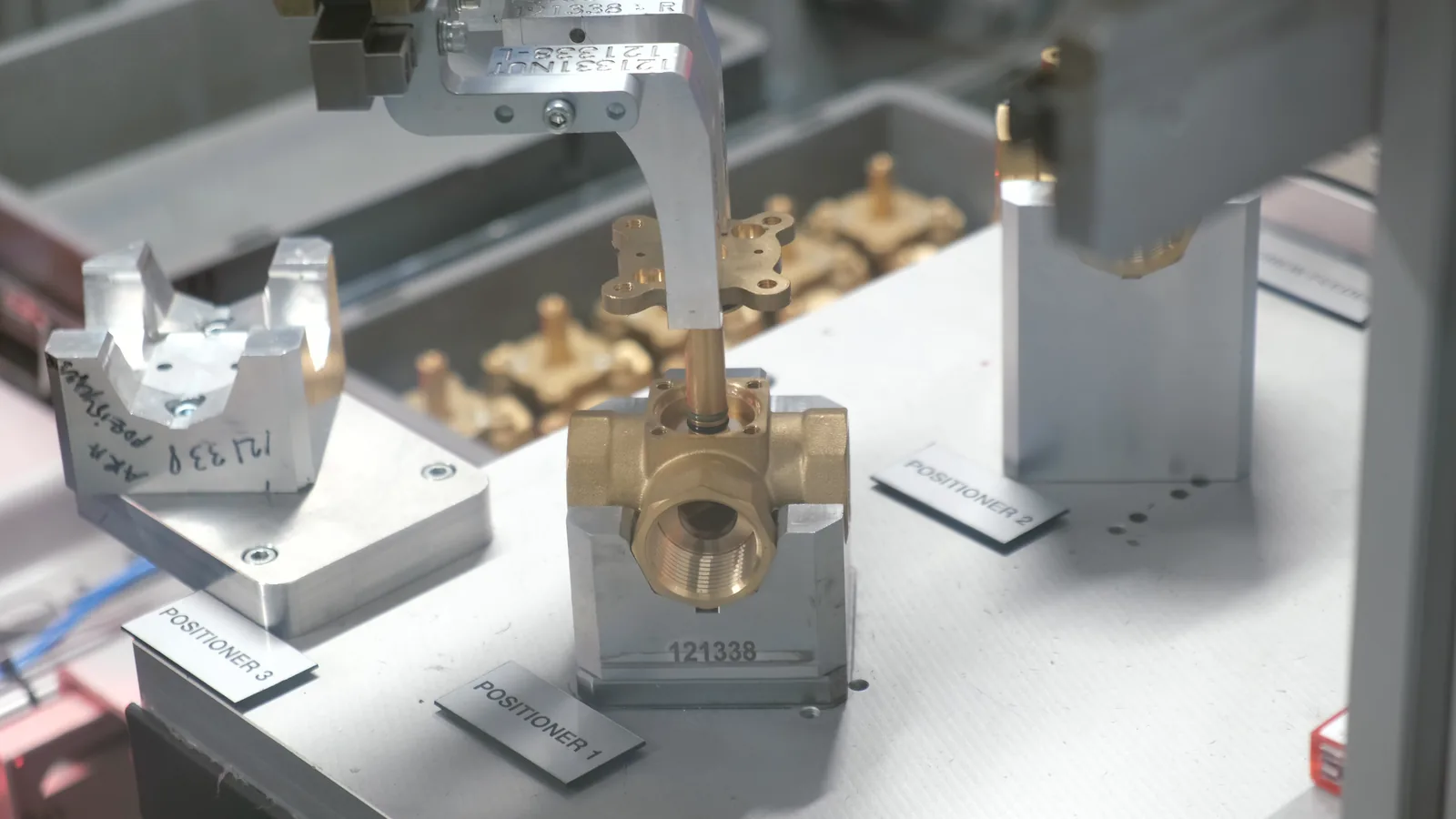
02Three parts joined 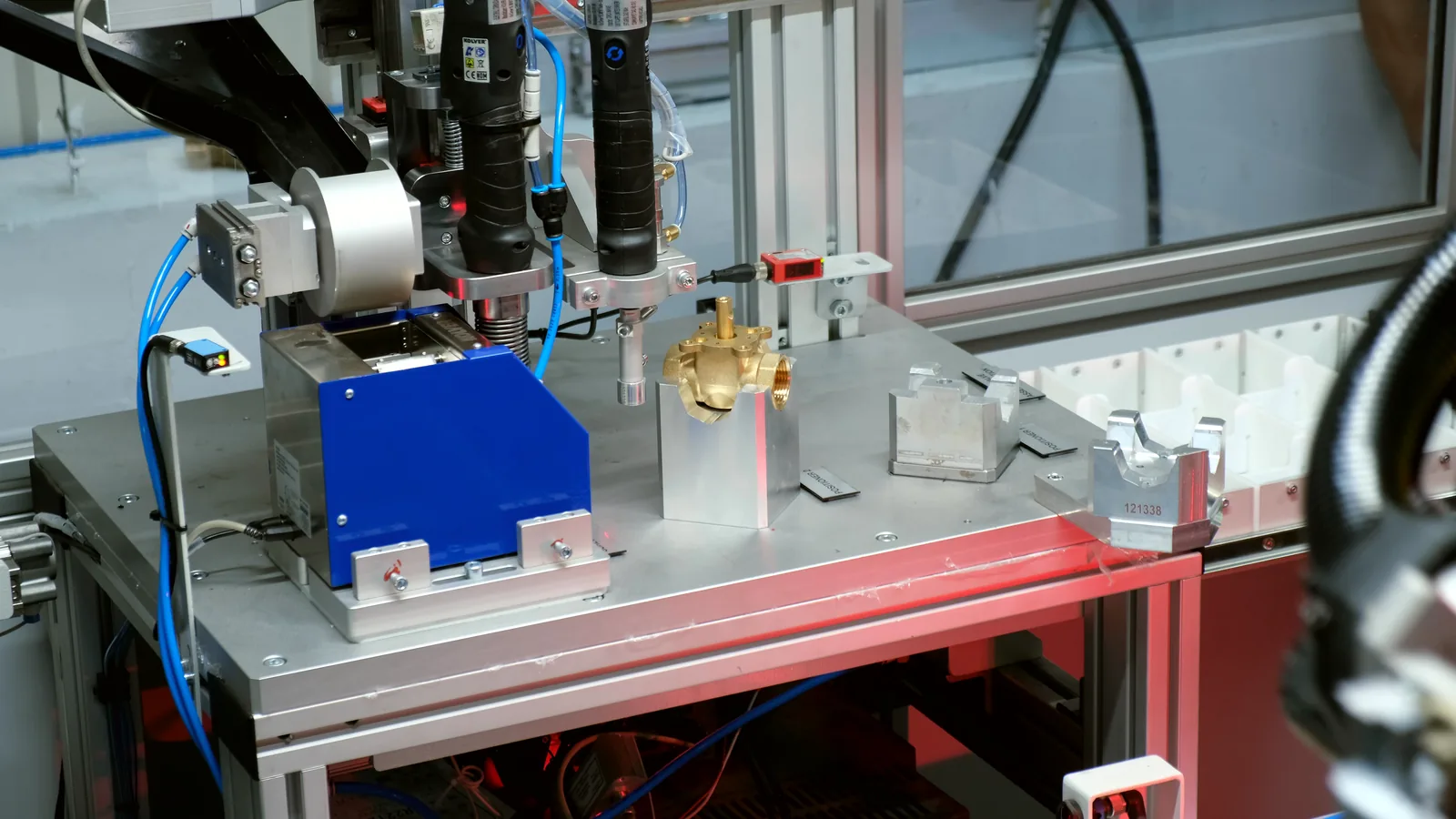
03Screwed, torque recorded 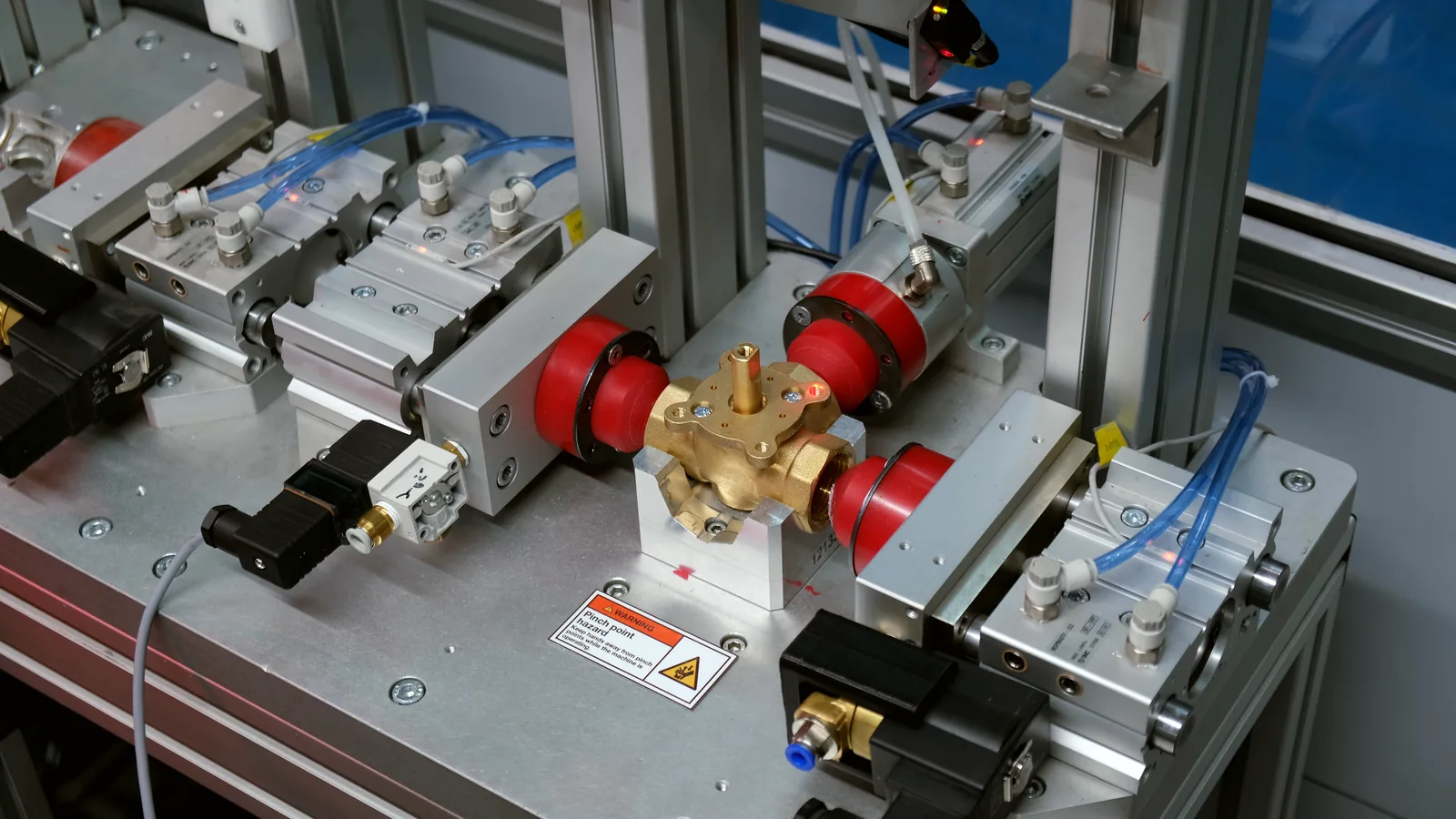
04Leak-tested
One visit per shift
The operator fills the drawers and takes the full boxes away. Between those two visits the machine builds, tests, marks and packs on its own, with eight hours of components in the drawers.
- 01
Loaded once a shift
The drawers hold eight hours of components. One visit loads them, and between visits the operator is free for other work.
- 02
Every valve tested
No sample. Each valve is tested with high-pressure air through the full travel of its stem.
- 03
Every value on record
Both torques, the test angle, the leak result, the test time and the serial code are stored for every valve.
- 04
Marked and read back
A laser writes a unique code on each valve, and a camera reads it back before the valve is packed.
From drawer to box
Three brass components go in; a tested, marked valve comes out in a KLT box. Hover over a step to watch it.
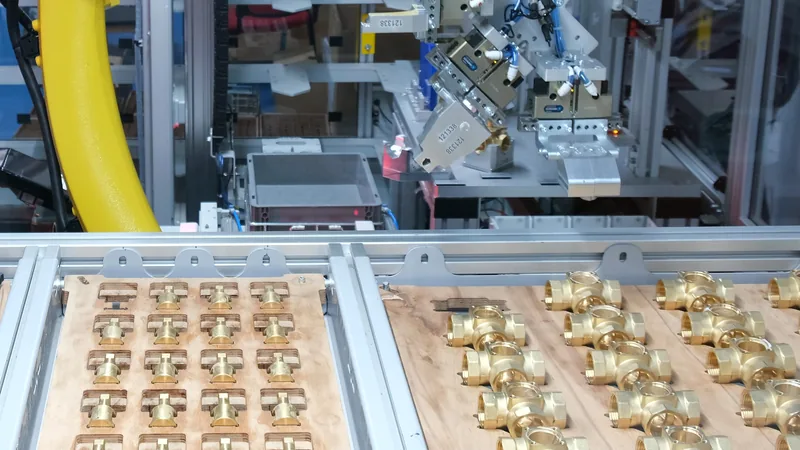
01Part feedingThe operator loads the drawers. A FANUC M-10iD/12 picks every component from them. 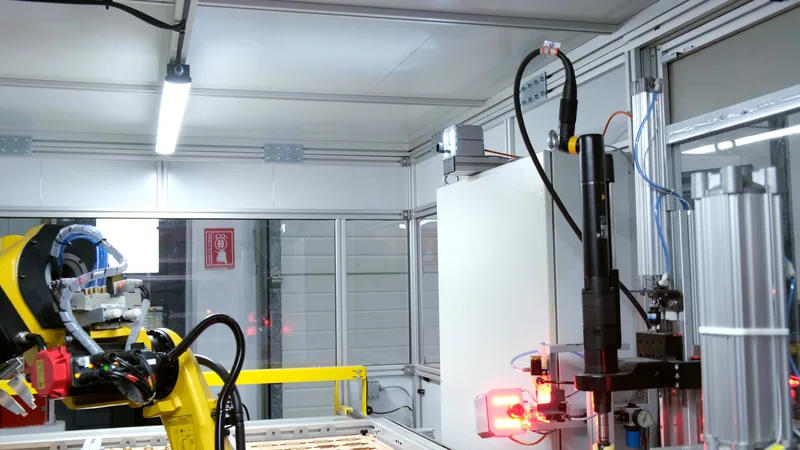
02O-ring inspectionA camera checks every o-ring before the parts go together. 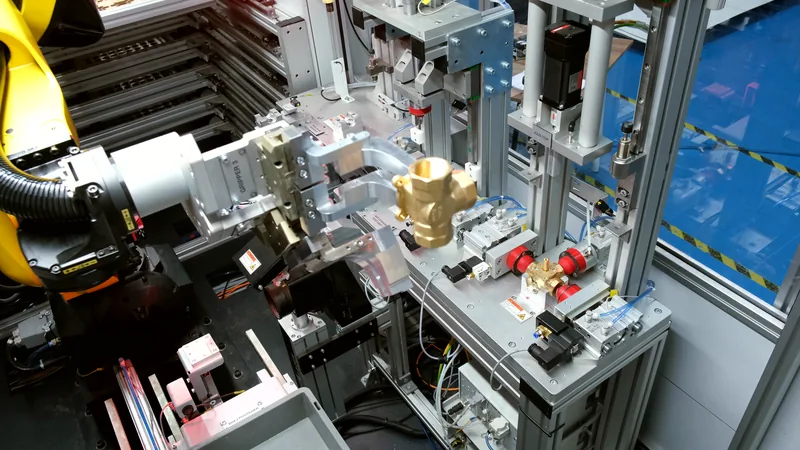
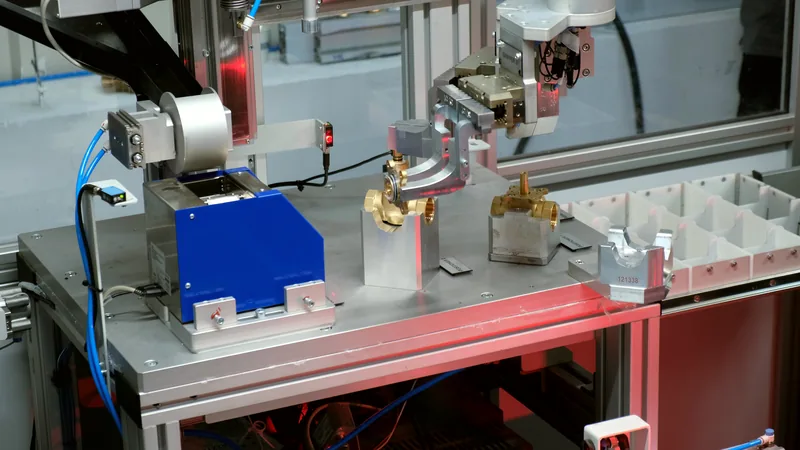
03AssemblyThe robot joins the three components of the valve. 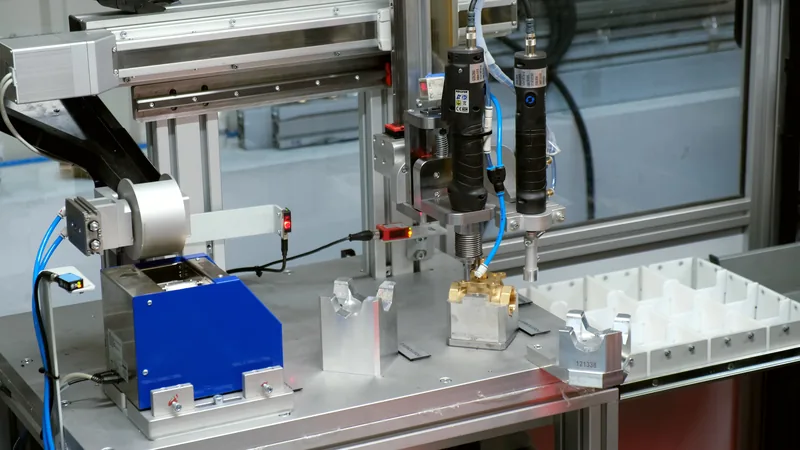
04Screwing with torque controlTwo screws are driven automatically. Each torque is checked and recorded. 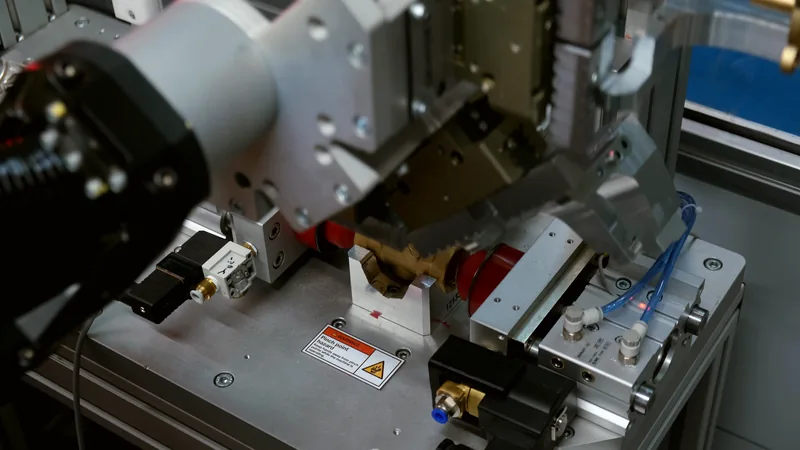
05Leak testHigh-pressure air, while the stem is turned through 380°, so tightness is proved across the whole travel. 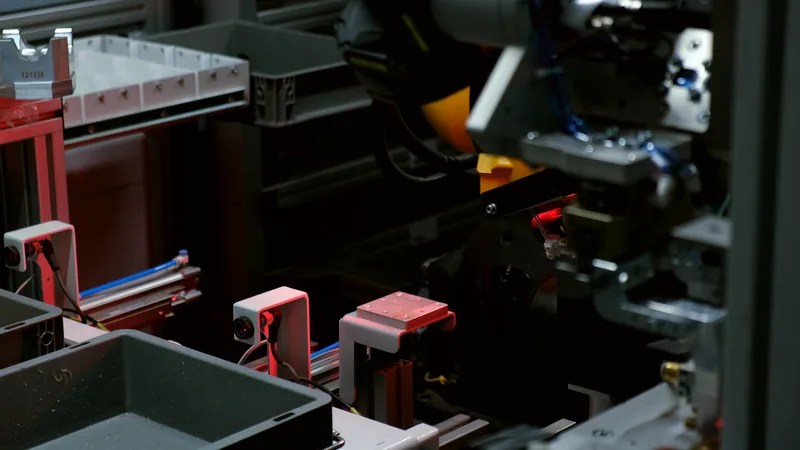
06Laser marking and OCRA unique code is laser-marked on every valve and read back by a camera. 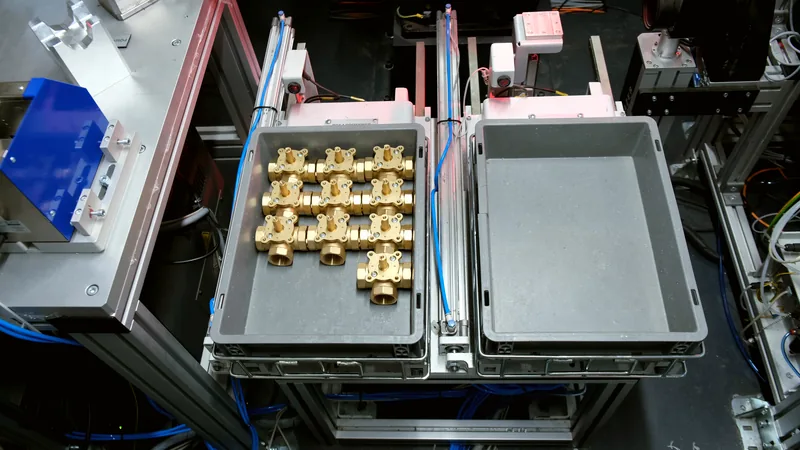
07PackingFinished valves go into KLT boxes. A Cartesian robot moves the full boxes to the rack.
Tested through the full travel
A rotary valve can seal in one position and leak in another. So the test does not stop at one angle.
- 01
Clamped and pressurised
The valve is clamped between the test cylinders and put under high-pressure air.
- 02
The stem turns 380°
A head on the stem turns the rotor through its full travel and a little beyond, while the pressure is watched.
- 03
Pass or fail, on record
The result, the test angle and the test time go into the record of that valve.
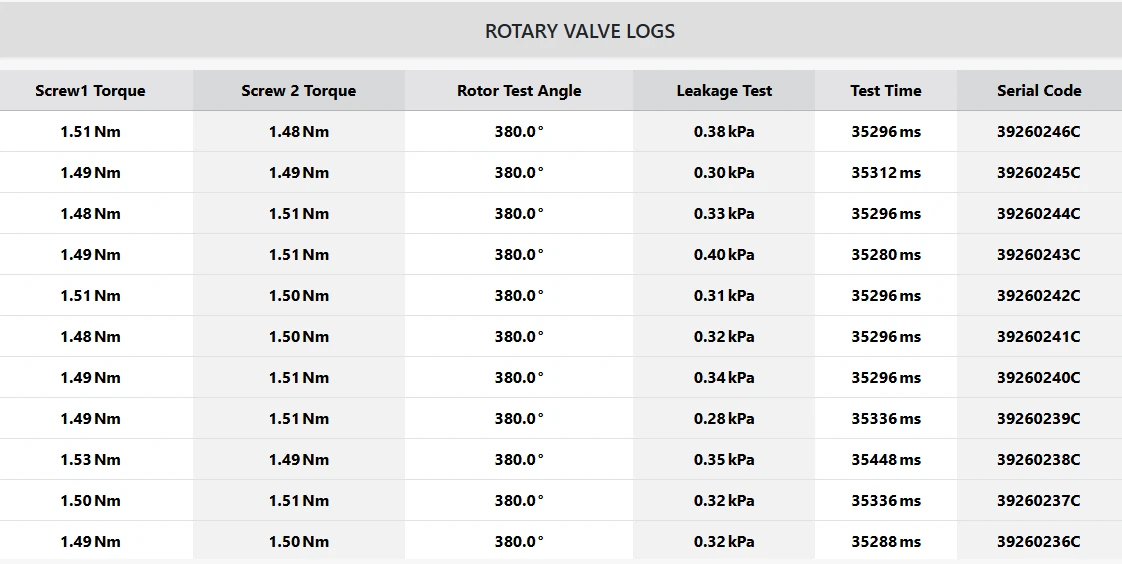
Every part. Every value. On record.
The machine writes a line for every valve it builds. Open the log and you see what each one measured.
- 01
Two torques
Screw 1 and screw 2, the value each one reached.
- 02
Angle, leak, time
The angle the rotor was turned through, the leak test result and how long the test took.
- 03
A code and a time
The unique serial code marked on the valve, and when it was made. One line per valve, ready to export.
On its own, from above
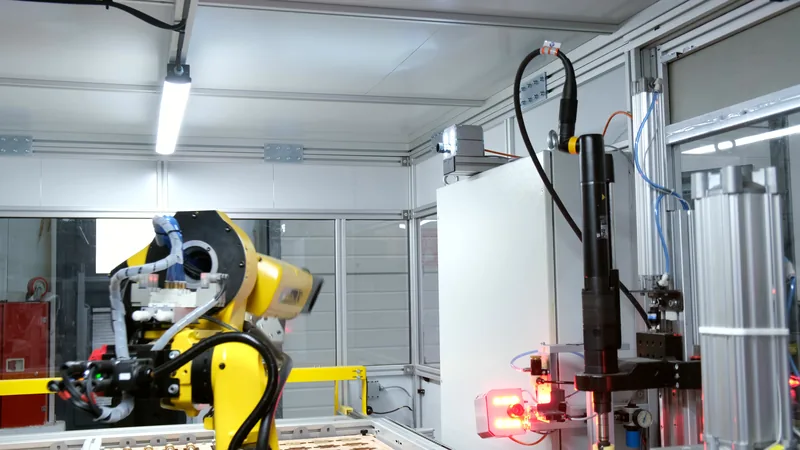
A ceiling camera watched the cell during its trials at our plant. Fifty minutes of it, sped up a hundred times: the robot picks from the drawer, works the stations and fills the boxes, and nobody comes in.
- 01
Drawers on the left
Brass bodies laid out in rows, enough for hours.
- 02
Stations around the robot
Assembly, screwing, leak test and marking, all within the robot’s reach.
- 03
Boxes on the right
Finished valves go into boxes, and full boxes go to the rack.
One platform, ready to run
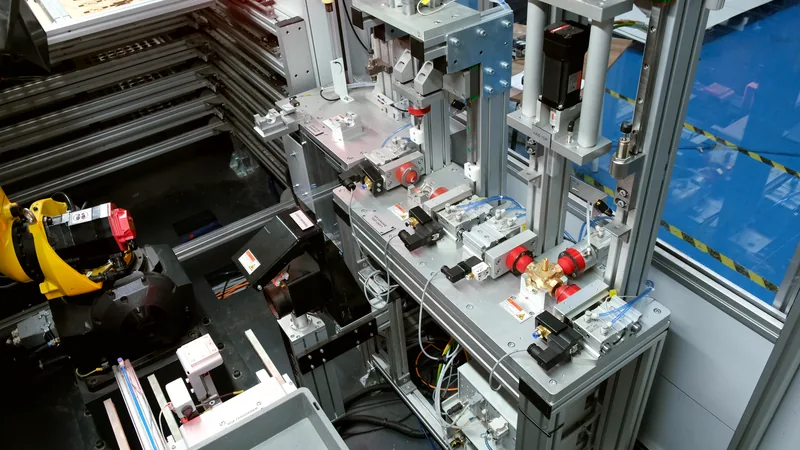
Robot, drawers, stations, laser and box handling sit on one base. The machine was built and tested at our plant and went to FIRST in Slovenia as one unit, for a short commissioning on site.
What a machine like this takes
Three parts, two screws, a pressure test, a code and a camera check for every valve, with the operator coming by once a shift.
- 01
Short cycles, hard problems
Many parts, many checks, little time per part. We take on that kind of problem and design every move around the cycle your plant needs.
- 02
One robot, every station
A single six-axis robot feeds every station, so each move, grip and hand-off is tuned until nothing waits for the robot.
- 03
Everything on one platform
Feeding, assembly, joining, marking, inspection and packing fit on one base. It is built and tested at our plant and leaves as one piece.
- 04
Data from every station
The machine software is ours. It keeps what each station measured, for every part, and shows it on one screen.
Gallery
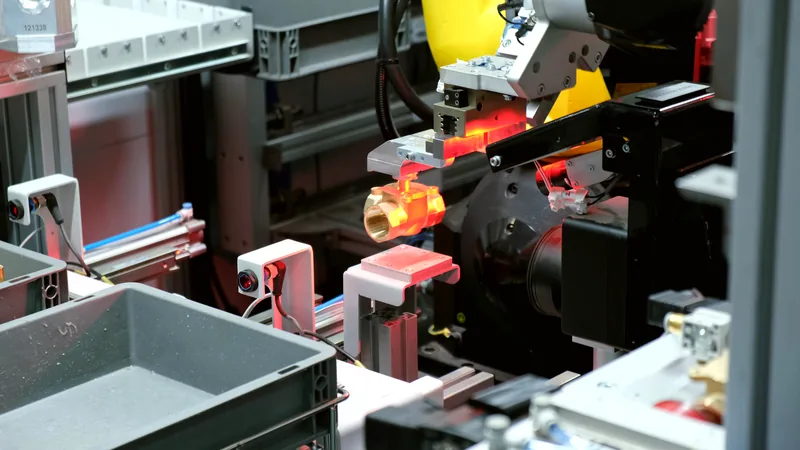
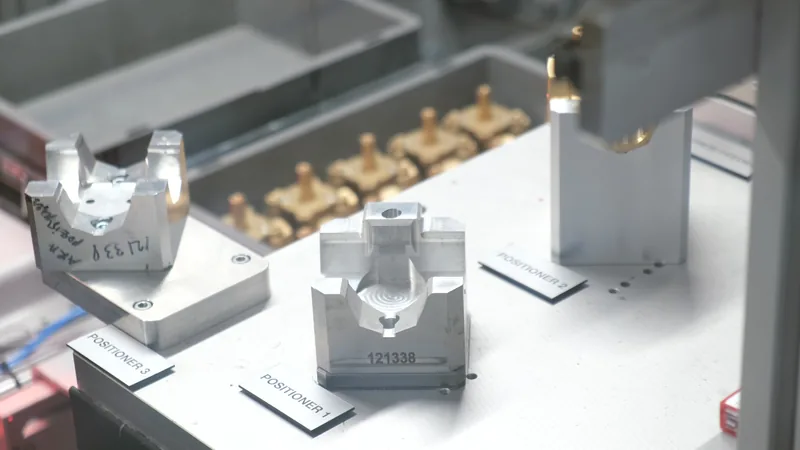
The film of the machine in production, and a few more views of it.

The machine in brief
- Application
- Valve assembly, torque-controlled screwing, leak test, laser marking, packing
- Solution
- Assembly and Quality Control
- Customer
- FIRST, Slovenia: valves and actuators
- Parts
- Brass rotary valves, three components each
- Robot
- FANUC M-10iD/12, six axes
- Feeding
- Drawers, loaded once per shift
- Screwing
- Two screws, torque-controlled, each value recorded
- Leak test
- High-pressure air, stem turned through 380°
- Marking
- Laser, a unique code per valve, read back by OCR
- Packing
- KLT boxes; a Cartesian robot moves them to the rack
- Operator
- One visit per shift (0.5 operator)
- Buffer
- 8 hours of components
- Traceability
- Every value of every valve on record
- Platform
- One base, built and tested at our plant, shipped as one unit
Questions we are asked
What does the operator do?
Fills the drawers with components at the start of the shift and takes the full boxes from the rack. The drawers hold eight hours of parts, so one visit per shift is enough.
What is tested?
Tightness, with high-pressure air, while the stem is turned through 380°. A valve that seals in one position and leaks in another is caught.
What is recorded?
For every valve: the torque of each screw, the angle the rotor was turned through, the leak test result, the test time, its serial code and the time it was made.
How is a valve traced?
A laser marks a unique code on it, a camera reads the code back, and the record of that valve is stored under it.
Which valves can it take?
It was built for FIRST’s family of brass rotary valves. Similar valves can follow the same path. Send us your drawings and we will tell you how they would be fed, joined, tested and packed.
How fast is it?
The cycle is set by the valve and by the test it needs. Send us yours and we will tell you the cycle for it.
How is it delivered?
As one unit on its own base, built and tested at our plant first, so the commissioning on site is short.
Send us your part
Every machine starts with the part. Send us your valve or its drawings, what has to be joined, screwed and tested, and how it should be packed, and we will work out the machine with you.
Talk to an engineer