
Safety seal assembly
Ten plastic seals in one body, a small metal clip in each and a plug on top, welded shut. On one rotary table, two robots set the clips, the plugs are welded, every seal gets its own barcode and a camera checks it. One operator loads the bodies.
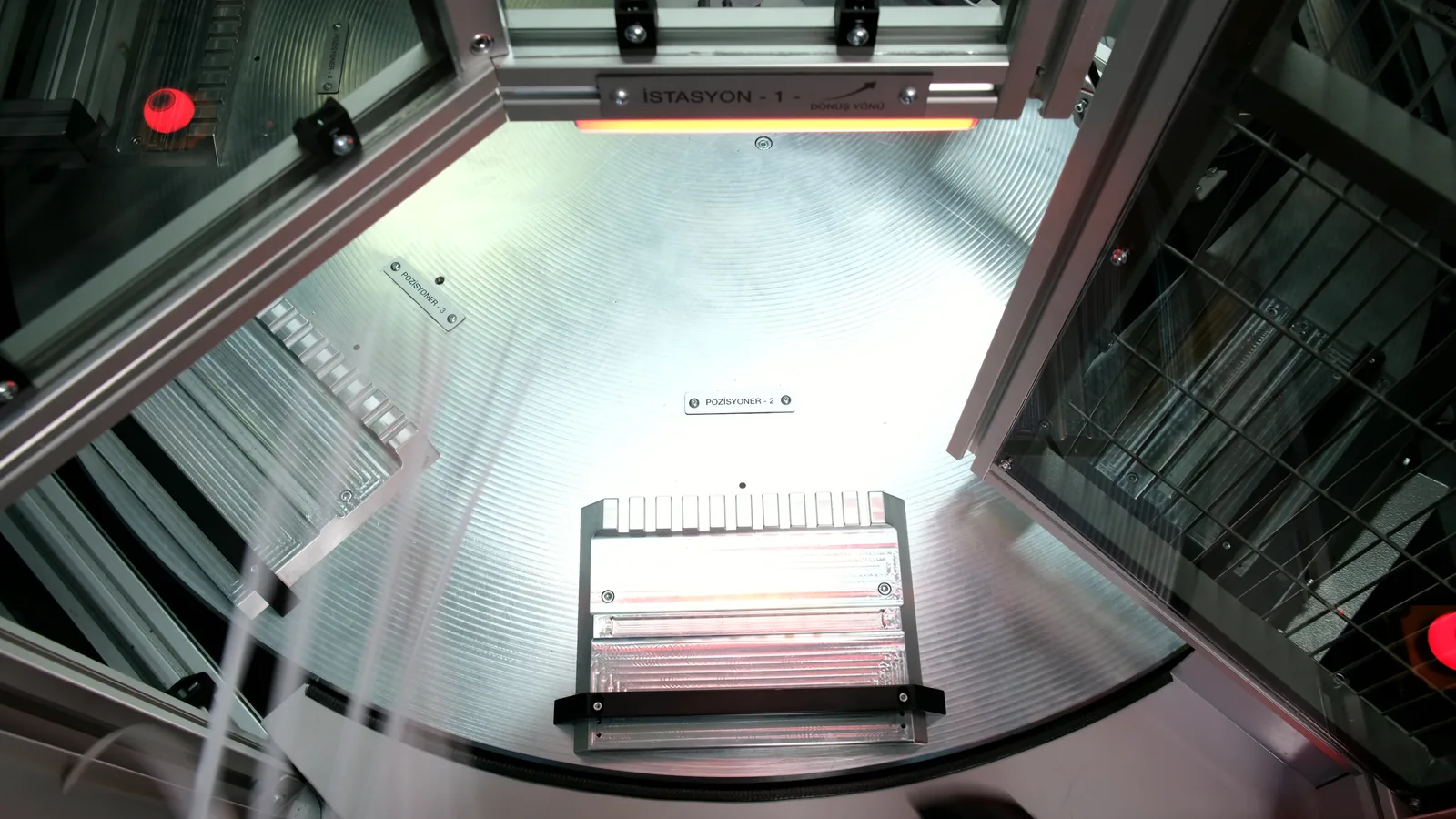
01Loaded by the operator 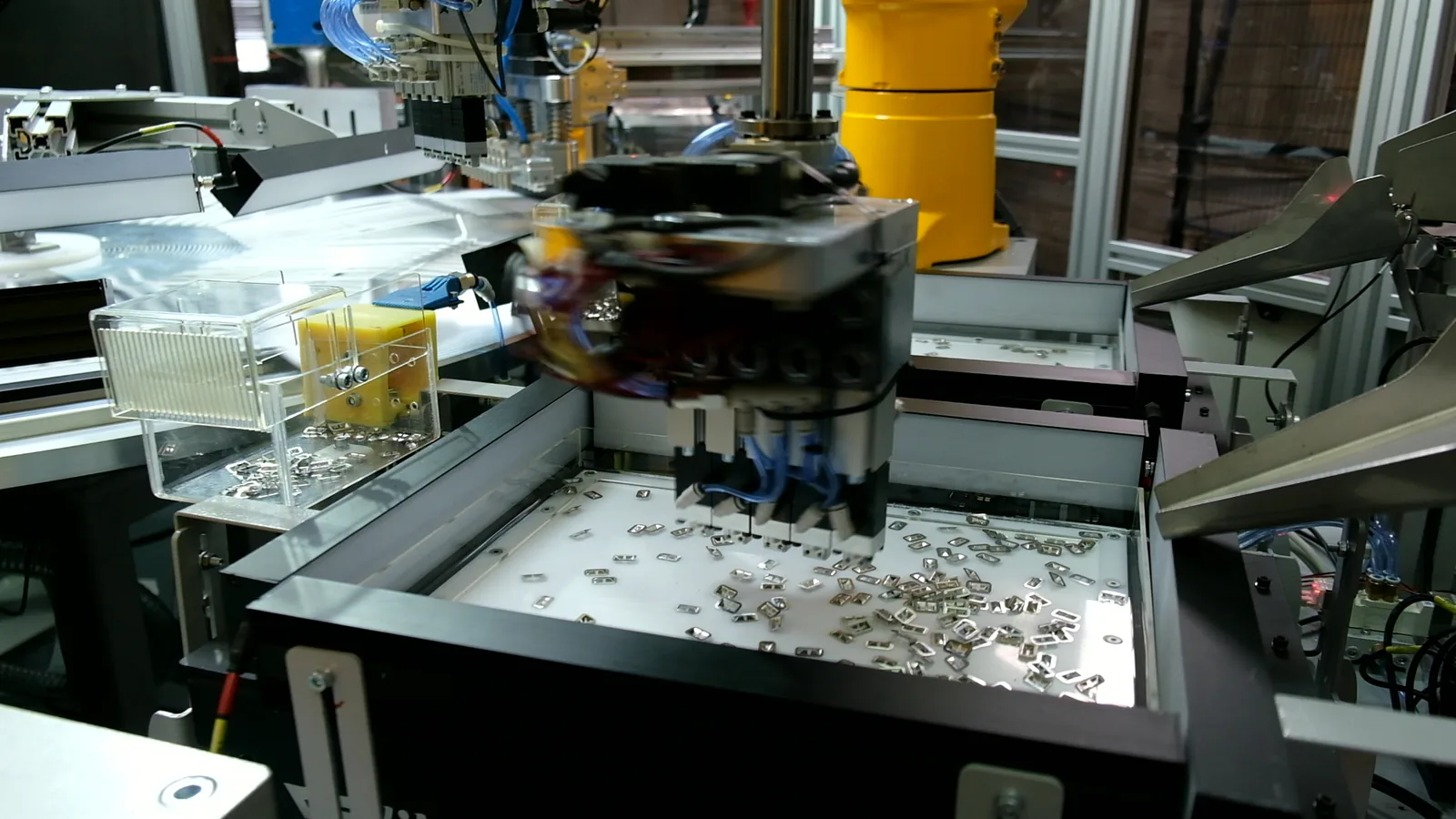
02Clips picked from the feeder 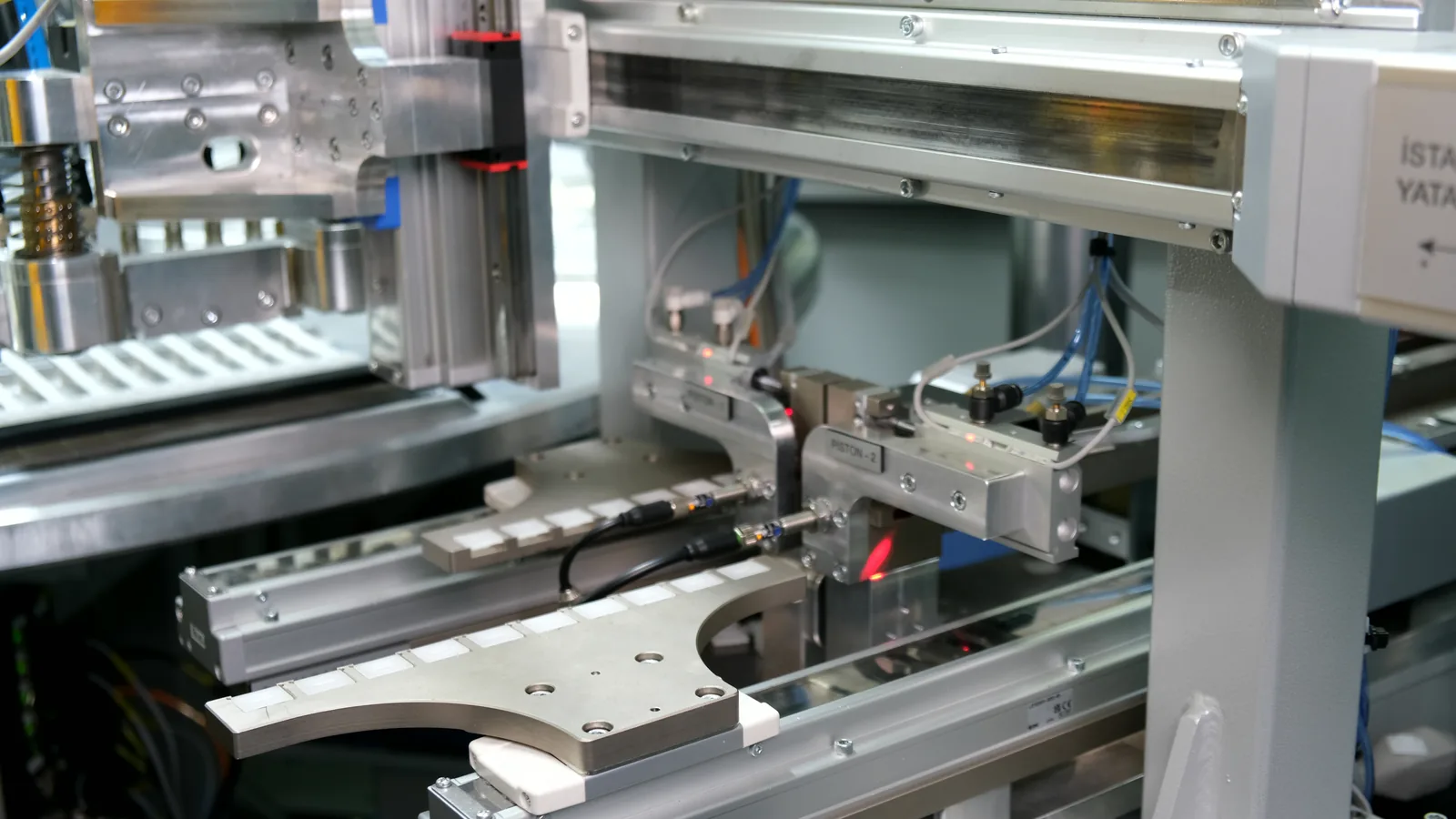
03Plugs set 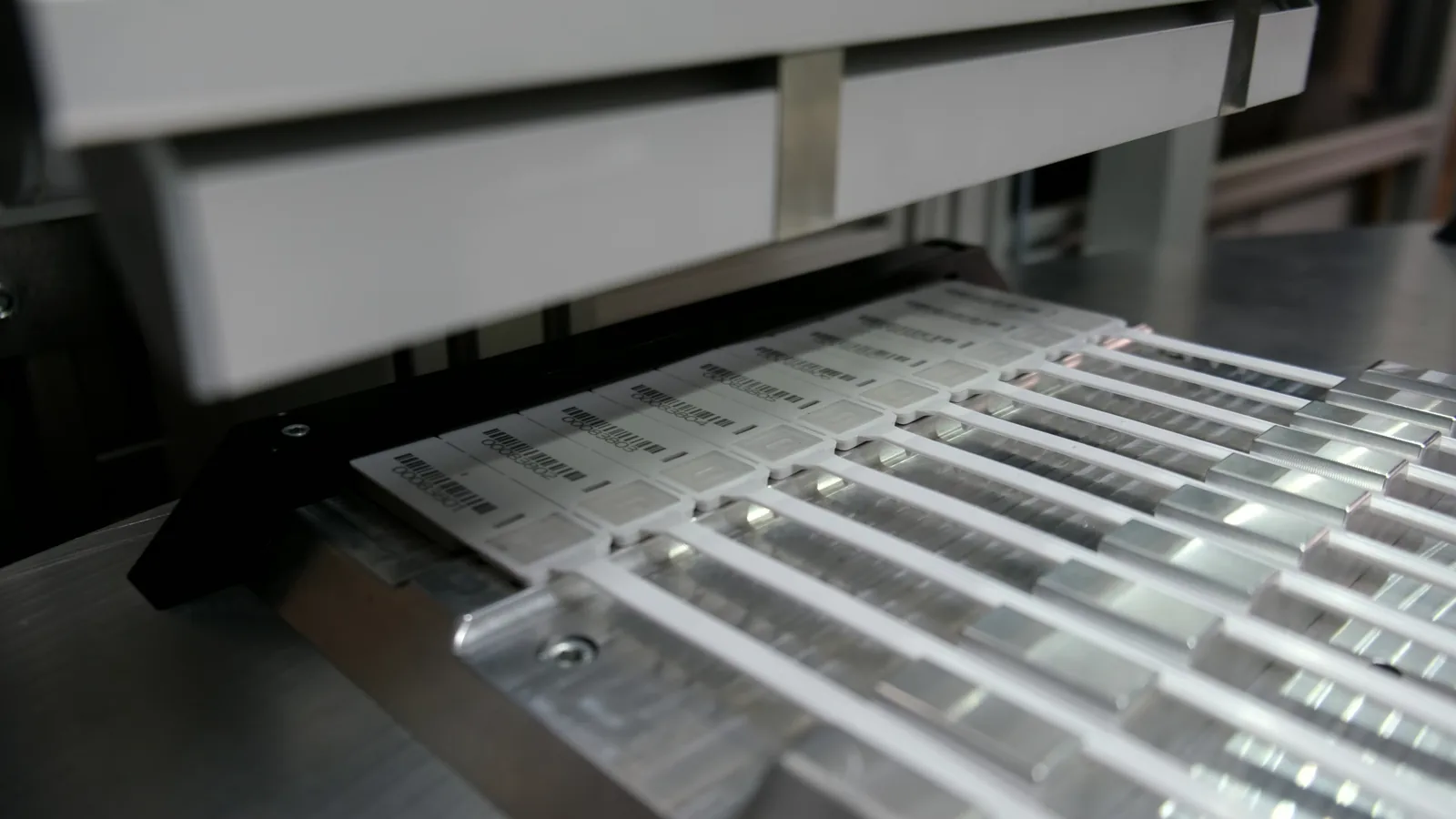
04Checked by camera
Three parts, one seal
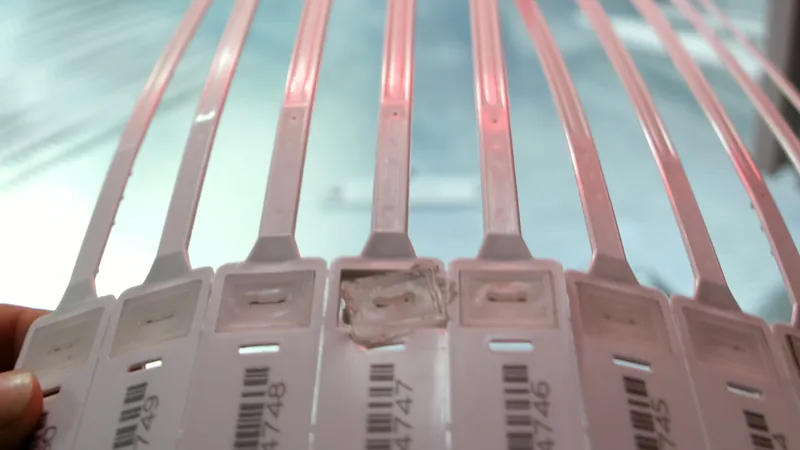
A safety seal is pulled through and locked once; it can only be opened by breaking it. Each one is made of three parts.
- 01
The body
Ten seals moulded together, still empty when the operator lays them in.
- 02
The clip
A small metal clip in each seal, which locks the tail once it is pulled in. It has a top and a bottom, and only one way is right.
- 03
The plug
A plastic plug over each clip, welded to the body so the clip cannot be reached.
Eight stations, one table
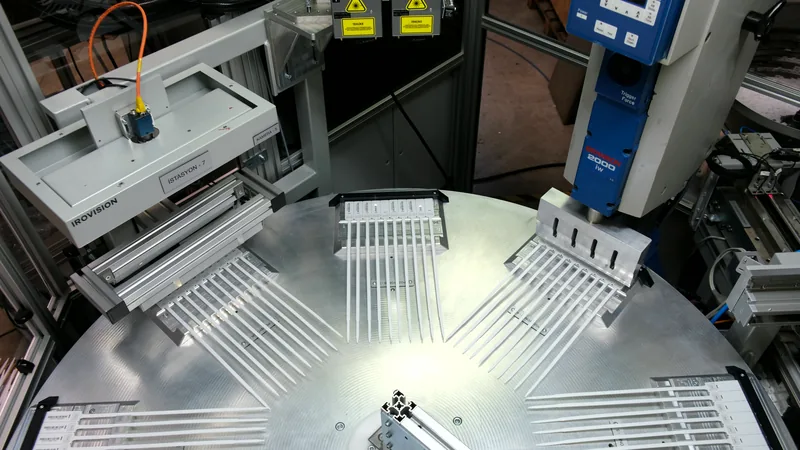
The rotary table turns one station at a time, and every body goes all the way round. Hover over a station to watch it.
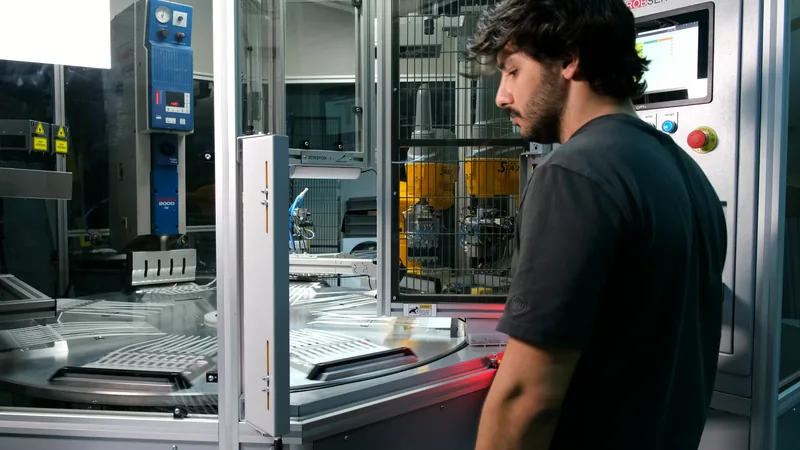
01LoadThe lights by the nest show which seals passed. The operator takes the finished seals and lays an empty body in the nest. 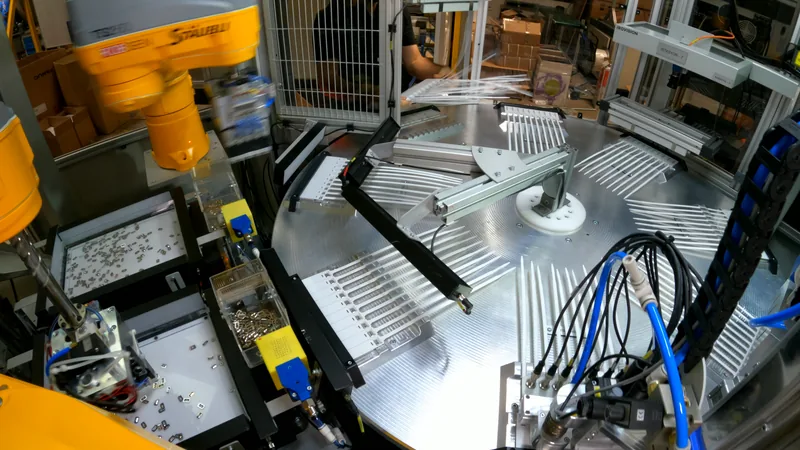
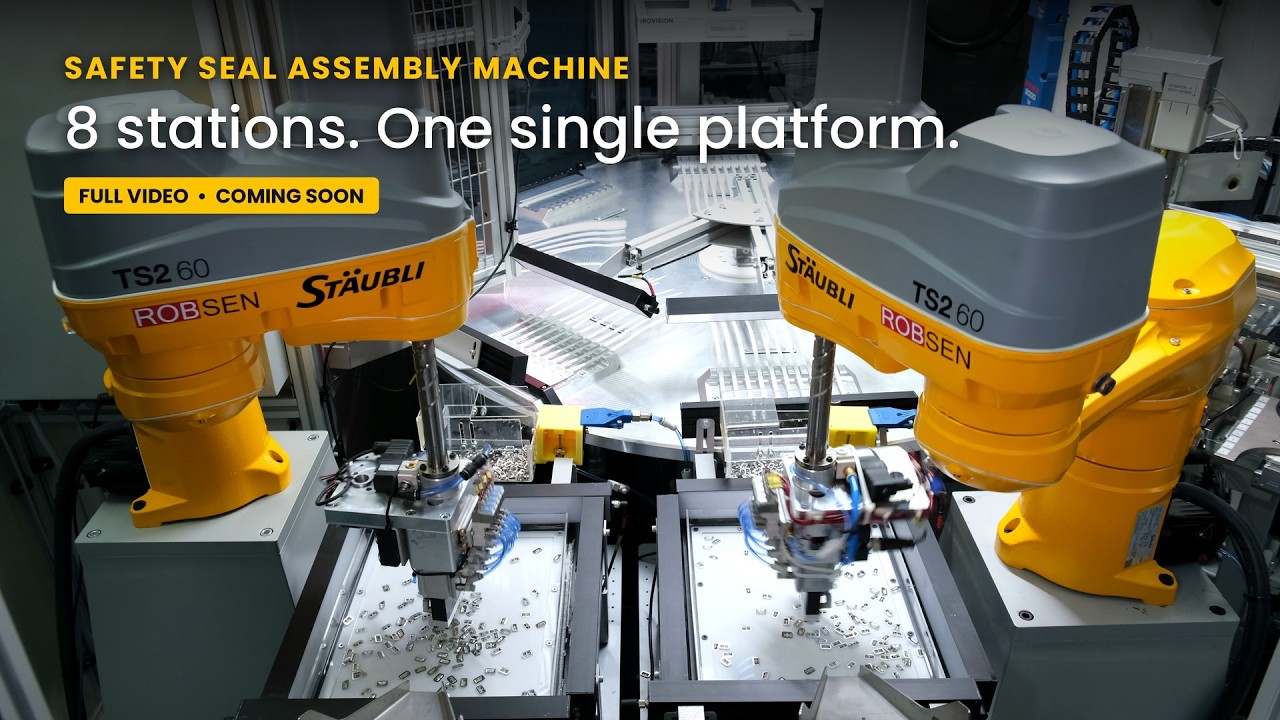
02Clip insertionTwo robots set the clips, each from its own feeder. A camera checks every clip is in place before the table turns. 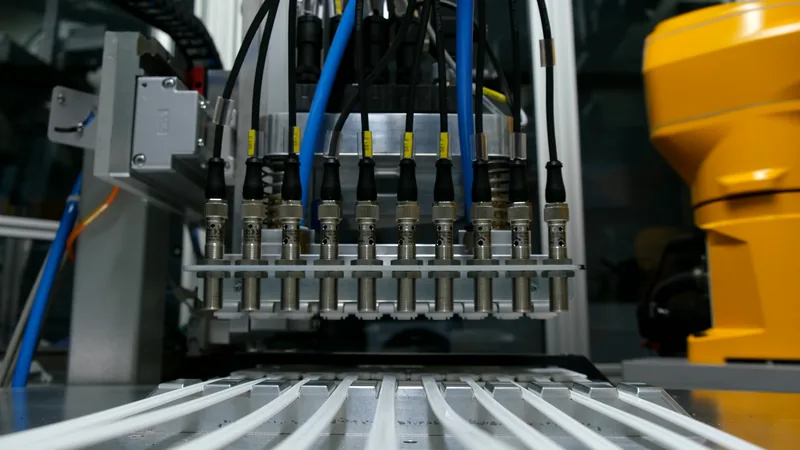
03PlugsA magazine sets a plug over each clip, five at a time. 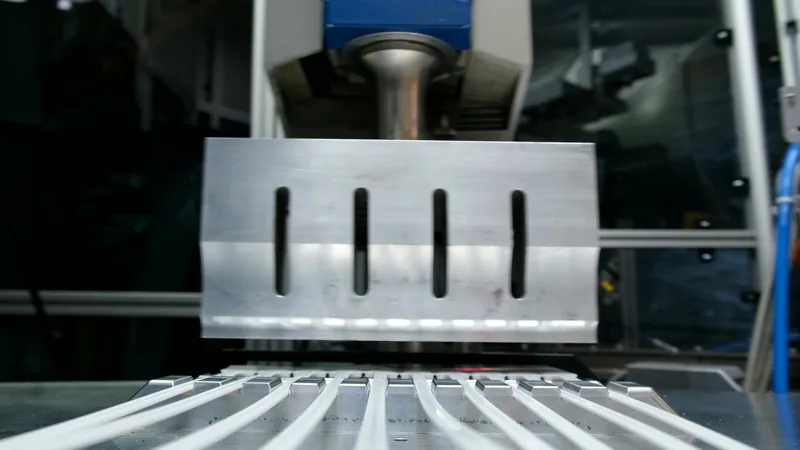
04Ultrasonic weldingThe sonotrode welds the plugs to the body. 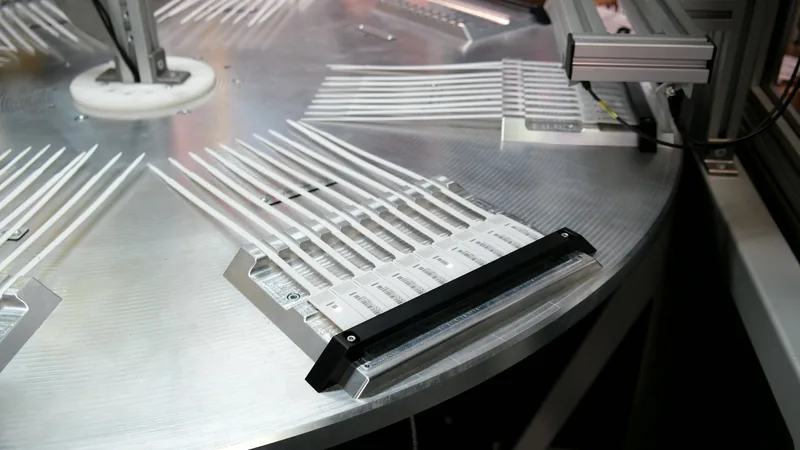
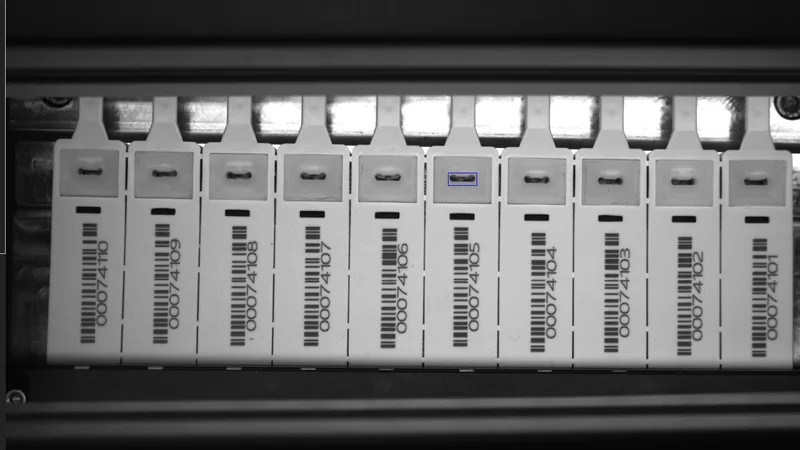
05Laser markingEvery seal gets its own barcode. 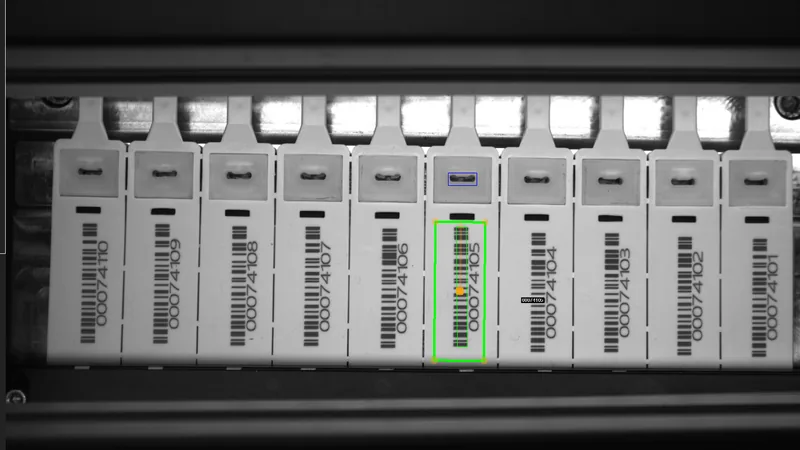
06ValidationUnder its own light, a camera checks every head, reads every barcode and the printed text. One more station is kept free for a later step.
Clips from a flexible feeder
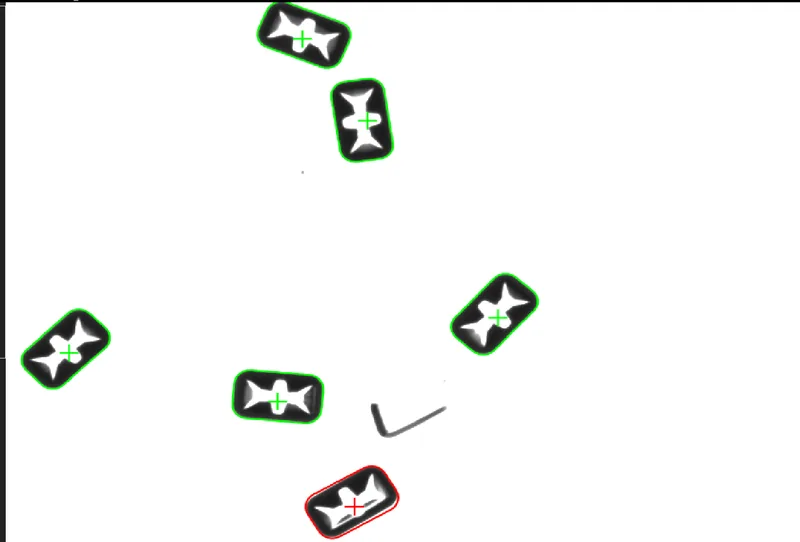
The clips are tiny, and they only fit one way up. So they come from a flexible feeder: a plate lit from below, with a camera above that sees each clip.
- 01
Filled from outside
The operator tips clips into the hopper from outside the machine. When the plate runs low, the hopper shakes more onto it.
- 02
Lit from below
The plate is lit from underneath, so every clip shows as a sharp outline to the camera above.
- 03
Which way up
The camera finds each clip and sees which way up it lies. A clip turned over cannot be used; it stays and is shaken again.
- 04
Picked one by one
A magnetic gripper on the SCARA robot picks the clips one by one, five on each trip, and sets them in the body.
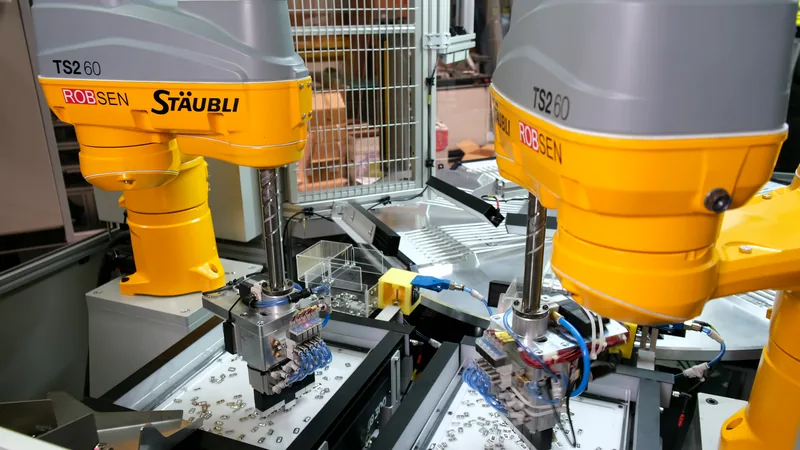 Real speed
Plugs from the bowl
The plugs come from a vibratory bowl.
- 01
Hundreds at once
The operator tips hundreds of plugs into the bowl, again from outside the machine.
- 02
Up the track
They walk up the bowl’s track and along linear feeders, lined up, to a magazine.
- 03
Five at a time
The magazine fills ten places and sets the plugs on the body, five at a time. The welder seals them in at the next station.
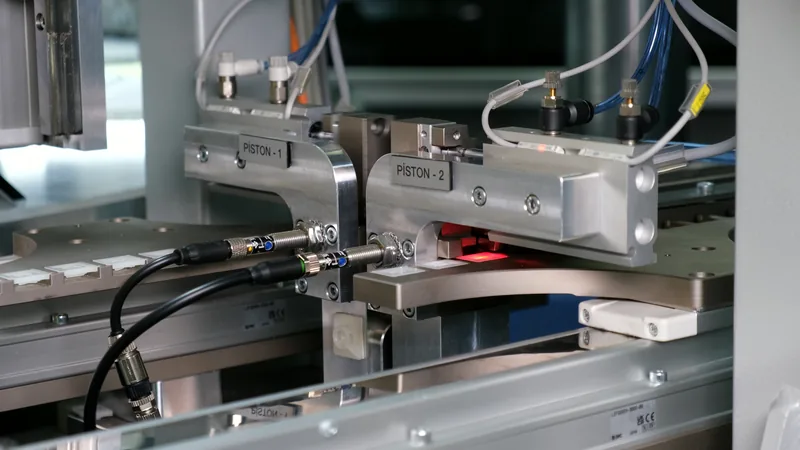
A camera at every step
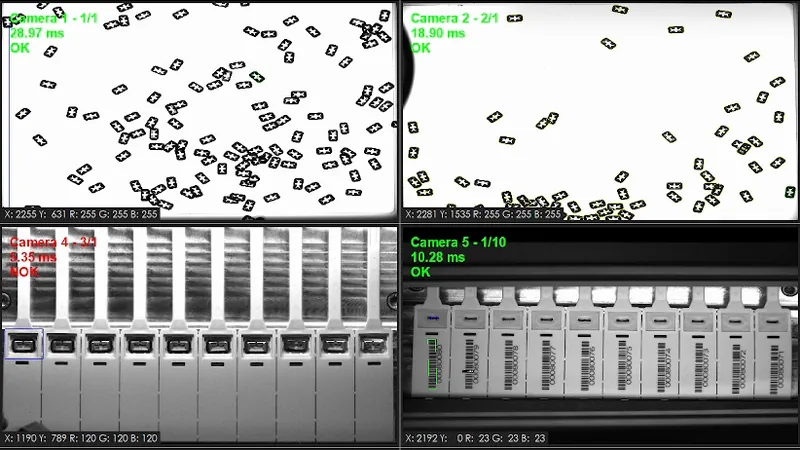
A missing clip never gets a plug, and a code that cannot be read never leaves as OK. IROVISION, our own vision software, decides at each station.
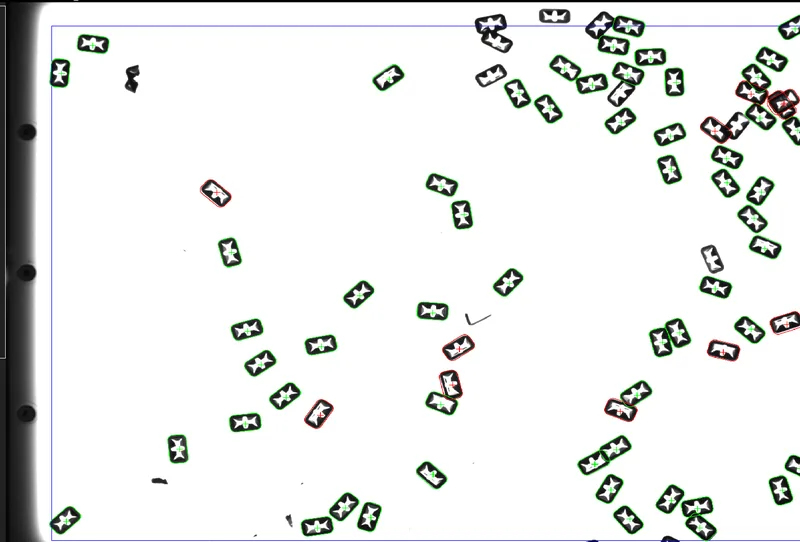
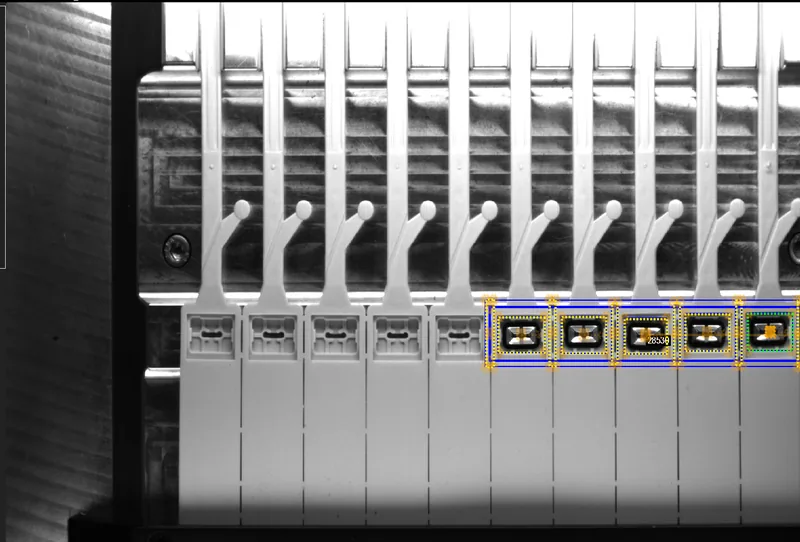
One operator, outside
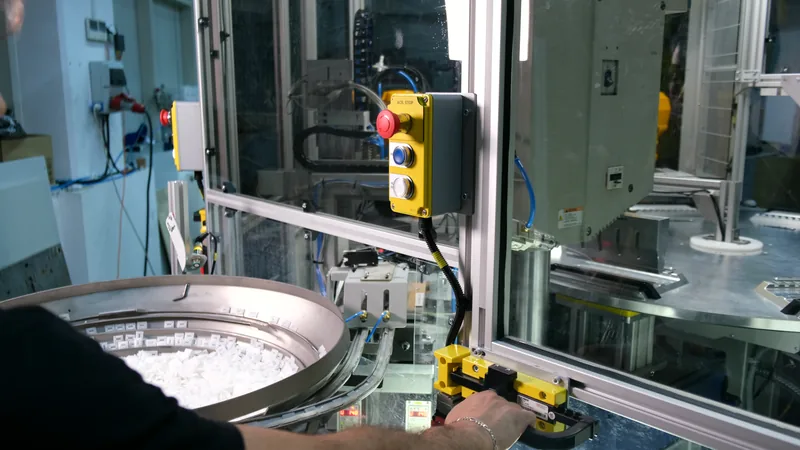
The operator loads bodies at one station and never reaches into the machine.
- 01
Loading behind a light curtain
The loading station is open to the operator, guarded by a light curtain. Everything else is behind glass.
- 02
Feeders filled from outside
The clip hoppers and the plug bowl are filled from outside, while the machine runs.
- 03
OK at a glance
The touch buttons by the nest show the result for every seal as the body comes back.
What a machine like this takes
Ten seals a body, three parts each, a weld, a code and a check for every seal: a lot to do on one table, in a short cycle.
- 01
Short cycles, hard problems
Many parts, many checks, little time per part. We take on that kind of problem and design every move around the cycle your plant needs.
- 02
SCARA robots near their limits
We tune the moves, grippers and timing until the robots run close to what they can do, without slowing for the stations around them.
- 03
Everything on one platform
Feeding, assembly, joining, marking, inspection and packing fit on one base. It is built and tested at our plant and leaves as one piece.
- 04
Vision we write ourselves
IROVISION is our own software, written by our own team: matching, measuring, surface defects, fine measurements in the image, telecentric optics. When a check needs something new, we add it.
Gallery
The film of the machine in production, and a few more views of it.
The machine in brief
- Application
- Clip assembly, ultrasonic welding, laser marking, vision check
- Solution
- Assembly and Quality Control
- Product
- Plastic safety seals, ten to a body
- Stations
- Eight on one rotary table, one in reserve
- Robots
- Two SCARA robots, magnetic grippers
- Clip feeding
- Flexible feeders, lit from below, camera above
- Plug feeding
- Vibratory bowl, linear feeders, magazine
- Joining
- Ultrasonic welding
- Marking
- Laser, a unique barcode on every seal
- Inspection
- IROVISION at every step
- Operator
- One, outside the machine
- Platform
- One base, built and tested at our plant, shipped in one piece
Also: final control and packaging
O-rings fitted, every fitting measured, rejects sorted, the good ones packed.
Also: valve assembly and testing
Three parts joined, two screws torqued, a leak test through the full travel, a code on every valve.
Machine tending with IROCUBE
The same vision, finding parts without fixtures for CNC machines.
Questions we are asked
Why a flexible feeder for the clips?
The clips are tiny and only fit one way up. A flexible feeder with a camera finds the ones lying the right way up and leaves the rest to be shaken again.
What if a clip is missing?
A camera checks the five clips in the body before the table turns. A body with a clip missing does not go on as OK.
How is every seal traced?
Each seal is laser-marked with its own barcode, and a camera reads and checks it before the body comes back to the operator.
Why is one station empty?
It is kept free so a step can be added later, without rebuilding the machine.
How fast is it?
Fast: the robots run close to their limits and nothing waits for anything else. The cycle depends on the product; tell us yours and we will tell you the cycle for it.
Does it need more than one operator?
No. One operator loads the bodies, fills the feeders from outside and takes the finished seals.
Send us your part
Every machine starts with the product. Send us your parts or their drawings, how they go together and what has to be checked, and we will work out the machine with you.
Talk to an engineer