
Part extraction for high-pressure die casting
A robot takes every casting out of the die, checks on a sensor plate that the whole casting came out, quenches it and lays it in the trim press. Nobody has to reach into a hot die, and the machine keeps its rhythm.
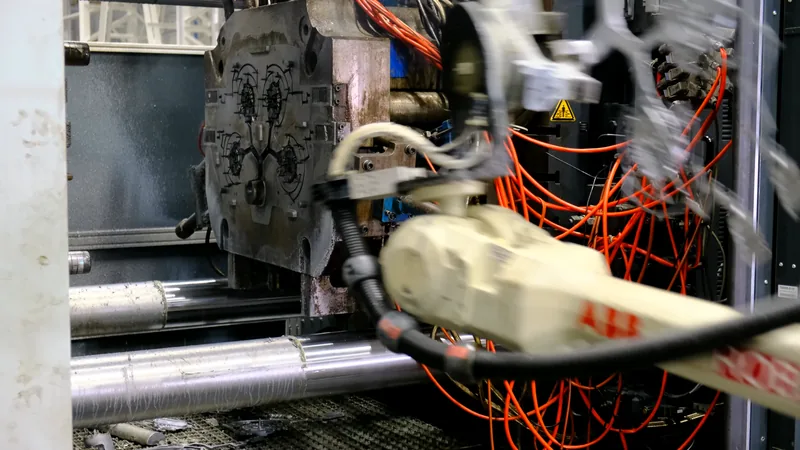
01Out of the die 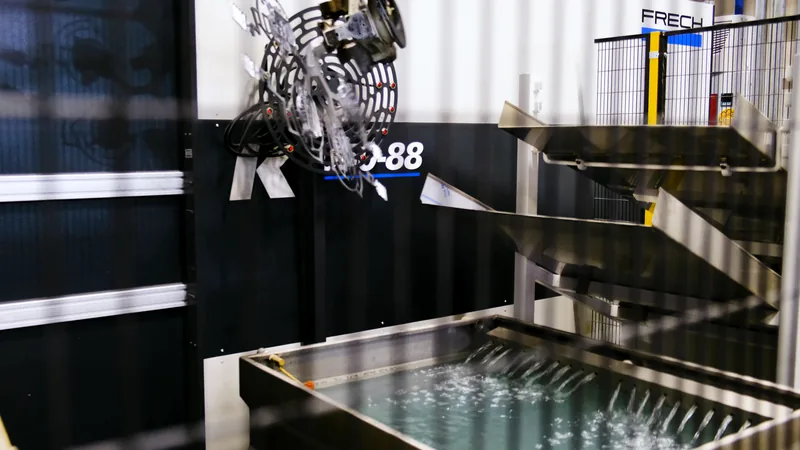
02On the sensor plate 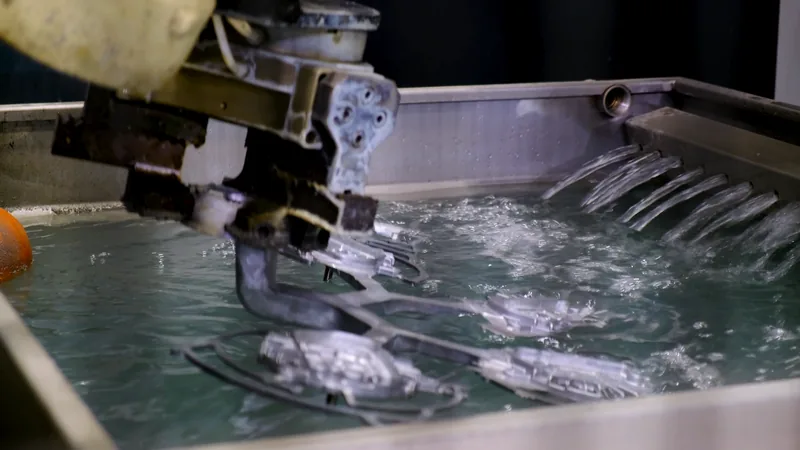
03Into the quench tank 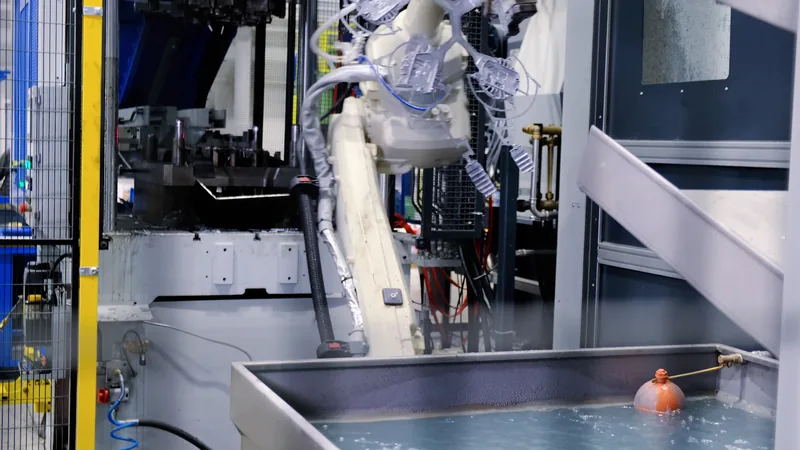
04Into the trim press
Hot, heavy and at arm’s length
Taking castings out of a die casting machine manually is one of the hardest jobs in a foundry. Die casters ask us for a robot for the operator’s sake first, and then for the machine’s.
- 01
Hot metal
Aluminium goes into the die at well over 600 °C. Seconds later the casting comes out still hundreds of degrees hot.
- 02
Weight at arm’s length
Nobody holds a hot casting close. At the end of long tongs even a light casting pulls hard on the hands, shot after shot.
- 03
Steam from the die
Before each shot the open die is sprayed so the next casting does not stick. On the hot steel the release agent turns to steam at once, right where the hands were.
- 04
A costly machine waiting
A die casting machine is one of the most expensive machines in a plant. Each time the operator is slower, tired or away, it waits.
A light casting at the end of long tongs
Short tongs are easy to hold, but the heat is right at the hands. Long tongs keep the heat away, but they work as a lever: the further the casting is from the hands, the more the hands have to hold. Try it: set the tongs and the casting, and see what the operator goes through, shot after shot.
From the die to the trim press
One robot does the whole round, casting after casting, in step with the die casting machine and the trim press. Hover over a step to watch it.
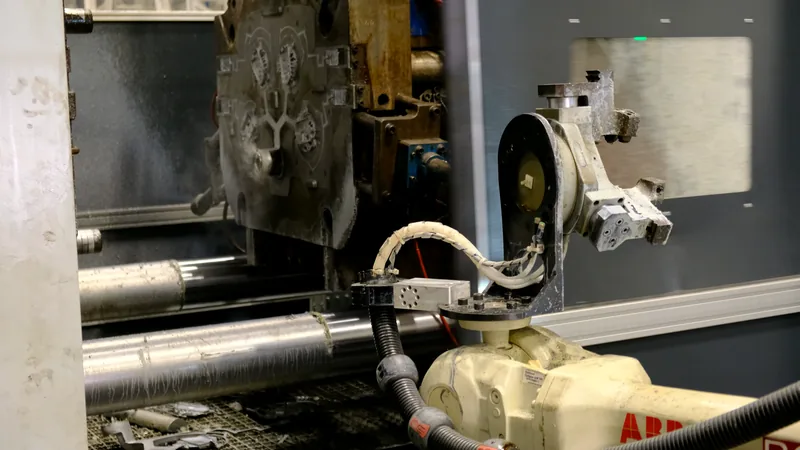
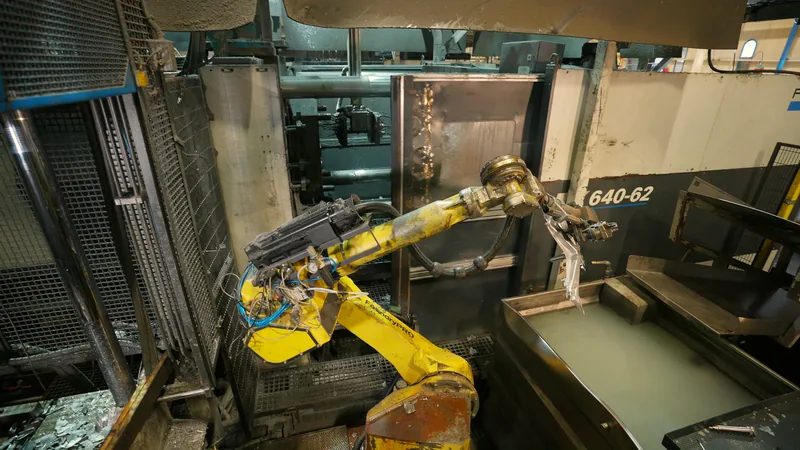
01Out of the dieWhen the die opens, the robot reaches in, grips the casting and draws it out. The cell and the machine tell each other when the die is open and when it may close. 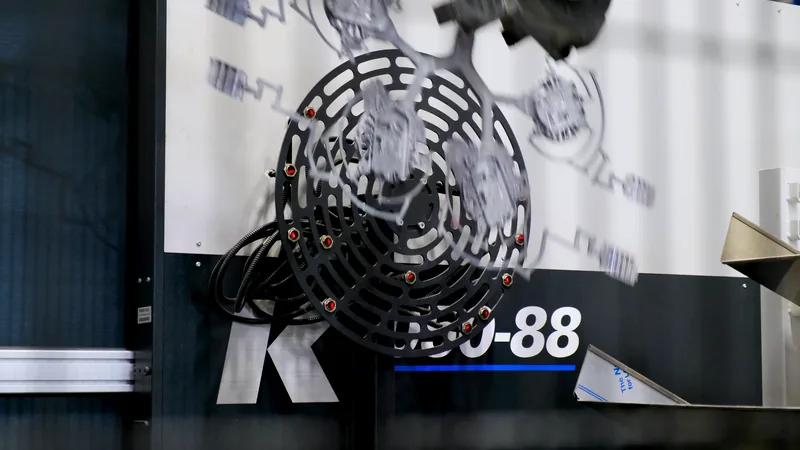 ½×
02Checked on the sensor plateIt holds the casting against a plate with a sensor for every part, and more on the runners. Every sensor has to find its piece. Shown at half speed: the check takes a moment. 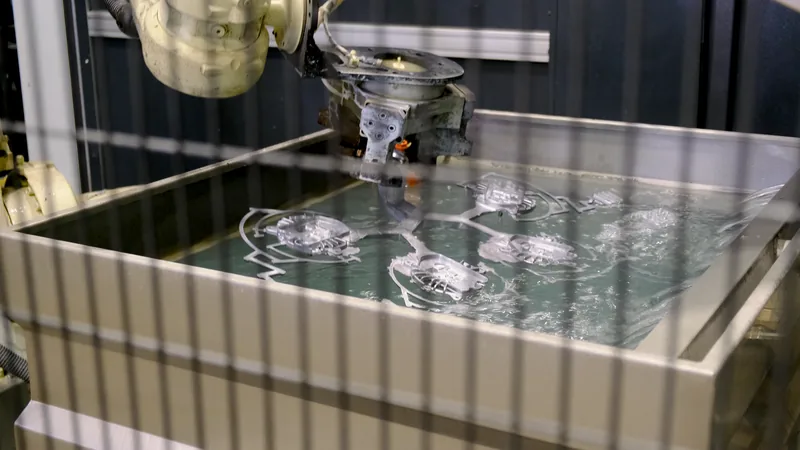
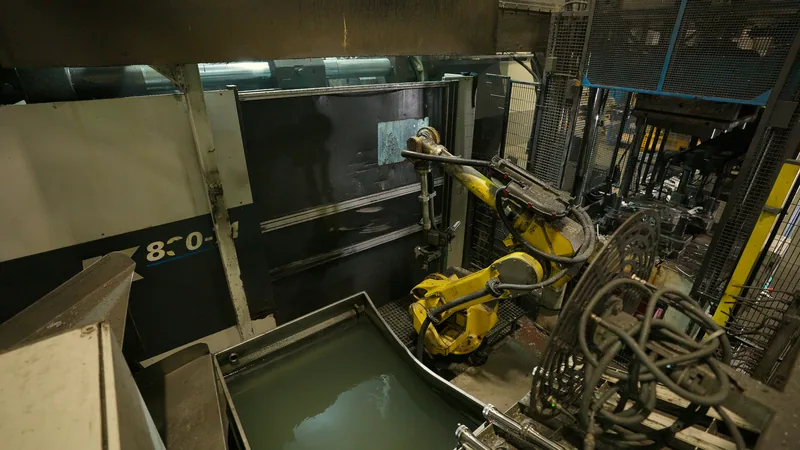
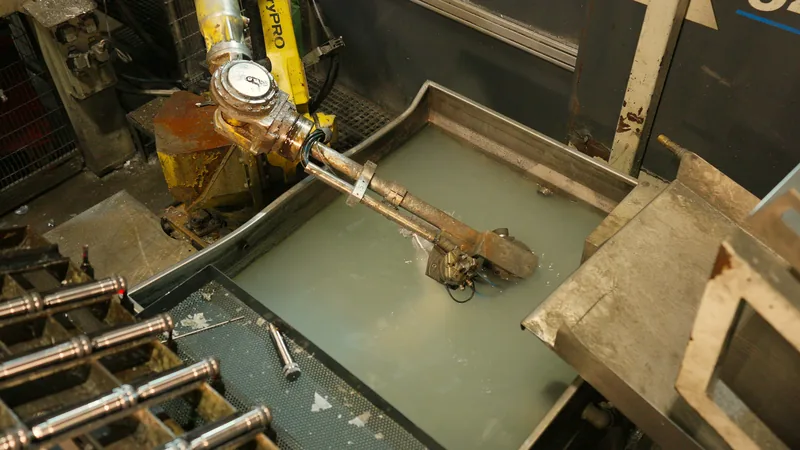
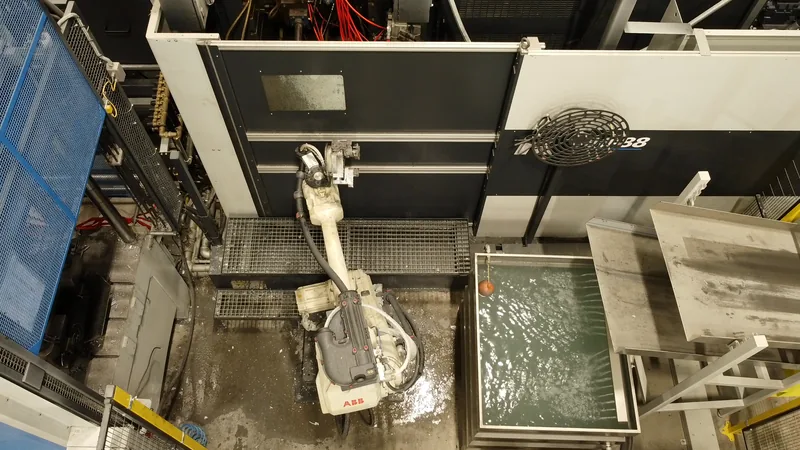
03QuenchedA dip in the water takes the heat out of the casting, so it can be trimmed and handled. 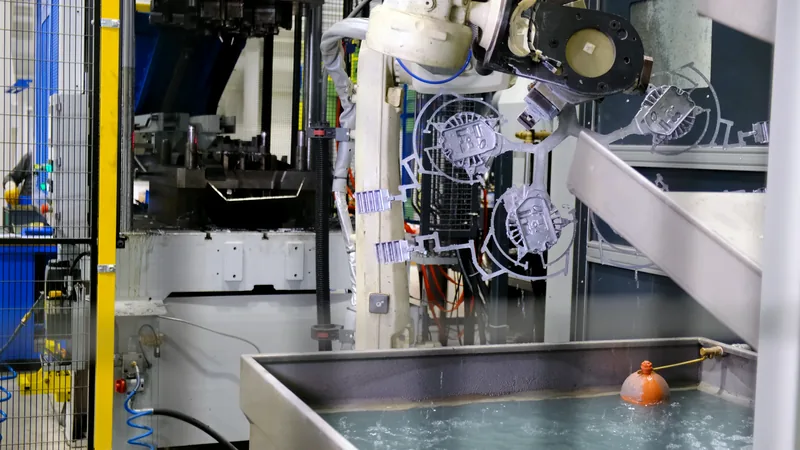
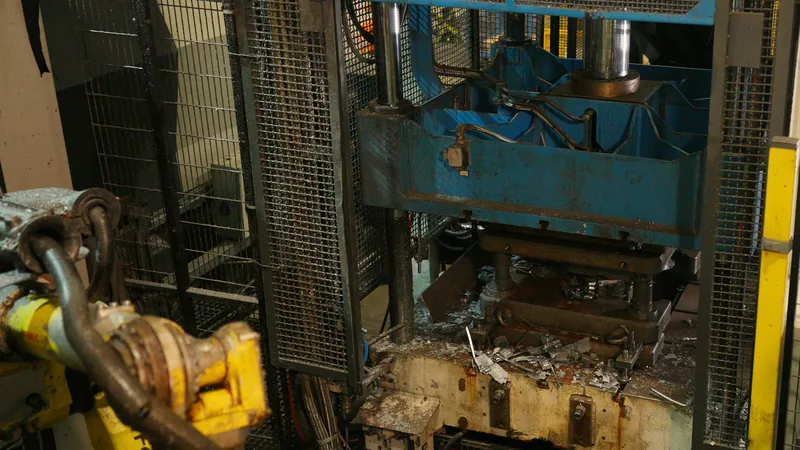
04Into the trim pressThe robot lays the casting in the trim die. The press cuts off the runner, the biscuit and the overflows. 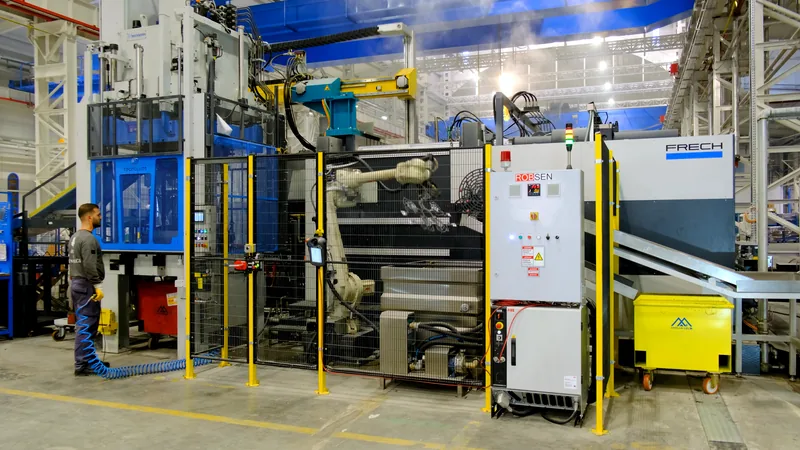 4×
05In step with the pressIf the trim press is busy, as here while the operator opens it and cleans it, the robot waits with the next casting.
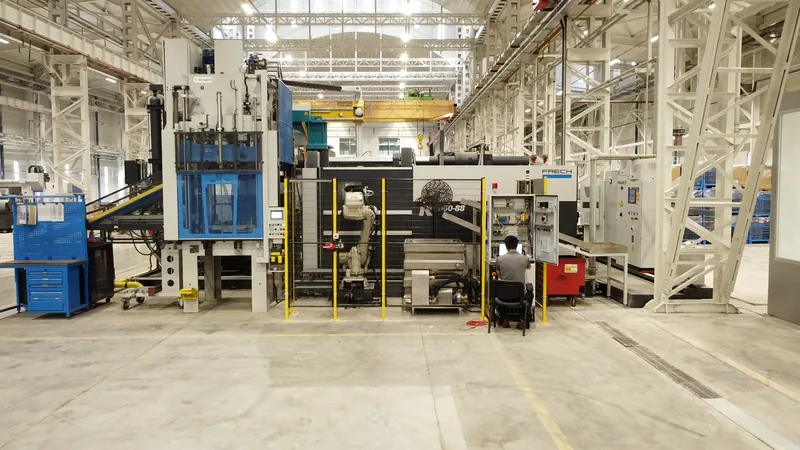
Filmed in the cell at a die caster’s plant. In step 01 a few seconds of the robot holding still in the die are cut out.
Did the whole casting come out?
A die often casts several parts in one shot, eight for example, joined by runners; the trim press cuts them apart later. Now and then one of them stays in the die, or a piece of runner does. If the die closes on it at the next shot, it can damage the die, the most expensive tool at the machine. So before the die closes again, the robot holds every casting against a sensor plate, with a sensor for every part and more on the runners. Did every part come out, and did it come out whole?
Sensors, not a camera
We write our own vision software, and 95% of our projects are vision-guided. At the die we choose sensors, on purpose.
We call the plate the daisy, after its shape.
- 01
Steam and mist do not blind it
Release agent spray and quench steam fill the air at the die. A camera sees fog; a sensor right at the metal does not.
- 02
No lens to keep clean
Release agent and metal dust settle on everything at the machine. A lens has to be clean to see; a sensor keeps working.
- 03
No light to tune
No lighting, no glare off fresh aluminium, no threshold to set. Each sensor gives a plain yes or no.
- 04
Set for your casting
A sensor for every part of your casting and on its runners. Where they sit, and which type of sensor, follows the casting; a new casting gets its own set.
Built for the heat at the machine
Everything in the cell works next to molten metal, steam and release agent, shift after shift.
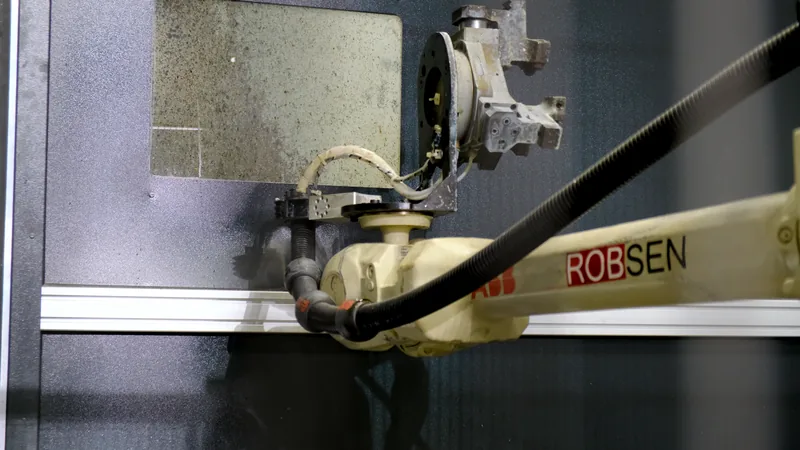
It knows when the die is open
The cell and the machine exchange signals. The robot reaches in only when the die is open, and the die closes only when the robot is out.
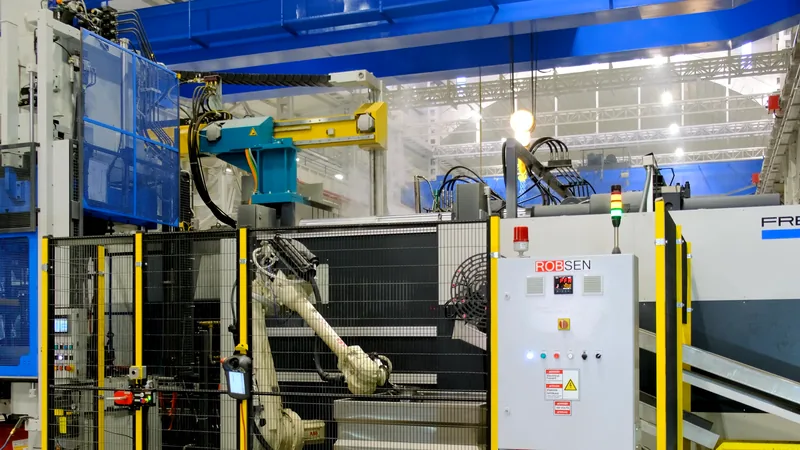
Steam, with nobody in it
The die is sprayed and steams at every shot. Inside the guarding, only the robot is near it.
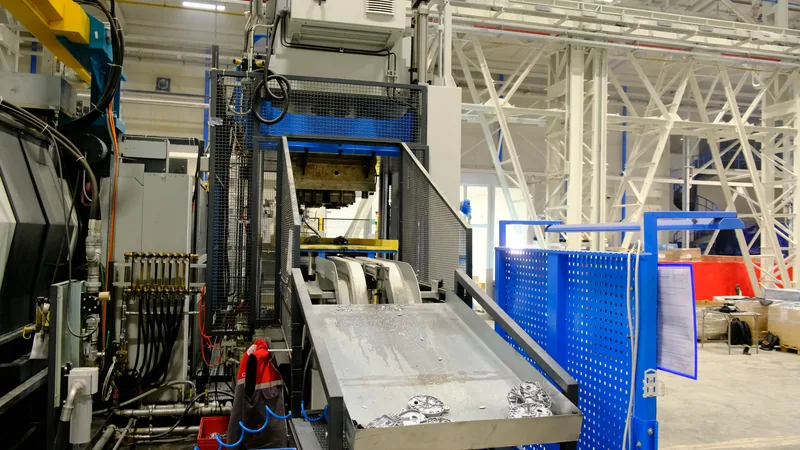
Around your trim press
We fit the cell around your trim press. The trimmed parts leave on a two-level stainless slide, into the bin.
- Also in the cell
- A foundry-protected robot, sealed against water, release agent and metal dust. A gripper with sensors, so the robot knows it holds the casting. Cables run in heat-resistant hoses where the heat reaches them. Safety fences with locked doors, and the robot’s working zone limited in its own safety controller. Inserts can be placed in the die by the same robot, where the part needs them.
The cell at work
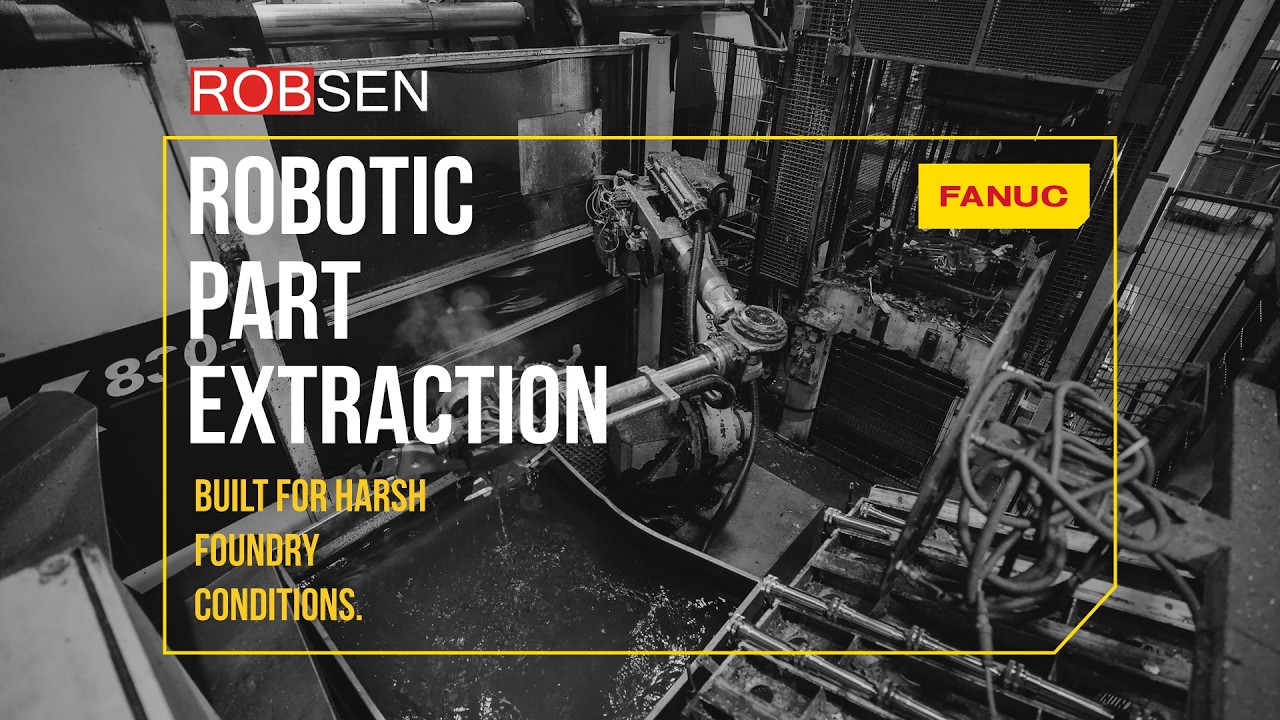
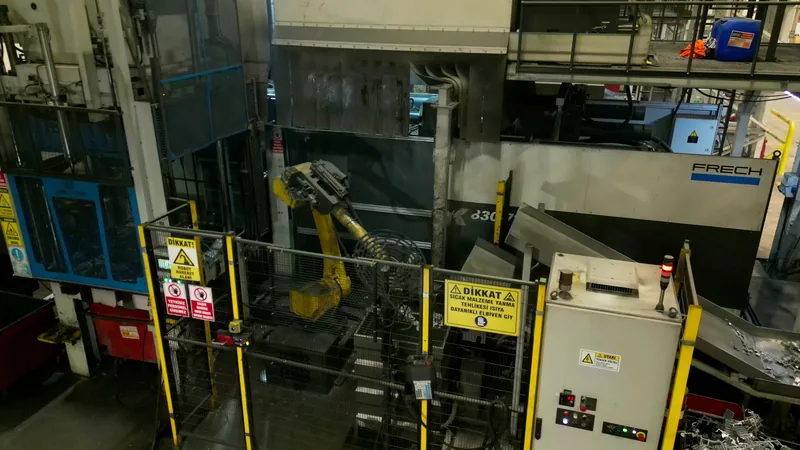
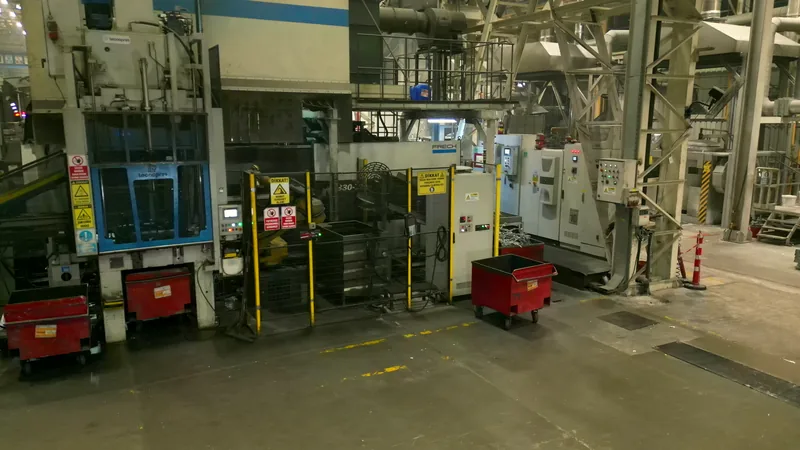
Two of our die casting cells on film, and a short one.


Gallery
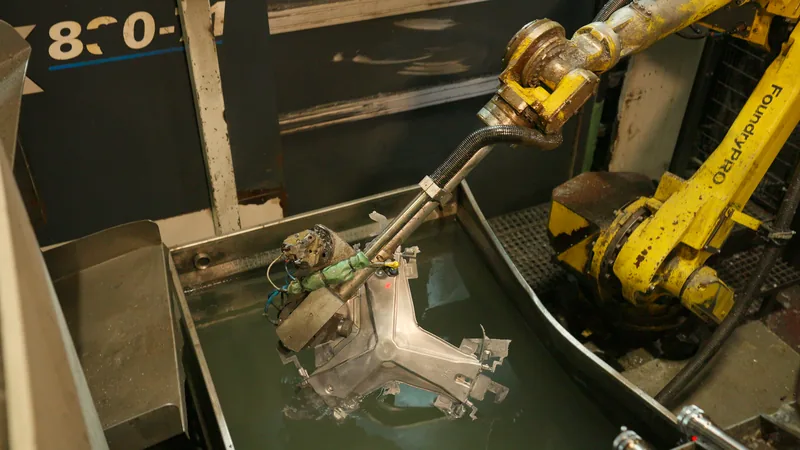
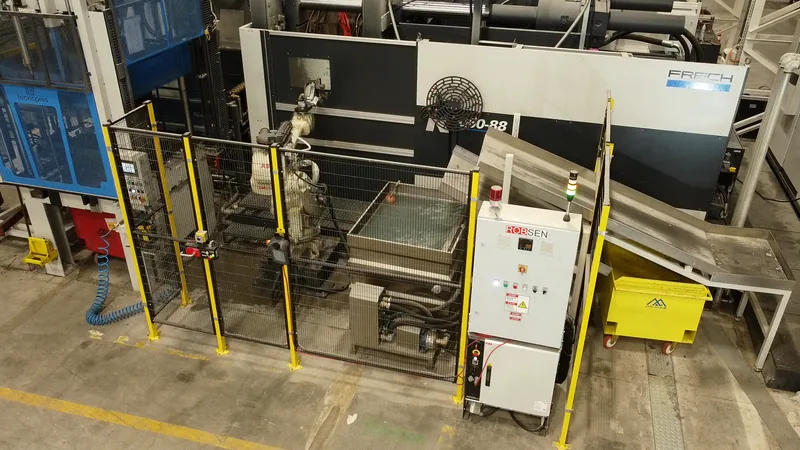
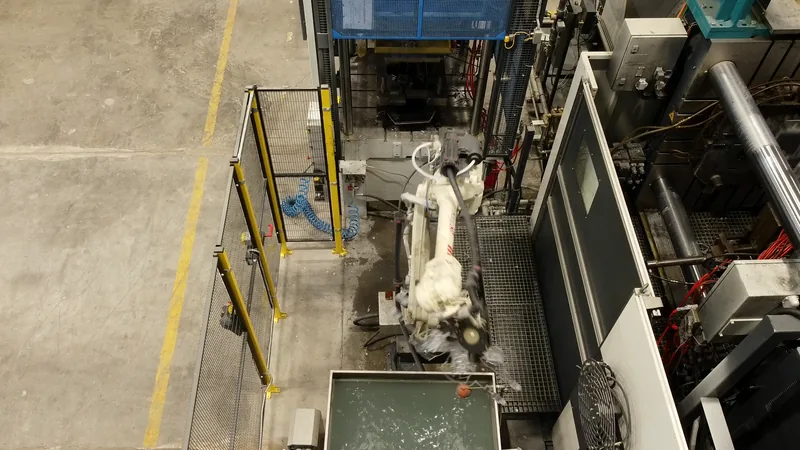
Fourteen cells for one die caster
When a die caster invested in fourteen new die casting machines, we built the robotic cell for the first one, then for the other thirteen. We have built robotic cells for die casting since 2018.
- Die casting cells since
- 2018
- Cells we built there
- 14
The cell in brief
- Cell
- Robotic part extraction for high-pressure die casting
- Solution
- Material Handling
- Machines
- Cold-chamber die casting machines, FRECH among them; new and older
- Robot
- Six-axis, foundry-protected, for example a FANUC M-710iC
- Part check
- A sensor plate, with a sensor for every part of the casting and more on its runners
- Cooling
- Quench tank in the cell
- Trimming
- The robot loads your trim press; parts leave on a two-level stainless slide
- Signals
- With the die casting machine and the trim press
- Safety
- Fences and locked doors; the robot’s zone limited in its safety controller
- Options
- Insert feeding into the die
- Delivery
- Simulated and designed for your machine, built and tested at our plant, commissioned and trained at yours
Questions we are asked
Which die casting machines can the cell work with?
Cold-chamber high-pressure die casting machines, new and older ones. We have built cells at FRECH machines, among others. The cell exchanges signals with the machine, so the robot reaches in only when the die is open, and the die closes only when the robot is out.
What does the sensor plate check?
That every part came out of the die, and came out whole. A die often casts several parts in one shot, eight for example, joined by runners; the trim press cuts them apart later. The plate has a sensor for every part, and more on the runners. The robot holds each casting against the plate, and every sensor has to find its piece before the die may close again. The type of sensor depends on the job.
Why sensors and not a camera?
Because of where the check happens. Steam, release agent mist and metal dust are part of every shot at a die casting machine. A camera needs clean glass and steady light to see; a sensor at the metal gives a plain yes or no in all of it. We write our own vision software and use it on most of our projects, but at the die we choose sensors.
What happens when a piece is missing?
The cell does not let the next shot start, and shows which point is missing. The piece is still in the die, so it is taken out before the die closes on it.
Does the robot also feed the trim press?
Yes. After the quench tank the robot lays the casting in the trim die. If the press is still busy, it waits with the casting. The trimmed parts leave the cell on a stainless slide.
Can the robot place inserts in the die?
Yes, where the part needs them. The same robot can place an insert in the open die before the shot.
Do you test the cell before it ships?
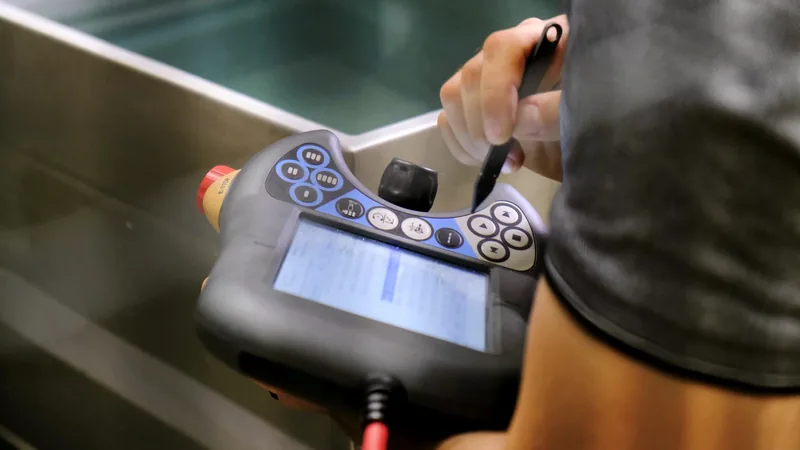
We simulate the cell for your machine first, then build it and test it at our plant with your sample castings. We commission it at your plant and train your team on the robot and the cell.
Tell us about your machine and your casting
Every die casting cell starts with the machine, the casting and the trim press it has to work with. Send us the casting and the layout around your machine, and we will work out the cell with you.
Talk to an engineer